Table of Contents
- Why Divorce Papers Get Rejected
- Understanding Service of Process and Legal Standing
- What to Do if Your Spouse Refuses to Sign Divorce Papers
- How to Amend Your Divorce Petition After Rejection
- Default Judgment and What Happens Next
- Moving Forward After Rejection
- Conclusion
Last Updated: August 16, 2026
Why Divorce Papers Get Rejected

Divorce papers get rejected for reasons ranging from simple clerical mistakes to substantive legal deficiencies. The court clerk verifies that your petition meets statutory requirements before it enters the docket. If something is missing, incomplete, or formatted incorrectly, the clerk issues a rejection notice, a procedural gatekeeping function, not a judgment on your case.
Common Reasons for Divorce Filing Rejection
Incomplete service of process documentation is the most frequent rejection reason. Texas law requires that your spouse receive proper notice of the divorce petition. If your affidavit of service lacks the required elements, date, method of service, and server’s signature, the court will reject the filing.
Missing or illegible signatures appear on roughly 30% of rejected filings. The petitioner must sign the petition, and certain affidavits require notarization. Faded signatures, unsigned pages, or incomplete notary stamps trigger rejection.
Incorrect case information creates another common rejection category. Filing under the wrong county, inconsistent name spelling, or incorrect marriage dates confuse the court’s records system.
Missing required disclosures are a major issue in contested cases and those involving children. Texas requires both parties exchange financial information and property disclosures before or concurrent with filing.
Jurisdictional problems arise when filing in a county where neither spouse has resided for the required time. Texas requires at least one spouse to have been a state resident for six months and a county resident for 90 days.
The Impact of Clerical Errors
Clerical errors are frustrating because they’re often invisible until the clerk points them out. A typo in your case number, transposed digit, or formatting issue can trigger rejection. These are fixable in minutes, but the psychological impact is real, a rejection feels like failure even though it’s purely procedural.
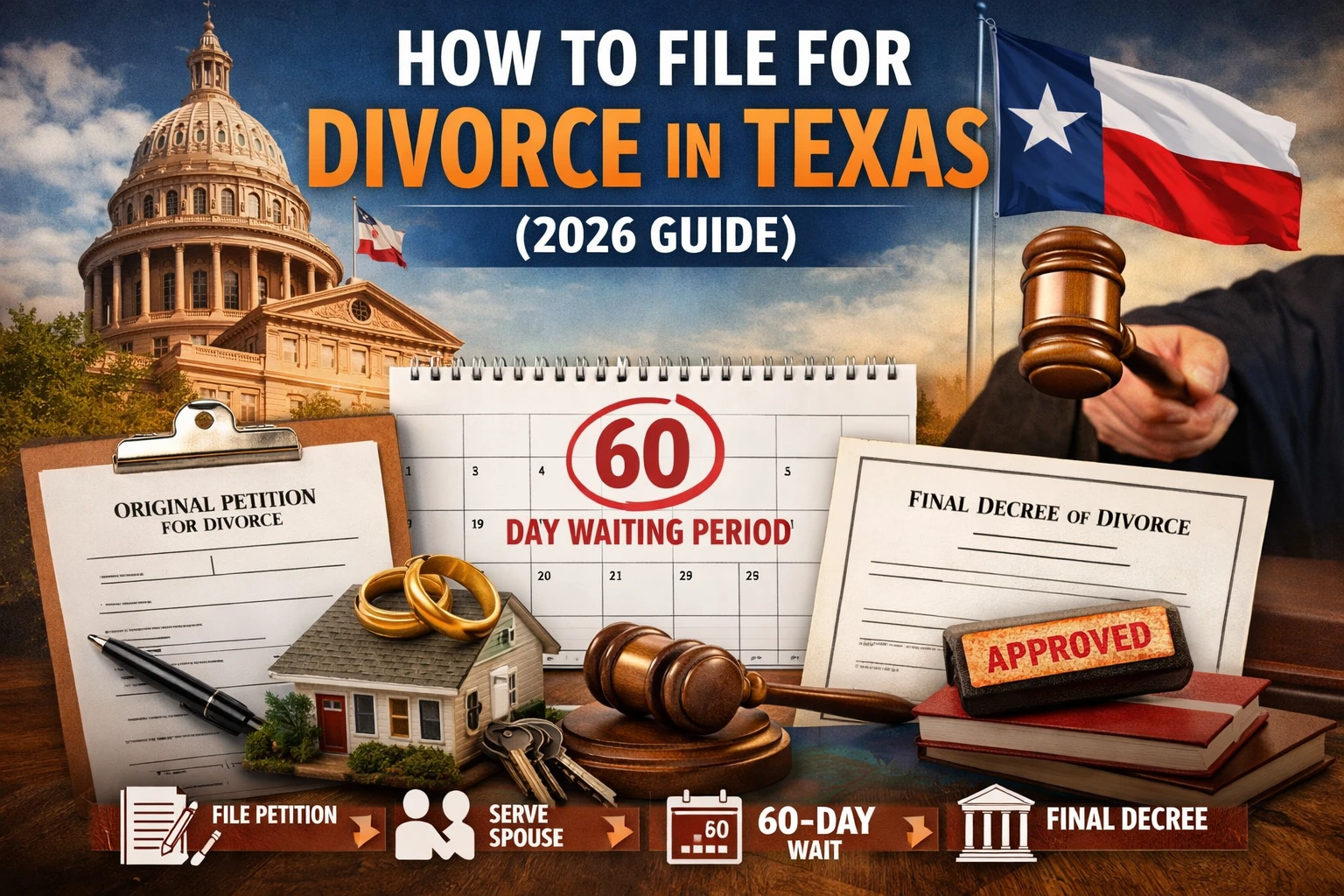
The real cost comes from timeline delays. Texas imposes a 60-day waiting period from the date of service before a divorce can be finalized. Every day your petition sits in the reject pile delays the waiting period’s start. If your original filing was rejected on day 5 and resubmission takes another week, you’ve lost nine days that compounds across the entire process.
Understanding Service of Process and Legal Standing
Service of process is the legal requirement that your spouse receives formal notice of the divorce petition. Without proper service, the court lacks jurisdiction over your spouse, and any judgment is legally invalid. Texas recognizes several methods: personal delivery, certified mail, waiver of service, or citation by publication in rare cases.
Many self-filers underestimate the formality required. A text message, phone call, or even handing your spouse the papers yourself may not qualify unless done by a neutral third party or meeting specific statutory requirements. The court requires documented, verifiable evidence that service occurred.
When service of process fails, because your spouse couldn’t be located or the method was improper, your entire case stalls. You cannot proceed to default judgment, obtain a divorce decree, or move forward with remarriage or property division.
What to Do if Your Spouse Refuses to Sign Divorce Papers
If your spouse refuses to sign divorce papers, you still have a clear legal path forward: the uncontested divorce can proceed via default judgment. Your spouse’s refusal doesn’t give them veto power over the process. Texas law allows divorce to proceed without the respondent’s agreement, provided you meet certain conditions.
First, you must properly serve your spouse with the petition. Once served, your spouse has a deadline (typically 20 days) to file a response. If they don’t respond, you can request a default judgment. A default judgment means the court grants your divorce based solely on your petition because your spouse failed to respond. You don’t need their signature, cooperation, or agreement, only proof of proper service and procedural compliance.
Document everything. Keep copies of service of process documents, any communications from your spouse, and all court filings. If your spouse later claims they were never served, you’ll have proof.
Ready Divorce Service helps clients navigate this scenario. Many people worry they’re stuck when their spouse refuses to sign. The reality is simpler: proper service and procedural compliance are your path to a default judgment and finalized divorce.
How to Amend Your Divorce Petition After Rejection

When your divorce papers get rejected, the court’s notice specifies what needs to be corrected. Read that notice carefully, it’s your roadmap. Don’t assume you understand the problem; follow the clerk’s guidance exactly to prevent a second rejection.
Amendments fall into two categories: those requiring resubmission of the entire petition, and those requiring only a corrected page or supplemental document. A missing signature might only require filing a corrected first page. A missing disclosure document might only require filing that document separately.
Step-by-Step Process for Resubmission
Step 1: Obtain and Review the Rejection Notice
The court clerk will provide a written notice explaining why your petition was rejected. This is not a suggestion; it’s a directive. Follow the clerk’s specific guidance rather than guessing at what the problem might be.
Step 2: Identify What Needs to Be Corrected
Determine whether the issue is simple (typo, missing signature, formatting error) or substantive (missing documents, improper service, jurisdictional issues). Simple corrections take minutes; substantive problems require more work but are still fixable.
Step 3: Make the Corrections
For clerical errors, correct the document and have it re-notarized if required. For missing documents, gather and prepare them according to Texas statutory requirements. For service issues, arrange proper service if the initial attempt was defective.
Step 4: Prepare Your Resubmission Package
Include corrected documents, a cover letter explaining what was corrected, and a copy of the original rejection notice. Call the court clerk’s office and ask what they prefer.
Step 5: Resubmit to the Court
File your corrected petition with the court clerk. Keep a copy of everything and get a date-stamped receipt.
Step 6: Follow Up
Call the clerk’s office after a few business days to confirm your amended filing was accepted and entered into the court docket.
Timeline and Filing Deadlines
The 60-day waiting period begins on the date your spouse is served. If your initial filing is rejected, that waiting period hasn’t started. A typical resubmission takes 3-7 business days if corrections are simple. If you need to arrange proper service, that could take 2-4 weeks. The court typically accepts or rejects resubmitted documents within 5-10 business days. Once accepted, most uncontested divorces finalize 60-90 days after proper service.
Respond quickly to rejections, make corrections, and resubmit. The sooner you do, the sooner the waiting period begins.
Default Judgment and What Happens Next
A default judgment is a court order granting your divorce because your spouse failed to respond within the statutory deadline. It’s a legitimate path to divorce in Texas, not a shortcut. Many uncontested divorces proceed via default judgment because the respondent simply doesn’t contest the case.
To obtain a default judgment, you must prove proper service of process through the affidavit of service. You must also file a motion for default judgment after the 20-day response deadline passes without a response. The court reviews your motion and documents. If everything is in order, proper service, all required disclosures, no jurisdictional issues, the judge signs a default judgment granting your divorce.
After default judgment is granted, you receive a divorce decree, the official court order ending your marriage. This decree addresses property division, custody, child support, and spousal support. Once signed, the decree is enforceable and final. You can then remarry and move forward with your life.
Moving Forward After Rejection
A rejected divorce filing is a setback, not a failure. Thousands of people experience rejection and successfully navigate correction and resubmission. The key is responding quickly, following the clerk’s guidance precisely, and avoiding a second rejection.
Many people delay resubmission because the rejection stung emotionally. That delay is understandable but costly. Every day you wait delays the 60-day waiting period’s start. Push through the disappointment, make corrections, and resubmit.
If the rejection involves substantive legal issues, improper service, jurisdictional problems, or missing required disclosures, consider consulting with a legal professional or Ready Divorce Service. These issues are fixable but require more than simple correction.
Document your timeline. Keep copies of every filing, rejection notice, and corrected document. This documentation protects you if your spouse later contests something or claims they were never properly served.
Divorce papers getting rejected is stressful, but it’s a solvable problem. Most rejections stem from clerical errors or incomplete documentation, issues that take hours to fix, not weeks. By understanding what the court requires, responding quickly to rejection notices, and following the resubmission process carefully, you can get your divorce back on track.
Ready Divorce Service specializes in helping people avoid rejections by ensuring your documents meet all Texas statutory requirements before filing. If you’ve already experienced a rejection and need guidance on correcting and resubmitting your petition, we provide step-by-step support to get your case accepted and moving forward.
Frequently Asked Questions
Why would a court reject divorce papers?
Courts reject divorce papers for procedural and clerical reasons. The most common causes include incomplete forms, missing signatures from both the petitioner and respondent, incorrect filing fees, failure to properly serve the other spouse, missing required affidavits of service, and errors in case numbers or jurisdictional information. Texas courts enforce strict statutory requirements for divorce filings. A notice of rejection from the court clerk explains the specific reason, allowing you to correct and resubmit your petition for dissolution.
What happens if my spouse refuses to sign the divorce papers?
If your spouse refuses to sign, you can still proceed with a contested divorce by serving them with a summons and petition through proper service of process. This notifies them officially of the legal action. If they fail to respond within the required timeframe, you may be eligible for a default judgment, which allows the court to proceed without their agreement. However, an uncontested divorce requires both parties' signatures. If you cannot reach agreement, you will need to litigate the disputed issues in court, which takes longer and costs more than an uncontested process.
How long does it take to correct and resubmit rejected divorce papers?
The time depends on the reason for rejection and how quickly you can address the issues. Simple clerical errors can be corrected within days or weeks. Texas law requires a 60-day waiting period from the date of service before a divorce can be finalized, regardless of how quickly you fix and resubmit. Once you receive a notice of rejection from the court clerk, review the specific deficiencies, make corrections to your petition, and resubmit with the corrected documents. The court will then process your amended filing and issue a new case number or updated court docket entry.
Do I need a lawyer to fix and refile rejected divorce papers?
Many people successfully correct and refile rejected divorce papers without legal counsel, especially in uncontested cases. However, if the rejection involves procedural compliance issues, jurisdictional questions, or disputes over child custody or property division, consulting with legal counsel can prevent further delays. A lawyer can review your amended petition to ensure it meets all statutory requirements and properly addresses the court's concerns. For straightforward clerical corrections in an uncontested divorce, you may handle the resubmission yourself by carefully following the court clerk's instructions.
This article was written using GrandRanker