Table of Contents
- What Online Divorce Workshops for Texas Residents Actually Do
- Live vs. Self-Paced: Comparing Virtual Workshop Formats
- How to File for Divorce Online in Texas: Where Workshops Fit
- Texas Divorce Forms: What Workshops Help You Prepare
- The Texas Uncontested Divorce Process, Step by Step
- Costs, Scholarships, and What’s Included
- How to Choose a Workshop Based on Your Divorce Circumstances
- Frequently Asked Questions
Last Updated: October 16, 2026
What Online Divorce Workshops for Texas Residents Actually Do
Online divorce workshops for Texas residents are live or self-paced classes that teach you how to complete and file your own divorce paperwork. They explain the process, show you which forms to use, and help you avoid common mistakes.

A workshop can walk you through every line of a form, but it cannot tell you whether signing it is right for your case.
Education, Not Legal Advice: Where the Line Sits
A workshop instructor can teach you the rules; only a licensed attorney can apply them to your situation.
That means a class can:
- Explain the difference between a fault and a no-fault divorce
- Show you how to fill out a petition
- Describe what happens at a courthouse hearing
It cannot:
- Tell you whether to accept a settlement offer
- Advise you on how to handle a disputed retirement account
- Predict how a judge will rule on your custody arrangement
Many workshops say this up front. Some do not. If a session promises “legal advice” for a flat fee, treat that as a red flag. Legal advice comes from a lawyer who has reviewed your case, not from a group webinar.
Live vs. Self-Paced: Comparing Virtual Workshop Formats
Virtual workshops come in two formats: live sessions on a set schedule with an instructor taking questions in real time, and self-paced courses you work through on your own time, often with a workbook or checklist.
Here is the trade-off in plain terms:
| Format | Best For | Main Drawback | Typical Access |
|---|---|---|---|
| Live webinar | People with questions in the moment | Fixed schedule, no replay | One session |
| Self-paced course | Busy schedules, repeat viewing | No live help | Limited-time access |
| Hybrid (recorded + live Q&A) | Most filers | Costs more than either alone | Both included |
Pick live if your case has moving parts to talk through; pick self-paced if your situation is simple.
What a Live Session Actually Looks Like
A live divorce workshop is usually a scheduled video call, often on Zoom, Teams, or a court self-help platform, capped so the instructor can field questions.
The value of live is the question window: you can ask, “My spouse won’t sign the waiver, what now?” and get a general answer on the spot. What you usually cannot get is a review of your paperwork.
What a Self-Paced Course Actually Looks Like
A self-paced course is a set of recorded modules you watch on your own schedule, often paired with a downloadable packet.
The trade-off is support. You get repetition and a pause button, but no one answers a question in the moment. If you get stuck on a line item, you are on your own unless the provider offers email or chat support, and many do not.
Who Teaches These Sessions
Instructor qualifications vary widely, so ask questions before you register. Common profiles:
- Court self-help staff. Court self-help centers and law libraries often staff workshops with court personnel or self-help attorneys who know the local filing quirks. These tend to be the most county-specific.
- Legal aid and nonprofit attorneys. Legal aid organizations run free or low-cost workshops, usually taught by licensed attorneys or supervised paralegals.
- Document-preparation services. Some online divorce services run their own webinars, taught by trained preparers rather than attorneys. These can be useful for form mechanics but are not legal advice.
A quick credibility check: ask whether the instructor is a licensed attorney, whether the session is county-specific or statewide, and whether materials are updated when forms change. If a provider cannot answer those three questions, treat the session as general education only.
What You Should Learn by the End
A good workshop, live or self-paced, should leave you able to:
- Confirm whether you meet the residency requirement to file
- Identify the correct county and the correct clerk’s office
- Name the core forms your case needs and where to download the current versions
If a session ends without you able to answer those six items, it was too general for your case, the clearest signal to look for a live session or hands-on document help instead.
Before you register, ask the provider three questions: Is the instructor a licensed attorney? Is the content specific to your county or statewide? How often are the materials updated? The answers tell you more about quality than the price does.
Live vs. Self-Paced: A Quick Decision Rule
- Simple, uncontested, no children, no property: A self-paced course is usually enough.
- Children, shared debt, or a retirement account to divide: Choose live so you can ask questions.
- Spanish-speaking filer: Confirm the session offers live bilingual support, not just translated slides.
If your situation includes children, debt, or property, a general workshop may leave gaps. That is where hands-on document preparation pays off. Ready Divorce Service specializes in Texas uncontested divorce paperwork, with step-by-step guidance and full compliance with state law, so nothing gets rejected on a technicality.
How to File for Divorce Online in Texas: Where Workshops Fit
Texas does not offer a statewide online filing portal for every county. Some counties accept electronic filing through their own systems; others still expect paper documents.
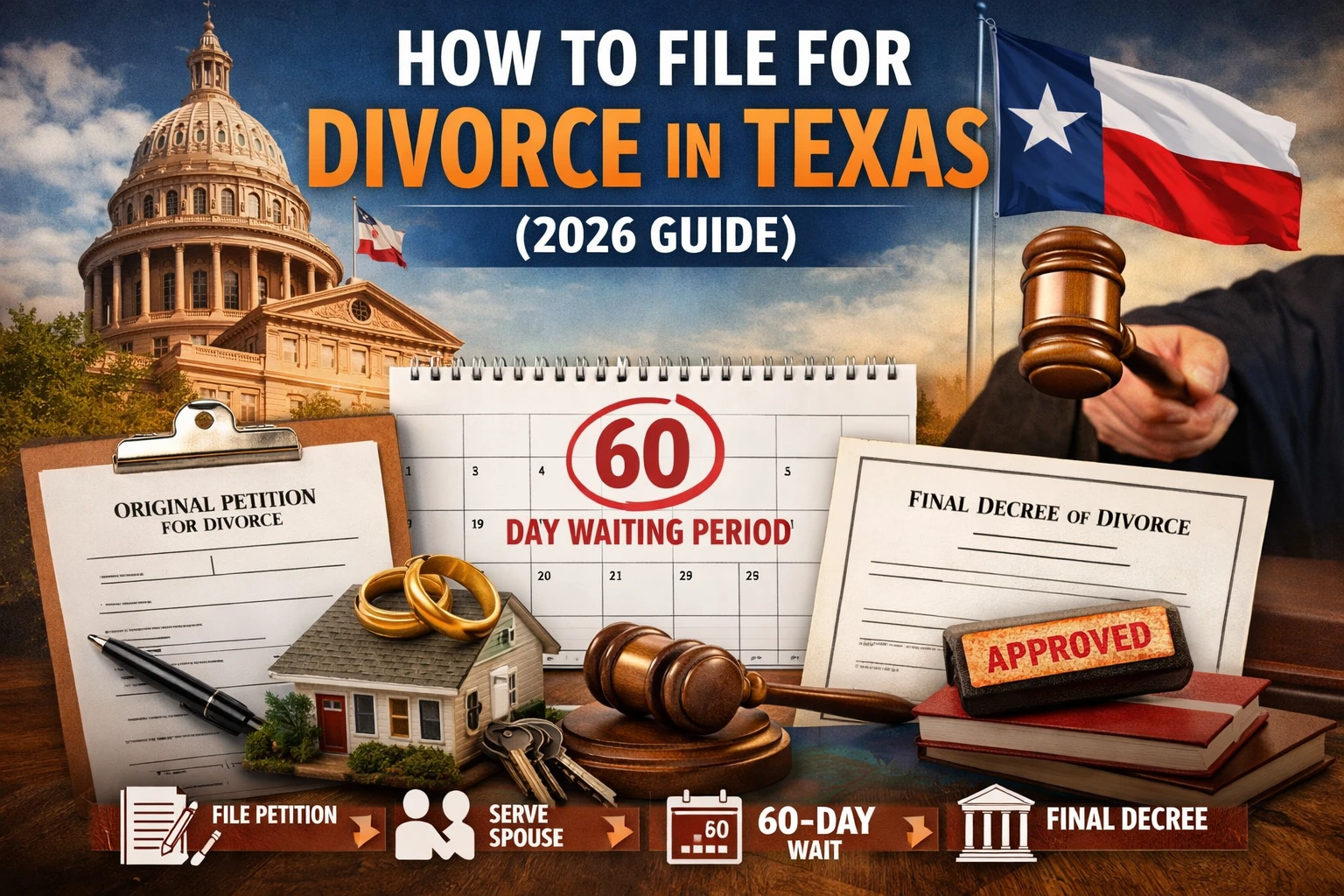
The typical sequence looks like this:
- Confirm you meet the residency requirement
- Complete the petition and supporting forms
- File with the district clerk in the correct county
- Serve your spouse or file a waiver
- Wait out the required waiting period
- Submit the final decree for the judge’s signature
A workshop covers all six steps at a general level. If you want a clearer picture of what each step involves before you file, our guide to starting the divorce process walks through the requirements.
Texas Divorce Forms: What Workshops Help You Prepare
Workshops focus on the core forms most uncontested cases need. The exact set depends on whether you have children, property, or debt to divide.
The common documents include:
- The original petition for divorce
- The waiver of service or acceptance of service
- The final decree of divorce
What most guides miss is that clerks reject filings for small things: a missing signature, an outdated form version, a blank field that should say “none.” A workshop shows you the forms. It rarely reviews your finished work line by line.
Filing an outdated form version is one of the most common reasons a clerk rejects a divorce packet. Always download forms from the county clerk or the state court system, not from a random third-party site, and check the version date before you file.
The Texas Uncontested Divorce Process, Step by Step
An uncontested divorce is one where you and your spouse agree on all terms before filing.
Here is how it unfolds:
- Confirm eligibility. You or your spouse must meet the state residency requirement before filing.
- Draft and file the petition. Submit it to the district clerk in the county where you or your spouse lives.
- Serve your spouse. Your spouse signs a waiver, or a constable or process server delivers the papers.
- Wait out the waiting period. Texas law requires a waiting period after filing before a court can grant the divorce, with limited exceptions.
- Submit the final decree. Both parties sign, and the judge reviews and signs the order.
- Close out loose ends. Update your name, accounts, and records after the decree is signed.
The waiting period trips up a lot of people: they file, assume they are done, and wonder why nothing happens for weeks.
For the residency rules, waiting period details, and filing requirements, check the Texas courts self-help divorce resources and your county clerk’s office, since requirements can vary by county.
Costs, Scholarships, and What’s Included
Workshop pricing varies by format, length, and whether an instructor is live. The range is wide, and the cheapest option is often the most county-specific.
Here is how the common price tiers break down:
| Tier | Typical Source | What You Usually Get |
|---|---|---|
| Free | Court self-help centers, law libraries, legal aid nonprofits | A live or recorded session, sometimes a checklist |
| Low-cost (nominal fee) | Nonprofit legal aid, community colleges, bar association programs | Live session with Q&A, sometimes a workbook |
| Paid self-paced | Online divorce services and education platforms | Recorded modules, downloadable packet, limited-time access |
| Paid live or hybrid | Online divorce services, private providers | Live instruction, Q&A, sometimes a recording and follow-up |
A few practical notes on each tier:
- Free sessions are the best starting point for most filers. Court self-help centers and legal aid nonprofits run them regularly, and the content is often tailored to the local clerk’s expectations. The trade-off is scheduling, sessions may run monthly or quarterly, and seats can fill.
- Low-cost sessions usually charge a small registration fee to cover materials, common through community colleges, bar association pro bono programs, and some county law libraries.
- Paid self-paced courses typically bundle a video series with a downloadable packet. Access windows vary, 30 days, a year, or lifetime. Read the fine print before you pay.
What Should Be Included, and What Usually Is Not
Before you pay, confirm these items in writing:
- Whether a recording is included, and for how long you can access it
- Whether you get a checklist, template packet, or sample completed forms
- Whether the fee covers one session or ongoing access
What is usually not included: review of your finished paperwork, representation in court, or advice on your specific settlement. Those are separate services, and a workshop that blurs that line is worth a second look.
Scholarships and Fee Waivers
Several sources offer reduced or no-cost access:
- Legal aid nonprofits often run divorce workshops at no charge for income-eligible residents. Eligibility rules vary by organization.
- Court self-help centers typically offer their sessions free as a public service. Ask your county’s self-help center first.
- Bar association pro bono programs sometimes run low-cost or free clinics, often staffed by volunteer attorneys.
If cost is a barrier, start with the court self-help center and the local legal aid office. Between the two, you can usually find a free or near-free session that covers the basics.
Cancellation and Refund Policies
Policies vary widely and are worth reading before you register:
- Free sessions: No refund issue, but no-shows may lose a seat for future sessions.
- Low-cost sessions: Some refund in full with notice; some do not refund at all. Ask before you pay.
- Paid self-paced courses: Many offer a refund window of a few days if you have not accessed the materials. Once you have watched the modules, refunds are usually off the table.
Court self-help centers and legal aid nonprofits often run free or low-cost divorce workshops for local residents. Ask your county’s self-help center first, then compare paid options. You may find the free session covers everything you need.
How to Compare Two Paid Options
If you are choosing between two paid workshops, compare instructor qualifications, county specificity, access window, and whether a recording is included. A cheaper course with a short access window and no recording can cost more in the long run if you need to rewatch a module; a slightly pricier course with a year of access and live Q&A is often the better value for anyone with children, property, or debt to divide.
You can review the available options and see which plan fits your case on our which plan is right for you page.
How to Choose a Workshop Based on Your Divorce Circumstances
The right workshop depends less on price and more on how complicated your case is. A simple no-kids, no-property filing needs far less support than one with a house, a retirement account, and shared custody.
Use this quick framework:
- No children, no shared property: A free or low-cost self-paced course is usually enough.
- Children or shared debt: Choose a live session where you can ask questions, or pair a course with document help.
- Spanish-speaking filer: Confirm the workshop offers live bilingual support, not just translated slides.
If your situation includes children, debt, or property, a general workshop may leave gaps. That is where hands-on document preparation pays off. Ready Divorce Service specializes in Texas uncontested divorce paperwork, with step-by-step guidance and full compliance with state law, so nothing gets rejected on a technicality.
Frequently Asked Questions
Are there online divorce workshops for Texas residents?
Yes. Several organizations offer virtual workshops and webinars tailored to Texas divorce procedures, including court form walkthroughs and parenting education. Formats range from one-time webinars to multi-session series. Availability and schedules change, so check each provider’s site directly. Note that workshops provide education, not legal advice, and cannot represent you in court.
What topics do online divorce workshops cover?
Most cover Texas divorce forms, residency and filing requirements, the uncontested divorce process, and how to complete and submit paperwork. Many also include co-parenting education, which some courts require when minor children are involved. Topics vary by provider, so review the curriculum before registering to confirm it matches your situation.
How can I prepare for an uncontested divorce in Texas?
Gather your marriage information, reach an agreement with your spouse on property and debt division, and decide how you will handle children’s issues if applicable. Then complete the required Texas divorce forms accurately and file them with the correct court. A workshop can walk you through each step, but you remain responsible for the accuracy of your filing.
Can a divorce workshop help if my spouse and I disagree?
Workshops are designed for education and preparation, not dispute resolution. If you and your spouse disagree on key issues, a workshop can still help you understand the process, but you may need mediation or a lawyer to reach a settlement. An uncontested filing generally requires agreement on all major terms before you file.
Filing for divorce in Texas is manageable when you know the steps, but small paperwork errors cause most of the delays. Ready Divorce Service helps you avoid them with expert document preparation, a clear step-by-step process, and an affordable alternative to traditional legal fees. Get started with Ready Divorce Service and move through your uncontested divorce with confidence.