Last Updated: November 2, 2026
Quick Summary
To get texas spousal support on a low income, you must prove you cannot meet your minimum reasonable needs and fit one statutory category, such as a marriage of 10 years or longer, disability, caregiving, or family violence. You must request maintenance in your divorce petition, or the court generally cannot award it later.
- The 10-year marriage mark runs from the marriage date to the date the divorce is filed.
- A police report alone does not satisfy the family violence route; a conviction, deferred adjudication, or protective order is required.
- Temporary orders can provide support while the divorce is pending, but they are separate from final maintenance.
- Build a monthly expense worksheet and back every line with receipts, statements, or bills.
- Document preparation services cannot give legal advice or represent you in court.
Table of Contents
- Texas Spousal Maintenance Eligibility: Who Qualifies
- How Long Do You Have to Be Married to Get Spousal Support in Texas?
- Can You Get Alimony and Child Support at the Same Time?
- How to Request Spousal Maintenance: A Step-by-Step Checklist
- Step 1: File the Petition and Plead Maintenance
- Step 2: Request Temporary Orders If You Need Support Now
- Step 3: Gather Income, Expense, and Qualifying-Condition Evidence
- Step 4: Serve the Other Side or Obtain a Waiver
- Step 5: Build a Minimum-Reasonable-Needs Worksheet
- Step 6: Prepare for the Hearing and Present Evidence
- Divorce Options for Low-Income Spouses: Affordable Help and Next Steps
- Frequently Asked Questions
Texas Spousal Maintenance Eligibility: Who Qualifies
Texas spousal support low income cases turn on one question: can you show the court you cannot meet your minimum reasonable needs? In every Texas spousal support case, that showing comes first.
At Ready Divorce Service, we walk clients through this analysis every week. You must lack enough property and income to cover basic needs and fit at least one statutory category, neither alone is enough.
The Four Statutory Categories
Texas recognizes four routes to eligibility. Each has its own proof requirements, and the marriage-length rule only applies to the first one.
- Marriage of 10 years or longer. The requesting spouse must also show they cannot meet minimum reasonable needs. The 10-year mark runs from the date of marriage to the date the divorce is filed, not the final decree.
- Physical or mental disability. The disability must be severe enough to prevent the spouse from earning enough to cover basic needs and must be expected to last. A short-term injury or a managed condition allowing full-time work generally will not qualify.
- Caregiving for a child of the marriage with a disability. The child must have a physical or mental disability requiring substantial care and supervision, the spouse must provide that care, and caregiving must be the reason the spouse cannot earn enough to meet minimum reasonable needs.
The Inability to Meet Minimum Reasonable Needs
Minimum reasonable needs means the basic costs of living for your household. Food, housing, utilities, transportation, medical care, and similar essentials count.
The burden of proof sits with you. You must show the court why your income and property fall short. What factors influence spousal maintenance court decisions explains how judges weigh those facts.
How Income and Resources Affect Eligibility
Judges look at the whole financial picture, not just the paycheck. Property counts, including a house, vehicle, retirement accounts, and savings. So does the spouse’s ability to earn, a spouse with recent work history in a field that pays enough to cover basic needs may struggle to show need even if unemployed today.
The paying spouse’s ability to pay matters too.
Family Violence, Disability, and Caregiving Exceptions
Family violence changes the math.
Disability works the same way: if you cannot work enough to cover basic needs, marriage length matters less. Medical records, treating-physician statements, and disability determinations from an agency or insurer carry weight.
Caregiving counts too. If you stay home to care for a child with a disability, the court may treat that as a qualifying reason.
What the Court Weighs When Deciding
Even when you qualify, the judge has discretion. Texas courts consider the requesting spouse’s financial resources, the marriage’s duration, the couple’s standard of living during the marriage, each spouse’s age and health, the paying spouse’s ability to pay, and any marital misconduct.
County practices vary. Dallas County, Tarrant County, Denton County, Collin County, and Ellis County courts each handle hearings and evidence differently, so confirm local procedures before a hearing.
How Long Do You Have to Be Married to Get Spousal Support in Texas?
Ten years is the standard answer for most low-income spouses. Under the Texas Family Code, the 10-year marriage route applies when the requesting spouse cannot meet minimum reasonable needs; confirm the current statutory text on the official Texas legislature website.
Shorter marriages can still qualify through the disability, caregiving, or family violence routes. A common mistake is assuming a 9-year marriage disqualifies you outright. It does not, if another category applies.
Can You Get Alimony and Child Support at the Same Time?
Yes. Spousal maintenance and child support are separate obligations, and a court can order both in the same divorce decree.
Child support is calculated as a percentage of the paying parent’s net income. Texas child support is calculated under guidelines that apply whether or not maintenance is also ordered.
Watch out: a judge may consider the combined total when deciding what the paying spouse can realistically afford.
How to Request Spousal Maintenance: A Step-by-Step Checklist
Requesting maintenance starts with your divorce petition. You must ask for it in the pleadings, or the court generally cannot award it later. That single rule trips up more self-represented spouses than any other part of the process.

Step 1: File the Petition and Plead Maintenance
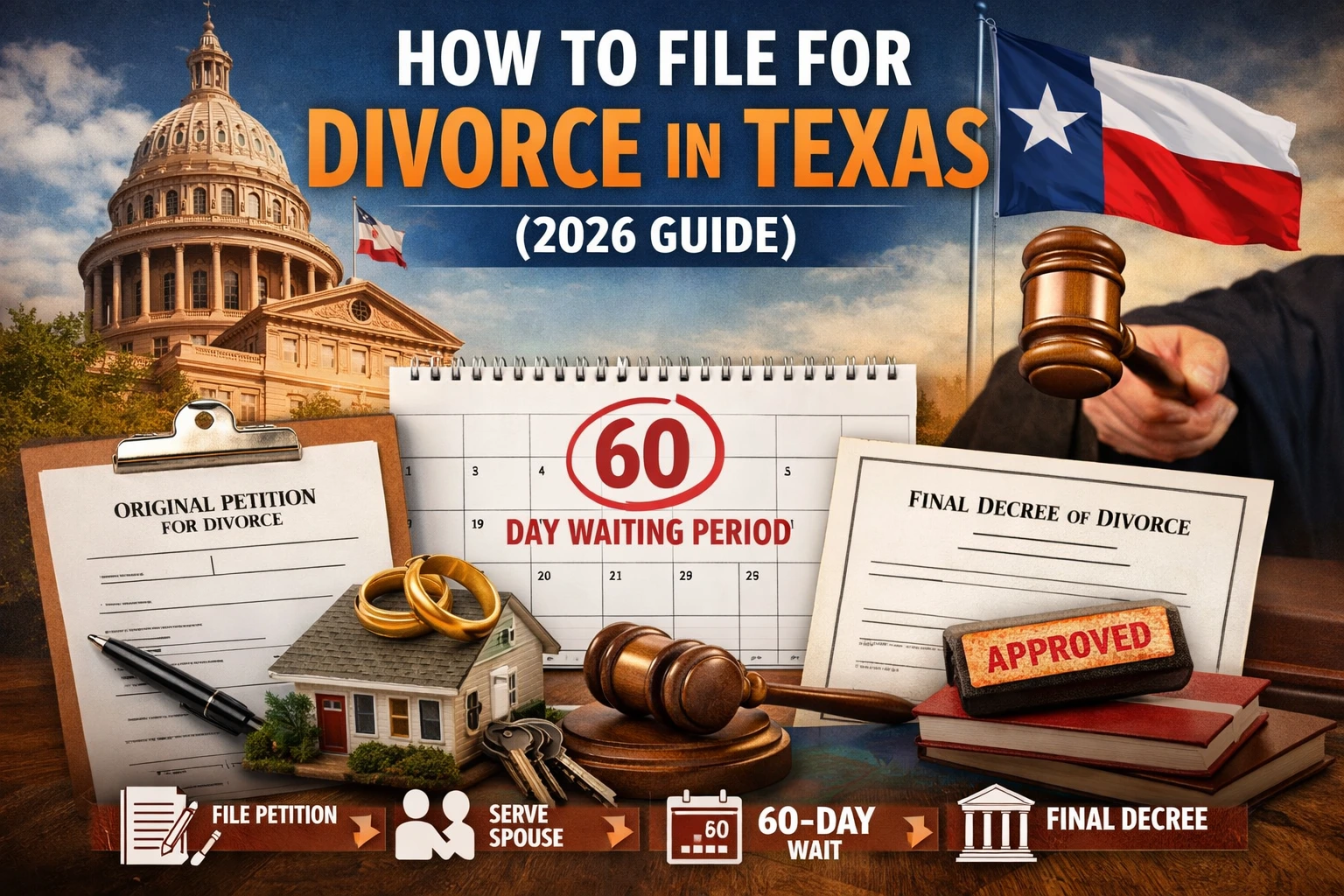
The original petition for divorce starts the case and must include a request for spousal maintenance, not just a general request for relief. If you are the responding spouse, raise the request in a counterpetition. If you are weighing document preparation options, Which Plan is Right for You? can help you compare what each package covers.
Step 2: Request Temporary Orders If You Need Support Now
Temporary orders are separate from final maintenance. They can address support while the divorce is pending and may provide relief for a spouse facing immediate hardship. Temporary support is not the same as post-divorce statutory maintenance, and the standards may differ. Ask early, courts are less receptive to a request made on the eve of trial.
Step 3: Gather Income, Expense, and Qualifying-Condition Evidence
This is where most low-income cases are won or lost. Build a file with:
- Pay stubs, W-2s, and the last two to three years of tax returns for both spouses
- Bank, credit card, and loan statements
- A monthly expense sheet (see the worksheet below)
Step 4: Serve the Other Side or Obtain a Waiver
The responding spouse must be served, or must sign a waiver of service. A waiver speeds the case and avoids service costs. If the other side cannot be located, alternative service may be available with court permission.
Step 5: Build a Minimum-Reasonable-Needs Worksheet
A monthly budget is the backbone of a maintenance request. List each category, your actual monthly amount, and a short note on the source. A simple format:
| Category | Monthly Amount | Source |
|---|---|---|
| Rent or mortgage | $ | Lease or statement |
| Utilities | $ | Bills |
| Groceries | $ | Receipts or bank records |
| Transportation and fuel | $ | Bank records |
| Health insurance and medication | $ | Policy and pharmacy records |
| Childcare | $ | Provider invoices |
| Other essentials | $ | Receipts |
Total the column, then subtract your monthly income. The difference is the shortfall you are asking the court to address. Keep receipts and statements for every line, a budget without backup is easy to challenge.
Step 6: Prepare for the Hearing and Present Evidence
At the hearing, you will testify about your needs and income and offer documents to support both. If paperwork errors worry you, affordable Texas divorce paperwork help can catch mistakes before filing.
Watch out: missing the pleading deadline or filing in the wrong county can delay the case or cost you the chance to request maintenance at all, so confirm local requirements before you file.
Divorce Options for Low-Income Spouses: Affordable Help and Next Steps
Low income does not mean no options. If you are unsure how filing actually works, Starting the Divorce Process walks through the requirements from petition to final decree.
Legal aid is worth checking. Free legal advice for divorce in Texas covers clinics and nonprofit resources for qualifying households.
Comparing paths helps. Simple versus affordable divorce options lays out the trade-offs in time and process.
| Situation | Best Path | Why |
|---|---|---|
| Both spouses agree on terms | Agreed divorce with document help | Fewest steps, lowest stress |
| Spouse won’t sign | Contested or default route | Court involvement required |
| Disability or violence claim | Petition plus evidence, attorney advised | Legal complexity is higher |
| Very limited funds | Legal aid screening first | Free help may be available |
One honest limitation: document preparation services cannot give legal advice or represent you in court. For contested maintenance fights, a licensed Texas attorney is the right call.
Frequently Asked Questions
Who qualifies for spousal support in Texas?
To qualify for Texas spousal support, a spouse must lack sufficient property and income to meet minimum reasonable needs and meet at least one additional requirement: the marriage lasted 10 years or longer, the spouse cannot earn enough due to a physical or mental disability, the spouse must care for a child with a disability, or the other spouse committed family violence within two years of filing. Courts weigh all factors before ordering maintenance.
Can a low-income spouse get spousal support in Texas?
Yes, a low-income spouse can request spousal support, but eligibility depends on meeting the statutory requirements. The court will look at your income, expenses, property, and the length of the marriage. Even if you qualify, the amount may be limited by caps and the paying spouse’s ability to pay. Documenting your minimum reasonable needs and the other spouse’s financial resources is essential.
How much spousal support might a low-income spouse receive in Texas?
The amount is determined by the court based on factors like the length of the marriage, each spouse’s income and earning capacity, and the recipient’s needs. Texas law sets limits on maintenance amounts; confirm the current statutory limits in the official Texas Family Code. A paying spouse’s income is a key factor in what a court may order.
Can you receive spousal support and child support at the same time?
Yes, spousal support and child support are separate obligations and can be ordered in the same divorce. Child support is calculated based on the paying parent’s income, while spousal maintenance is based on the factors discussed above. The court may consider the total financial picture, but one does not automatically preclude the other.
Texas spousal maintenance rules reward preparation, and the spouses who document their needs clearly fare best. Ready Divorce Service helps you prepare accurate paperwork, coordinate filing, and stay organized from petition to final decree. Our team offers step-by-step guidance, document preparation and management, and ongoing support through the process. Get started with Ready Divorce Service and move through your Texas divorce with fewer delays and less confusion.