Last Updated: October 29, 2026
Quick Summary
Texas divorce mediation can work for high-conflict couples when safety is addressed first and the format is adapted to the level of tension. A responsible mediator screens for intimidation, power imbalance, and crisis before any joint session. Formats such as shuttle mediation let each spouse negotiate without direct contact.
- Screen for physical violence, threats, and power imbalance before any joint session.
- Shuttle mediation moves proposals between separate rooms, so spouses never meet face to face.
- Remote video mediation requires reliable technology and a private space for each party.
- Gather financial records, a ranked priority list, and a safety summary before the first session.
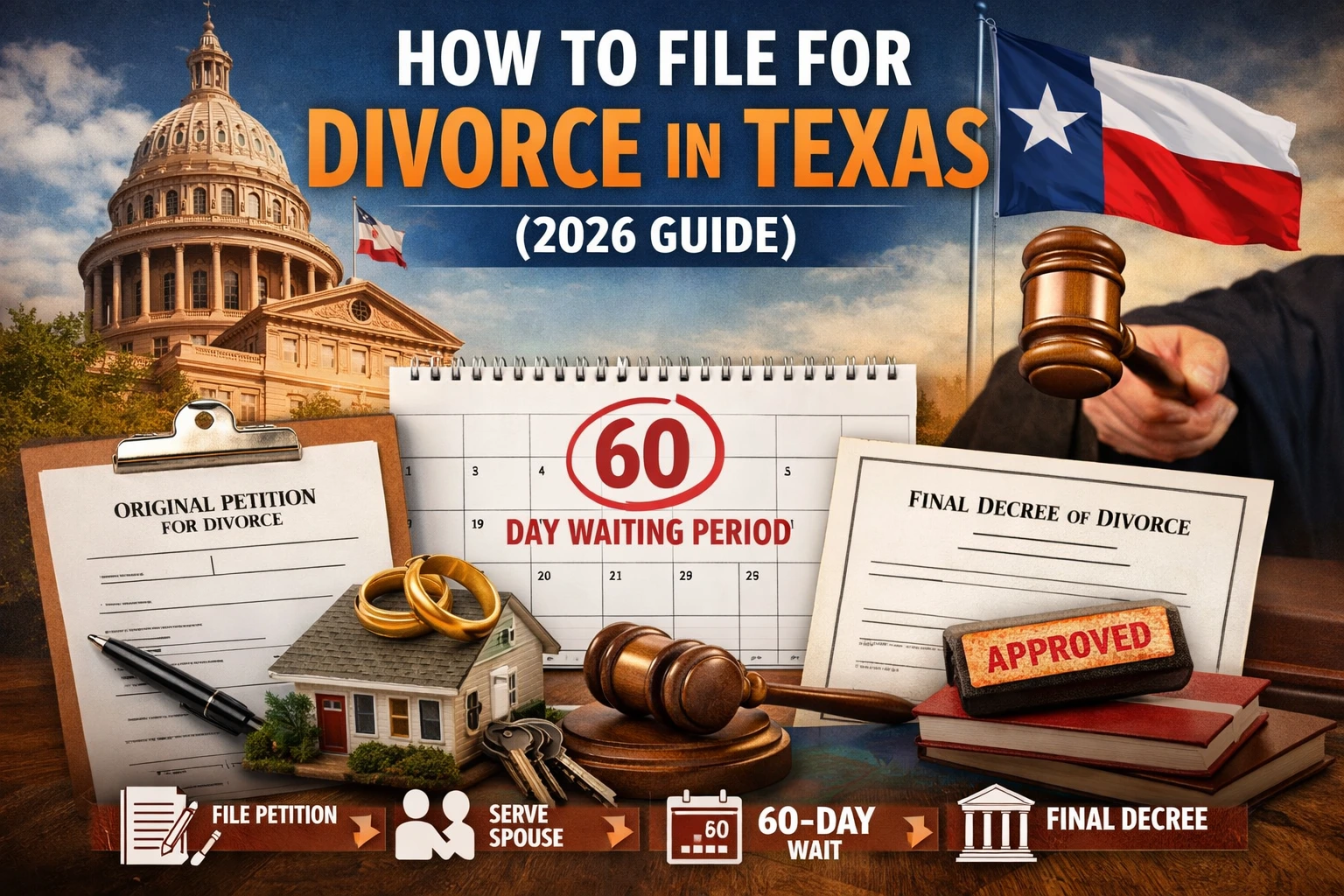
- Mediation does not replace the Texas 60-day waiting period unless a statutory exception applies.
Table of Contents
- Can Divorce Mediation Work When Your Relationship Is High-Conflict?
- How Divorce Mediation Works in Texas
- Screening for Safety, Suitability, and Power Imbalance
- Formats That Work Better for High-Conflict Couples
- Divorce Mediation Preparation Checklist
- Divorce Mediation Communication Strategies That Reduce Conflict
- Mediation for Child Custody Disputes in Texas
- How Long Does Divorce Mediation Take?
- What to Do If Mediation Does Not Produce an Agreement
- Taking Your Next Step Toward an Agreed Texas Divorce
- Frequently Asked Questions
Texas divorce mediation for high conflict couples is a real option, but it works differently when emotions run hot. The path forward depends on whether both spouses can sit at the same table without the process turning into another fight. The short answer: sometimes yes, with the right structure, the right mediator, and a realistic screening before anyone signs anything.
Can Divorce Mediation Work When Your Relationship Is High-Conflict?
Divorce mediation is a process in which a neutral third party helps spouses negotiate settlement terms on property, debts, and children. Mediation can work for high-conflict couples, but only when safety is addressed first and the process is adapted to the level of tension between the parties. Compare agreed divorce and mediation options side by side to see how costs and timing differ for lower-conflict cases.
The question to ask is not whether you disagree, because nearly every divorcing couple does. The question is whether you can communicate well enough to reach and document an agreement. If one spouse intimidates, threatens, or controls the other, mediation in its standard form may not be appropriate, and other options deserve a closer look.
How Divorce Mediation Works in Texas
In Texas, mediation usually happens in one of two ways. Parties may voluntarily hire a mediator at any stage of a case, or a family court may order mediation before a contested hearing. In either setting, the mediator does not decide the outcome.
Once the spouses reach terms, those terms are written into a mediated settlement agreement. A mediated settlement agreement can be binding when it meets Texas statutory requirements, so the document should be reviewed carefully before anyone signs.
Mediation is generally confidential, and confidentiality rules should be confirmed for your situation. For more context, read the key differences between divorce mediation and litigation in Texas.
Screening for Safety, Suitability, and Power Imbalance
Before any joint session, a responsible mediator screens for safety and suitability. This step is especially important for high-conflict couples.
Ask these questions honestly before you commit:
- Is there a history of physical violence, threats, or stalking? If yes, tell the mediator privately and request separate sessions or a different format.
- Does one spouse control the household finances or decision-making in a way that makes open negotiation unrealistic? A significant power imbalance can make an agreement one-sided.
- Can each of you speak for yourself without the other interrupting, belittling, or pressuring you?
- Are either of you using substances or experiencing a mental health crisis that affects judgment?
If the answers raise concerns, a mediator may recommend shuttle mediation, where the mediator moves between two rooms, or a different process altogether. Your safety comes first. If you are in danger, contact local law enforcement or a domestic violence hotline before anything else.
Formats That Work Better for High-Conflict Couples
Mediation can take several formats. The format you choose shapes how much direct contact occurs, how long the process takes, and whether an intimidated spouse can negotiate freely. See how mediation compares with a court filing on conflict level, timelines, and costs.
Shuttle mediation
The spouses sit in separate rooms, and the mediator moves between them, carrying proposals, questions, and counteroffers. The parties may never see each other. This is the standard fallback when face-to-face contact is unsafe or unproductive.
- Best for: couples with a history of intimidation, explosive arguments, or a protective order in place.
- Trade-offs: it usually takes longer because every exchange passes through the mediator, and some mediators charge more for the additional time. Nuance can get lost in translation, so put key proposals in writing.
- How to request it: tell the mediator privately before the first session. If a court ordered mediation, the mediator can often accommodate the format without a new order, but confirm with the court coordinator in your county.
Separate arrival and departure times
A lighter-touch option: both parties attend the same session but arrive and leave at staggered times, and the mediator keeps them in separate waiting areas. This reduces the chance of confrontation in a parking lot or lobby, a real concern in high-conflict cases.
- Best for: couples who can negotiate together but cannot handle unstructured contact before or after.
- Trade-offs: it requires coordination by the mediator’s office and works best when the mediator has a physical office with separate spaces.
Remote mediation by video
Sessions run over a video platform, with each party in a separate location. Some mediators use breakout rooms so the parties never share a virtual room unless the mediator opens one.
- Best for: couples who live in different areas, have transportation or scheduling constraints, or find that physical distance lowers tension.
- Trade-offs: it only works when both parties have reliable technology and a private space. A spouse who is being monitored or coerced at home may not be able to participate safely by video, so screen for that first.
Structured agenda sessions
The mediator assigns one topic per session, parenting schedule first, then property, then debt, and holds the parties to that agenda. This is less a separate format than a protocol layered onto any of the above.
- Best for: couples who derail into history or reopen settled points.
- Trade-offs: it can stretch the number of sessions, but each session tends to be more productive.
Hybrid formats
Many mediators combine these. A common pattern is a private caucus with each spouse first, then a joint session only after positions are clarified, with shuttle mediation as the fallback if the joint session breaks down.
When you call to schedule, ask three questions: Do you offer shuttle or separate-room mediation? How do you handle a party who becomes disruptive? What is your cancellation and rescheduling policy? The answers will help you judge fit before you commit.
Whatever format you choose, the goal is the same: give both parties enough structure to negotiate without giving either party a platform to intimidate. If you are unsure which format fits your situation, a licensed Texas family law attorney can advise you, and Ready Divorce Service can help with the document preparation once terms are reached.
The formats below differ in how much direct contact they allow and how long they take, so it helps to compare them side by side. Compare collaborative divorce with agreed divorce and mediation if you want a more structured, cooperative format.
| Format | Best for | Key trade-off |
|---|---|---|
| Shuttle mediation | History of intimidation or a protective order | Slower; every exchange goes through the mediator |
| Staggered arrival and departure | Negotiating together but avoiding unstructured contact | Depends on the mediator having separate spaces |
| Remote video mediation | Distance, scheduling limits, or lower tension apart | Needs reliable technology and a private space |
| Structured agenda sessions | Couples who derail into history or reopen settled points | Can add sessions, though each is more productive |
| Hybrid formats | Mixed needs that shift during the process | Ask how the mediator handles a mid-session breakdown |
Divorce Mediation Preparation Checklist
Preparation is where high-conflict mediation is won or lost. Before the first session, learn what background information to gather about your marriage, family, and the issues in your divorce. A couple who arrives with organized documents and a written list of priorities can move through issues in a session or two. A couple who arrives with grievances and no records often burns the first session on process.
Documents to gather
- A complete inventory of marital property and debts, with estimated values and account numbers where available
- Recent statements for bank, retirement, brokerage, and credit accounts
- Tax returns for the last two to three years
If you do not have access to joint accounts, a common situation when one spouse controls the finances, write down what you know and flag the gaps. The mediator can ask the other spouse to produce records, and a court can order production if needed.
Positions to prepare
- Your top three priorities, ranked
- The points you are willing to compromise on, and your fallback position on each
- A short written summary of the outcome you want on each major issue
Bring the list to every session. In a high-conflict case, a written list keeps you anchored to outcomes when the conversation drifts toward old grievances.
Safety preparation
- A short written summary of any safety concerns, to share with the mediator privately before the first session
- A plan for arriving and leaving safely, including parking and waiting areas
- A code word or signal with the mediator if you need to pause or end a session
If you are in danger, do not wait for mediation. Contact local law enforcement or a domestic violence hotline first. A mediator can adapt the process, but a mediator cannot provide protection.
Financial preparation
High-conflict cases often involve disputes over hidden assets, business interests, or a spouse who has controlled the household finances. Before mediation, gather what you can and consider consulting a licensed Texas family law attorney or a forensic accountant if you suspect assets are being concealed. Mediation can resolve how assets are divided, but it cannot uncover what no one discloses.
What to bring to a private caucus
If the mediator offers a private session with each spouse, bring your priority list, your safety summary, and any questions you did not want to raise in front of the other party. The caucus is often where the real negotiation begins in high-conflict cases.
Once terms are reached, the final paperwork needs to be accurate and properly filed. Ready Divorce Service can help prepare divorce documents that reflect your agreed terms.
Divorce Mediation Communication Strategies That Reduce Conflict
Communication is often the hardest part of mediation for high-conflict couples. These strategies can help:

- Keep messages brief and factual. “I need the Tuesday pickup moved to 5 p.m.” works better than a paragraph about past failures.
- Use written communication for logistics. Email or a shared app creates a record and removes some of the emotional pressure of phone calls.
- Take breaks before reacting. If a proposal triggers anger, ask for a pause and return to it later.
These habits will not eliminate conflict, but they keep it from derailing the negotiation.
Mediation for Child Custody Disputes in Texas
Texas courts use the term conservatorship for legal custody and possession and access for parenting time. Many parents negotiate these terms in a parenting plan during mediation.
Texas courts generally focus on the best interest of the child when reviewing parenting plans, and local procedures can differ from county to county. Local procedures and standard possession schedules can differ from county to county, so confirm the requirements in the county where you file.
How Long Does Divorce Mediation Take?
Mediation timelines vary widely. A couple with a limited number of issues and a cooperative approach may finish in a few sessions over a few weeks. A high-conflict case with substantial property, business interests, or contested parenting issues can take several months.
Keep in mind that mediation is only one step. Texas has a statutory waiting period before a divorce can be finalized, with exceptions in certain circumstances.
What to Do If Mediation Does Not Produce an Agreement
Not every mediation succeeds, and that is not always a failure. Sometimes the process narrows the disputed issues, which makes later litigation shorter and more focused.
If you reach an impasse, you have several options. You can return to mediation later, request a different format, or agree on a neutral expert for specific issues.
Ready Divorce Service handles document preparation and procedural assistance for agreed and uncontested divorces, and it is not a law firm.
Taking Your Next Step Toward an Agreed Texas Divorce
Mediation can be a practical path for high-conflict couples who are willing to proceed carefully and with the right support. Start by screening honestly for safety, choosing a format that protects both parties, and preparing your documents before the first session.
If you have reached agreement on your divorce terms and need help with document preparation and procedural guidance, you can review which uncontested divorce package is right for you or learn more about the starting the divorce process requirements.
Frequently Asked Questions
Can divorce mediation work for high-conflict couples in Texas?
It can, though it usually takes more structure than mediation between couples who communicate easily. Many high-conflict couples do better with shorter sessions, clear agendas, separate caucuses where a mediator meets each spouse privately, and a mediator who actively manages power imbalances. Safety screening should come first. If there is a history of abuse or fear, the process may need to be adapted or replaced, and the mediator can explain the options available under Texas procedures.
What happens during divorce mediation in Texas?
A neutral mediator meets with both spouses, sometimes together and sometimes separately, to identify the issues that need resolution, such as property division, child custody, and support. The mediator does not decide the outcome or give legal advice to either side. Each spouse proposes options and the mediator helps them weigh tradeoffs. When the couple reaches agreement on the terms, the agreement is put in writing so it can be reviewed and, if appropriate, submitted to the court.
How can I prepare for mediation when my spouse is difficult to communicate with?
Start by listing the specific issues you need resolved and what a good outcome would look like for each one. Gather financial records, a list of assets and debts, and any parenting schedule ideas before the first session. Agree in advance on ground rules, such as no interrupting and no discussing past grievances. Consider asking the mediator to use written proposals or caucus sessions if direct conversation becomes unproductive.
Can a mediator make decisions for a divorcing couple in Texas?
No. A mediator facilitates the conversation but cannot impose a decision. The spouses themselves must agree to the terms. If they reach agreement, the terms are documented in a settlement agreement, and that agreement only becomes binding once it is properly drafted and, where required, approved by the court. Because the mediator is neutral, the mediator generally cannot advise either spouse on their individual legal rights.
What if we cannot reach an agreement during divorce mediation?
An impasse does not end your options. You can take a break, change the format, or narrow the issues you are still disputing so that the remaining disagreements are clear. If mediation stalls completely, the case can proceed through the Texas court process, where a judge decides contested issues. Consulting a licensed Texas attorney at this stage can help you understand your rights and the likely next steps.
Should I have an attorney during Texas divorce mediation?
Many people benefit from having a licensed Texas attorney review proposals and advise them, especially when children, significant property, or safety concerns are involved. Ready Divorce Service provides divorce document preparation and procedural assistance and is not a law firm, so it cannot give individualized legal advice or represent you in court. Where your situation requires legal advice or representation, you should consult a licensed Texas attorney.
How long does divorce mediation take in Texas?
Timing depends on how many issues are involved, how quickly the couple can communicate, and how much preparation each spouse completes. A simple mediation may conclude in one session, while a high-conflict case may take several sessions spread over weeks or months. Texas also imposes a statutory waiting period between filing and the final divorce decree, with certain exceptions, so mediation timing and the court timeline are related but separate. County procedures may also affect scheduling.
How can high-conflict couples handle child custody during mediation?
Focus first on the children’s routines, school, and health needs before debating the schedule. Many parents find it easier to discuss a parenting plan in terms of specific days and responsibilities rather than broad principles. Written proposals and caucus sessions can reduce direct confrontation. Any parenting plan should be reviewed for compliance with Texas Family Code requirements, and county court practices may differ.