Last Updated: November 5, 2026
Quick Summary
Texas divorce residency requires you or your spouse to meet the state’s residency rules before a Texas court can grant your divorce. The 6-month rule applies at the state level, while the 90-day rule applies at the county level, so confirm the current requirements with the Texas Family Code and the court before filing.
- The 6-month rule is state-level; the 90-day rule is county-level.
- A domiciliary lives in Texas and intends to stay, which keeps Texas domicile intact.
- A temporary out-of-state assignment does not automatically end Texas domicile, but a permanent move might.
- File the Original Petition for Divorce in a county that meets Texas venue requirements.
- Relocating before filing may restart your county residency clock; moving after filing generally keeps jurisdiction.
Table of Contents
- Understanding Texas Divorce Residency Requirements
- Texas Divorce County Filing Requirements and the Original Petition for Divorce in Texas
- Filing for Divorce in Texas While Living Out of State
- Frequently Asked Questions
Understanding Texas Divorce Residency Requirements
Before a Texas court can grant your divorce, you or your spouse must meet the state’s residency rules. Texas divorce residency is the legal connection that gives a Texas court power to hear the case.
Texas Family Code Chapter 6, Suit for Dissolution of Marriage

The 6-Month Rule and the 90-Day Rule
The 6-month rule is state-level; the 90-day rule is county-level.
What Is a Domiciliary in Texas Divorce?
A domiciliary lives in Texas and intends to stay, a temporary out-of-state assignment doesn’t automatically end Texas domicile, but a permanent move might.
Exceptions to the Standard Residency Rules
Because these situations turn on specific facts, confirm your standing with a licensed Texas attorney before filing. If you meet the residency rules, our step-by-step guidance for Texas divorce filing walks through the process, and our guide to Texas residency requirements for divorce has the full breakdown.
Here are the core residency rules the article explains, at a glance.
| Rule or term | Level | What it means |
|---|---|---|
| 6-month rule | State | Spouse must have lived in Texas a set period before filing |
| 90-day rule | County | Filing county must have been petitioner’s home a set period |
| Domiciliary | State | Lives in Texas and intends to stay |
| Temporary out-of-state assignment | State | Does not automatically end Texas domicile |
| Permanent move | State | Might end Texas domicile |
Texas Divorce County Filing Requirements and the Original Petition for Divorce in Texas
Next, file the Original Petition for Divorce in a county that meets the Texas venue requirements, county procedures vary, so confirm the rules with the court where you plan to file. The petition identifies the petitioner and respondent, states the grounds, and sets out what the petitioner asks the court to order.
Texas Judicial Branch, Family Law Information
What the Original Petition Must Include
Jurisdiction is the court’s power to hear the case; venue is the proper county. Getting either wrong can cause delays or a rejected filing.
Filing, Service, and the Court Clerk
File with the district court clerk, who assigns a case number; the respondent is then notified through service of process or can sign a waiver of service. For forms, waiting periods, and filing steps, read our guide to Texas divorce filing requirements.
Filing for Divorce in Texas While Living Out of State
You can sometimes file in Texas even if you no longer live here, the key question is whether you or your spouse still meets the Texas residency rules at filing. If your spouse still lives in Texas and meets the state’s residency rules, you may be able to file in their county; if neither spouse qualifies, a Texas court may lack jurisdiction.
Texas Courts Online, Self-Help Resources
Interstate Relocation During the Filing Process
Relocating before filing may restart your county residency clock; moving after filing generally keeps jurisdiction, but keep your address current with the clerk and the other side.
Proving Residency: Documentation Checklist
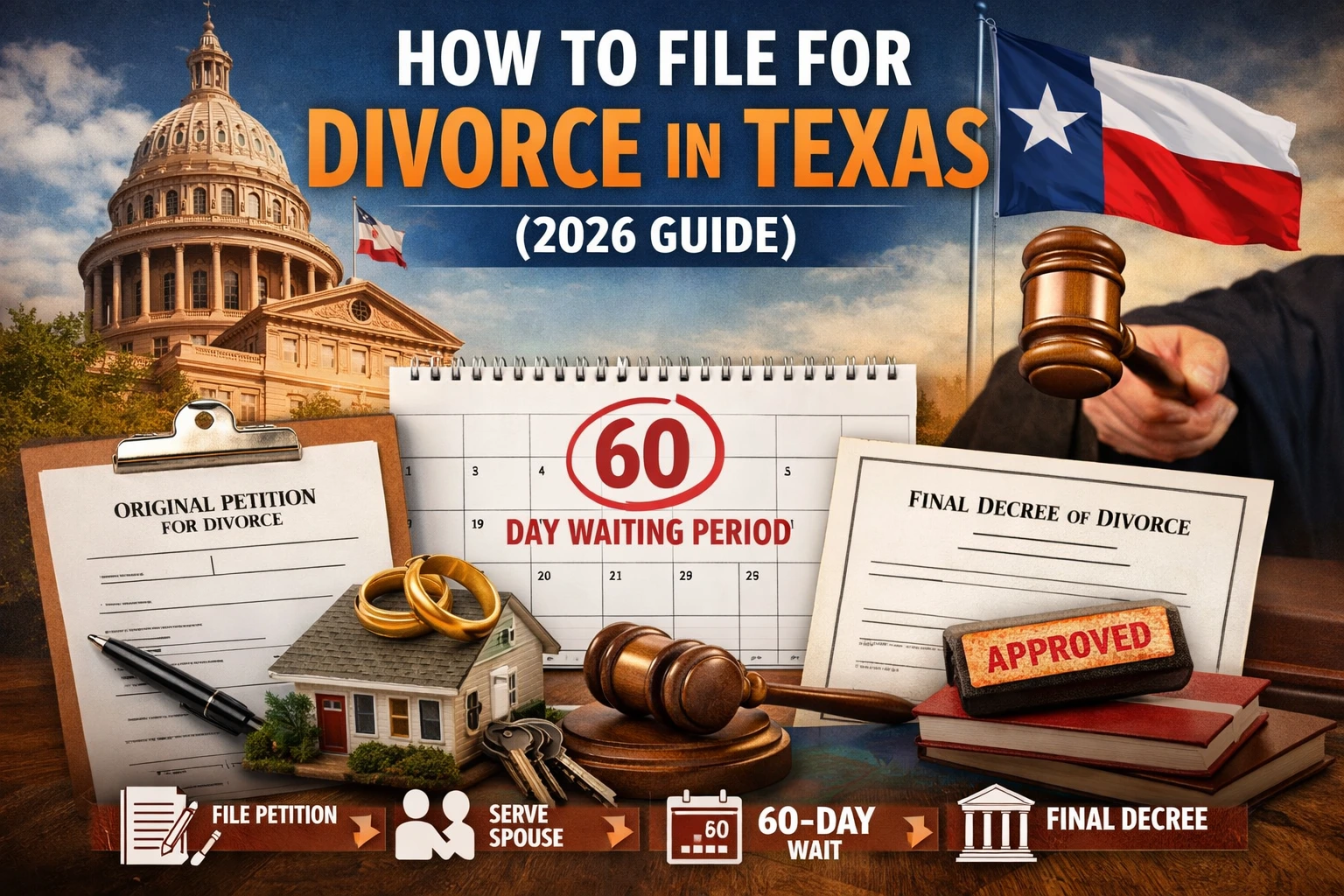
Our guide to Texas no-fault divorce requirements explains residency rules and filing steps, and our Texas divorce filing timeline covers filing through the 60-day wait and final decree.
How Long Does a Texas Divorce Take?
Texas law generally imposes a waiting period after filing before a court can grant a divorce. Confirm the current waiting period and any exceptions with the official Texas sources, since disagreements over property or children often take longer.
Residency is the foundation of every Texas divorce, and getting it wrong can cause delay. If you’re weighing your options, our guide to which uncontested divorce package is right for you can help you compare service levels, and our overview of starting the divorce process covers the requirements you’ll need to meet before filing.
Frequently Asked Questions
What are the residency requirements for filing for divorce in Texas?
Texas Family Code sets residency requirements that apply to either you or your spouse, including a state residency period and a county residency period. Check the current periods in the Texas Family Code before filing. If you moved recently, confirm that you meet the residency requirements before preparing any documents.
Can you file for divorce in Texas if you live in another state?
Filing for divorce in Texas while living out of state is possible only if the other spouse meets the Texas residency and county requirements, or if you can show that Texas retains jurisdiction over the marriage. Living out of state yourself may affect whether you satisfy the Texas residency requirements on your own. An attorney can explain jurisdiction questions; a document preparation service can help once the filing location is confirmed.
Does my spouse have to meet Texas residency requirements too?
No. Texas law requires that only one spouse meet the applicable state and county residency requirements. The other spouse can live elsewhere, including out of state. That said, the filing spouse must be able to show proof of Texas residency, such as a Texas driver license, lease, utility bill, or voter registration. Keep copies of these documents with your divorce paperwork in case the court clerk requests them.