When people say they want the best ways to simplify divorce, they usually mean something very practical: less conflict, fewer delays, lower cost, and a clear path from separation to final paperwork. In Texas, that is often possible – especially when both spouses are willing to stay focused on agreement instead of escalation.
Divorce is still a legal process, and legal processes can get complicated fast when decisions are vague, emotions take over, or paperwork is incomplete. The good news is that many divorces become harder than they need to be for preventable reasons. A simpler divorce usually starts with making the right choices early.
The best ways to simplify divorce start with the type of case
Not every divorce can be made easy, but many can be made much more manageable. The biggest factor is whether the case is contested or uncontested.
If you and your spouse agree on the major terms – property division, debts, children, support, and the basic terms of ending the marriage – an uncontested divorce is usually the most direct route. It is generally faster, more affordable, and less stressful than a court fight. If one person wants to argue every point or there are serious disputes about safety, hidden assets, or parenting, the process may not stay simple. That is the trade-off. Simplicity depends on cooperation and complete information.
For many Texas couples, the smartest first question is not, “How do we win?” It is, “Can we get to agreement and avoid unnecessary conflict?”
1. Confirm that an uncontested divorce is realistic
A lot of frustration comes from trying to force a case into the wrong process. If both spouses are generally in agreement, uncontested divorce can save time and money. If not, pretending everything is settled when it is not will usually create delays later.
Be honest about where you stand. Do you agree on who keeps the house, how bank accounts will be divided, how debts will be handled, and what parenting arrangements will look like? If children are involved, can you agree on conservatorship, possession, support, and medical support? If the answer is yes, or close to yes, the case may be a good fit for a streamlined approach.
That clarity matters because Texas courts still expect proper filings, complete forms, and legally compliant final orders even when the divorce is agreed.
2. Get organized before filing anything
One of the best ways to simplify divorce is to gather your information before the first document is prepared. This sounds basic, but it prevents some of the most common mistakes.
Start with a written list of assets, debts, income sources, and monthly expenses. Include real estate, vehicles, retirement accounts, credit cards, personal loans, tax issues, and anything else that may need to be addressed in the final decree. If children are involved, collect school information, health insurance details, and a realistic picture of the parenting schedule.
When people skip this step, they often end up revising forms, correcting agreements, or arguing over details that should have been identified early. A few hours of preparation can save weeks of backtracking.
3. Keep communication practical and focused
You do not need perfect communication to complete a divorce, but you do need disciplined communication. That means keeping conversations centered on decisions instead of old arguments.
Try to discuss one topic at a time. Property first, then debts, then children, then logistics. Written communication can help because it reduces misunderstandings and creates a record of what was agreed. Short, direct messages are often better than emotional phone calls.
This is where many couples either simplify the process or make it harder on themselves. If every discussion turns into blame, even a divorce that should be uncontested can become expensive and slow. If necessary, take breaks and return to the topic when both people are calm enough to make decisions.
4. Use accurate Texas-specific paperwork and instructions
Divorce forms are not just administrative paperwork. They shape the legal outcome of the case. Using the wrong forms, missing required language, or filing incomplete documents can lead to rejection, delay, or a final order that does not reflect the agreement.
Texas has specific rules, filing procedures, and waiting periods. Counties may also have local practices that affect how documents are submitted or set for finalization. That is why state-specific support matters. A general online template may look convenient, but if it does not match Texas requirements, it can create more work instead of less.
This is especially true in agreed divorces involving children, real property, or detailed debt division. The goal is not just to finish paperwork. It is to finish correctly.
5. Settle parenting terms with real-life schedules in mind
When children are involved, simplicity comes from clarity. Vague parenting plans often create conflict later, even if the divorce itself is uncontested.
Parents should think through daily realities, not just legal labels. Who handles school pickup? What happens during holidays? How will you manage transportation, extracurricular activities, and medical appointments? What schedule is realistic based on work hours and distance between homes?
In Texas, child-related terms need to be specific and legally sound. A workable agreement protects both parents and gives children more stability during a difficult transition. The simpler plan is usually the one both parents can actually follow.
6. Do not fight over everything just because it feels unfair
This may be the hardest step emotionally, but it is often one of the best ways to simplify divorce. Not every disagreement is worth dragging through a legal process.
There is a difference between protecting what matters and fighting over every item in the house. If a dispute will cost more in time, stress, and money than the issue is worth, it may be smarter to resolve it and move on. That does not mean giving up important rights. It means choosing your energy carefully.
A simpler divorce usually requires both people to accept that compromise is part of the process. You are not building a perfect outcome. You are building a workable one.
7. Understand the timeline so you do not create avoidable delays
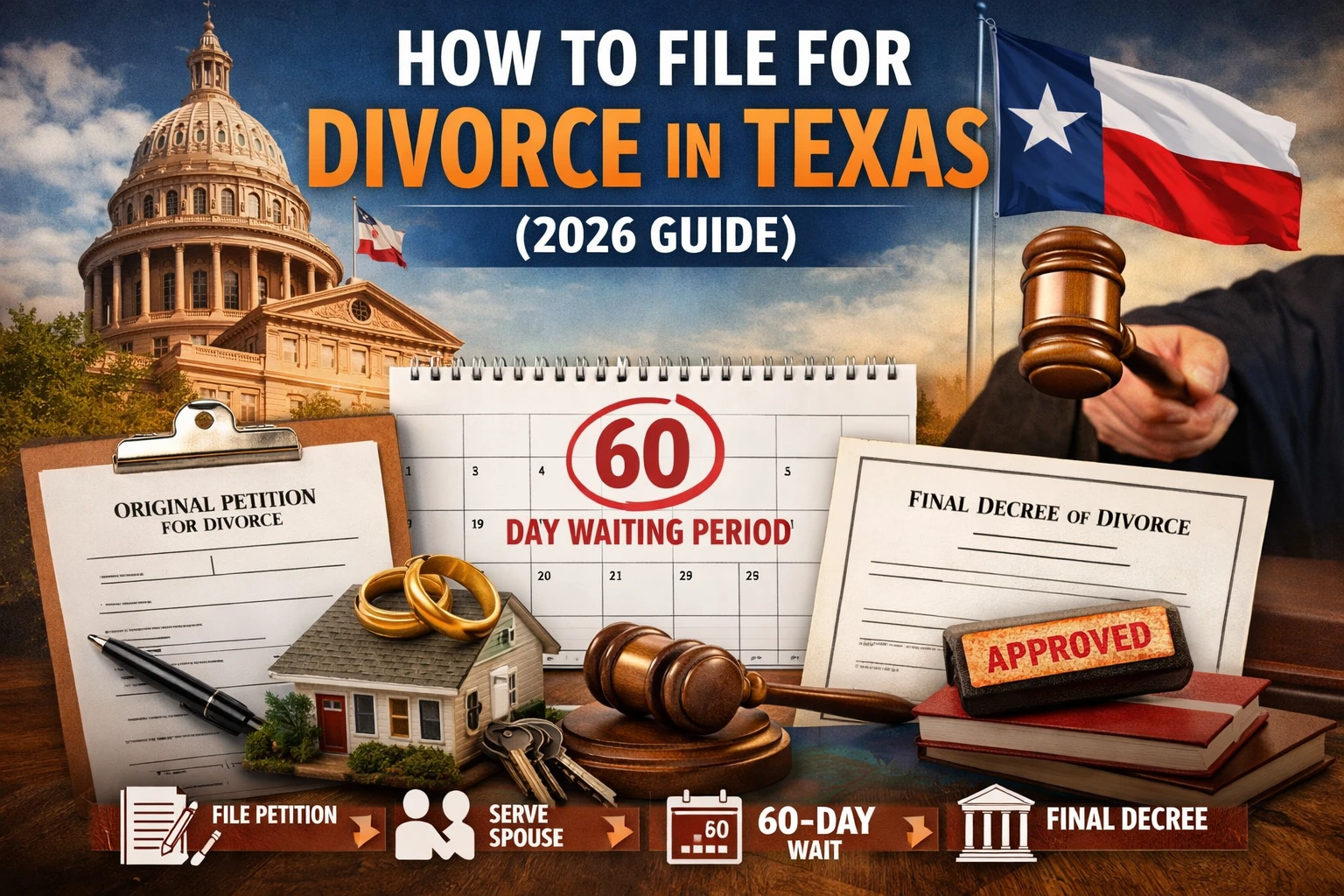
Many Texans are surprised to learn that divorce cannot usually be finalized immediately, even when both spouses agree. Texas has a mandatory waiting period in most cases, and timing also depends on proper filing, service or waiver requirements, and court procedures.
Knowing that upfront helps you plan better. If you expect everything to be done in a week, normal legal timing will feel like a problem. If you understand the steps, the process feels more manageable.
This is another area where procedural guidance can make a real difference. In counties like Dallas, Tarrant, Collin, Denton, Harris, Bexar, and Ellis, the basic legal rules are statewide, but the filing experience can still vary in practical ways. Small procedural mistakes can slow down an otherwise straightforward case.
8. Get help with the process instead of guessing
People often assume the only options are hiring a full litigation attorney or handling everything alone. For agreed cases, there is often a middle path that makes more sense.
If your divorce is uncontested, document preparation and procedural guidance can reduce confusion, lower costs, and help you avoid filing errors. That kind of support is especially useful for people who want a simpler process but do not feel confident managing every form and court step on their own.
It is also a practical option for working families who need affordability without sacrificing accuracy. Ready Divorce Service focuses on this kind of streamlined support for Texans who want to complete an agreed divorce with less stress and more confidence.
When divorce may not be simple
It helps to be realistic. Some divorces involve domestic violence, financial deception, serious custody disputes, or a spouse who will not cooperate. In those situations, simplifying the process may not be the top priority. Safety, financial protection, and enforceable court orders come first.
Even then, parts of the process can still be made clearer with the right guidance. But the path may not be quick, and it may require more formal legal intervention. Knowing that early can save you from false expectations.
A simpler divorce is usually a more deliberate one
The people who move through divorce with less stress are not always the ones with the fewest issues. Often, they are the ones who make deliberate choices. They stay organized, focus on agreement, use the right paperwork, and get support before small problems turn into bigger ones.
If your goal is closure without unnecessary conflict, keep your next step simple too. Start with accurate information, a realistic plan, and a process built for agreement. That is usually where real peace of mind begins.
👉 Contact us today for a free consultation and learn how clarity, communication, and cooperation can make all the difference in your divorce journey.
✅ Easy step-by-step guidance
✅ Flat-fee pricing — no surprises
📲 Call us now at (800) 432-0018