If you and your spouse already agree that the marriage should end, the biggest challenge is often not the decision itself. It is figuring out the paperwork, the filing steps, and the court process without getting stuck. This Harris County uncontested divorce guide is built for that exact situation – when you want a clear path, lower cost, and fewer delays.
An uncontested divorce usually works best when both spouses agree on the major terms before filing or early in the process. That includes property and debt division, whether either spouse will pay support, and, if children are involved, conservatorship, possession, child support, and medical support. If those issues are still being argued, the case may not stay uncontested for long.
Who this Harris County uncontested divorce guide is for
This guide is for married couples or individuals filing in Harris County who want a straightforward Texas divorce and are trying to avoid the cost and stress of a courtroom fight. It is especially useful if you are handling an agreed divorce with limited conflict and want practical guidance rather than legal theory.
That said, uncontested does not always mean simple. A divorce can still involve children, a house, retirement accounts, or questions about separate versus community property. The difference is that both spouses are willing to cooperate and sign the necessary documents.
First, make sure you qualify to file in Texas
Before worrying about forms, confirm that the court has jurisdiction. In most Texas divorce cases, one spouse must have lived in Texas for at least six months and in the county of filing for at least 90 days. If you plan to file in Harris County, those residency rules matter from the start.
You also need grounds for divorce. In an uncontested case, most people use insupportability, which is the no-fault option in Texas. It means the marriage cannot continue because of conflict or discord, without forcing either spouse to prove wrongdoing.
If there has been family violence, intimidation, hiding of assets, or serious disagreement about children or money, an uncontested process may not be the right fit. In those situations, getting legal advice is usually the safer move.
What an uncontested divorce in Harris County usually includes
In practical terms, an uncontested divorce means one spouse files the case, the other spouse is informed properly, and both sides sign off on the final terms. The court still reviews the paperwork. You do not skip the legal requirements just because you agree.
Most agreed divorces include an Original Petition for Divorce, a waiver or answer from the other spouse, and a Final Decree of Divorce. Depending on the facts, you may also need child support documents, a parenting course certificate if required by the court in your situation, a wage withholding order, or other county-specific paperwork.
That is where many people lose time. The case is uncontested, but the documents are incomplete, inconsistent, or not formatted the way the court expects.
Filing steps in a Harris County uncontested divorce
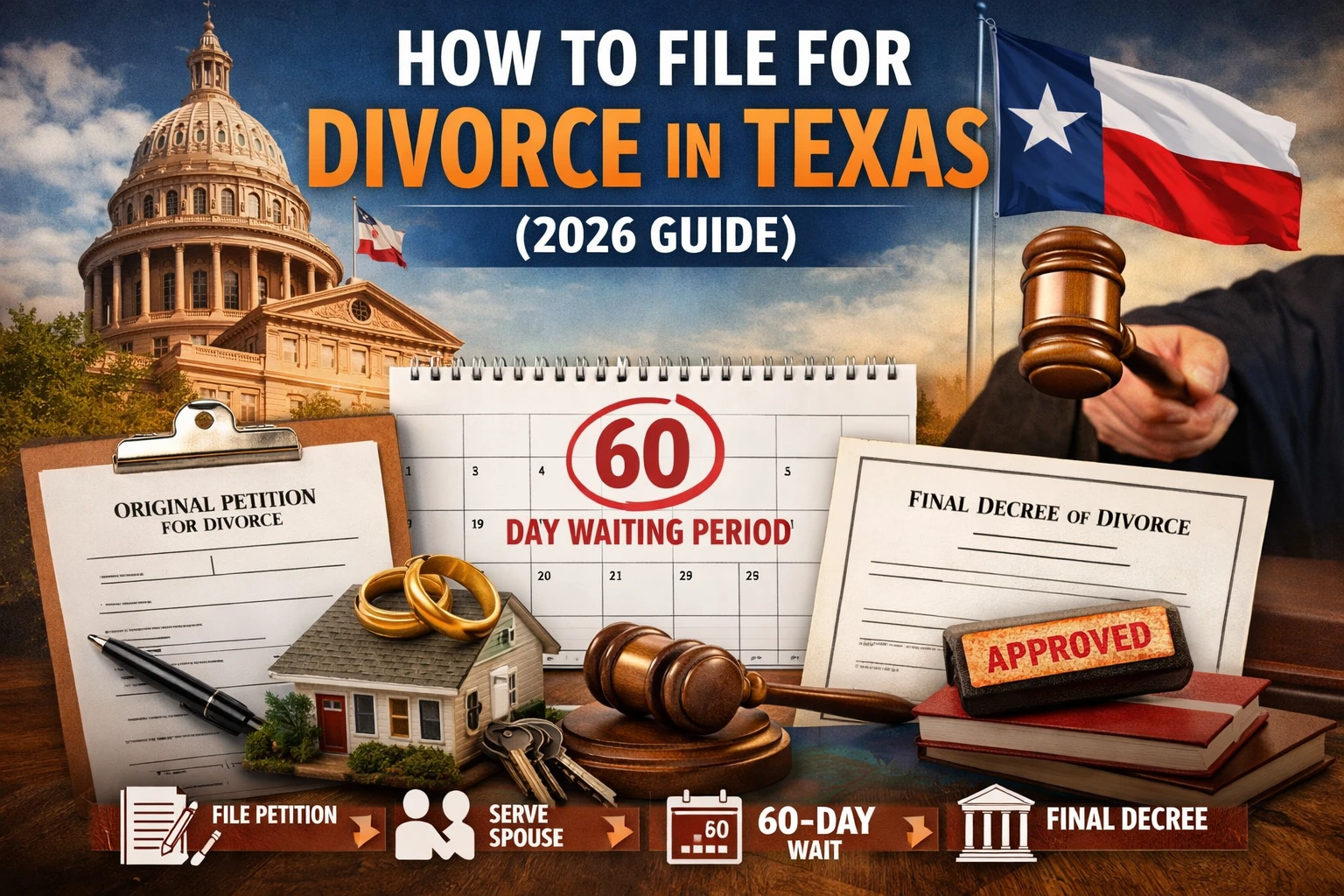
The process usually starts when one spouse, called the petitioner, files the Original Petition for Divorce with the district clerk. After filing, the other spouse, called the respondent, must be formally served unless they are willing and eligible to sign a waiver.
A waiver can save time and cost, but it has to be handled correctly. It cannot be signed too early, and it should match the filed case information. If the waiver is defective, you may have to redo part of the process.
Once the case is on file, the parties work toward final documents that reflect their agreement. If children are involved, the court will expect detailed terms covering conservatorship, possession schedules, decision-making rights, child support, and health insurance. If there are no children, the focus is usually on dividing assets and debts clearly enough that the decree can actually be enforced later.
Texas also has a mandatory waiting period in most divorce cases. You generally cannot finalize a divorce until at least 60 days have passed from the date the petition was filed. That waiting period catches some people off guard, especially when both spouses are ready to finish quickly.
When the waiting period has run and the final paperwork is complete, the case moves toward prove-up. In many uncontested cases, this is a brief hearing where the judge reviews the paperwork and asks basic questions. Some courts may allow alternative procedures depending on current local practice, but you should never assume the final step is automatic.
Child-related issues can still be uncontested
A lot of people think a divorce is only uncontested if there are no children. That is not true. Parents can complete an uncontested divorce if they fully agree on the parenting and support terms and those terms meet Texas requirements.
The court will still look closely at anything involving children. If the proposed orders are vague, incomplete, or clearly not in the child’s best interest, the judge may require corrections. Parents often need extra care when drafting final paperwork because a small wording issue can create confusion about possession exchanges, holiday schedules, or support obligations later.
This is one reason procedural guidance matters. Even when both parents are cooperative, child-related forms are less forgiving than people expect.
Costs, timing, and where delays usually happen
For most people, the appeal of an uncontested divorce is simple: lower cost, less conflict, and a faster finish. Compared with a contested case, that is usually true. But the timeline depends on how prepared you are.
The shortest possible case is still limited by the 60-day waiting period, and real-world timing may be longer if documents need revision or signatures are delayed. If one spouse changes position halfway through, the case can also become more expensive and more complicated.
Filing fees are separate from document preparation or support services. The exact amount can vary, and there may be additional fees depending on service, certified copies, or child-related filings. The cheapest divorce is rarely the one with the lowest sticker price at the beginning. It is the one done correctly the first time.
Common mistakes this guide can help you avoid
The most common problem is assuming agreement is enough. It is not. Courts need correct paperwork, complete disclosures where required, accurate party information, and final orders that are internally consistent.
Another frequent mistake is using forms that do not fit the facts. A couple with children should not be relying on forms designed for spouses without children. The same goes for cases involving real property, retirement accounts, or reimbursement claims.
People also run into trouble when they leave terms too vague. Saying each person keeps the property in their possession may sound simple, but it can create avoidable disputes if nobody lists vehicles, bank accounts, debts, or household items clearly.
Then there is the timing issue. Signing documents too early, missing required notices, or trying to finalize before the waiting period ends can force you to redo steps you thought were already complete.
Should you handle it yourself or get support?
It depends on the case. If your divorce is truly simple, with no children, limited property, no retirement issues, and full cooperation, some people do manage the process on their own. But even simple cases can stall when a clerk rejects a filing or a judge wants corrections.
Support can make sense when you want help preparing documents, understanding the sequence of steps, and reducing the chance of procedural mistakes without paying for full litigation representation. For many Harris County families, that middle ground is what makes an uncontested divorce realistic.
Ready Divorce Service focuses on that practical lane – helping Texans move through agreed divorce paperwork and filing steps with more clarity and less confusion.
Final practical advice before you file
Before starting, sit down with your spouse and confirm that you really agree on everything that matters. If there are open questions about the house, the kids, or support, resolve those before expecting the paperwork to carry the case.
Gather your information early. Full names, addresses, dates, details about property and debt, and any child-related information should be organized from the start. The more complete your information is, the smoother the process tends to be.
And do not measure progress only by speed. In Harris County, the best uncontested divorce process is the one that gets you to a signed final decree without surprises, rejected filings, or avoidable return trips to court. A calm, accurate process may not feel dramatic, but it is often the fastest way to move forward and start the next chapter with fewer loose ends.
📞 Get Started Today – Your Peaceful Divorce Is Just a Click Away
When you’re ready to move on, we’re ready to help.
📲 Call us now at (800) 432-0018
🖥️ Start your divorce online today