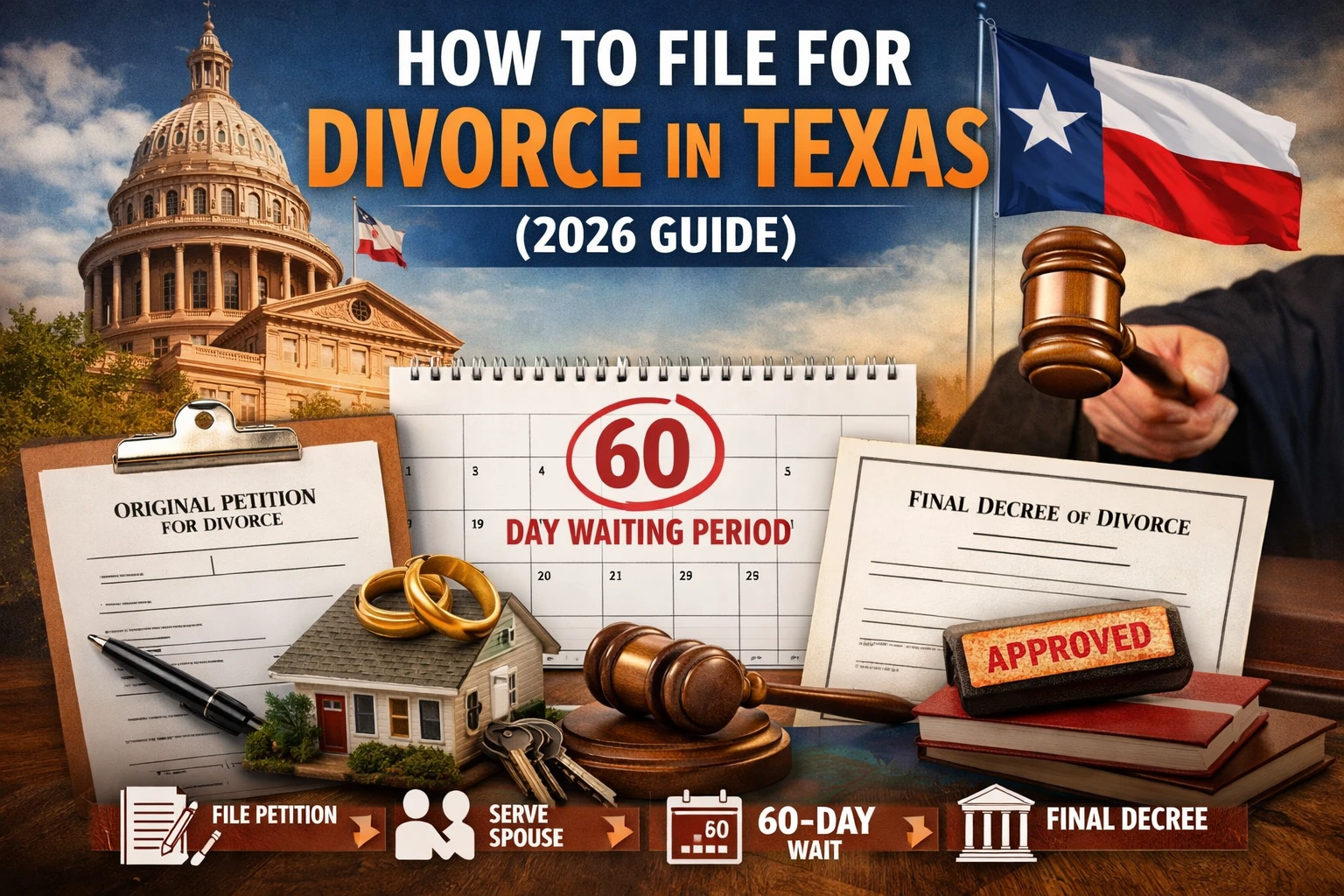
When a divorce involves kids, the paperwork is not just about ending a marriage. It is also about setting out who makes decisions, where the children live, how support is handled, and what life looks like after the case is finalized. That is why Texas divorce forms with children require more care than a divorce without children. A missed detail can slow the case down or create avoidable problems later.
If your divorce is uncontested, meaning both spouses agree on the major terms, the process can still be manageable. The key is understanding which documents are typically involved, what those forms are meant to do, and where parents often get stuck.
Which Texas divorce forms with children are usually involved?
The exact paperwork can vary by county, by family circumstances, and by whether the court requires local forms. Still, most agreed Texas divorces involving children include a core set of documents.
The case usually starts with an Original Petition for Divorce. This is the document that opens the case and tells the court what relief is being requested. If children under 18 are involved, or if support and conservatorship issues need to be addressed, the petition must reflect that clearly.
The most important final document is the Final Decree of Divorce. In a divorce with children, this decree does much more than divide property. It also includes terms covering conservatorship, possession and access, child support, medical support, and other child-related provisions. This is often the form people struggle with most because it has to be detailed enough for the judge to sign and clear enough for both parents to follow afterward.
Depending on the case, parents may also need forms related to withholding for child support, a civil case information sheet if required locally, a waiver of service if one spouse is not formally served, and documents used for the prove-up hearing. Some courts may also require parenting-related notices or standing-order acknowledgments.
That is where many people run into trouble. They assume a generic divorce packet will cover everything, but divorces with children are rarely that simple. Even when the case is fully agreed, the paperwork has to match Texas requirements and the facts of your family.
Why the child-related sections matter so much
In a Texas divorce involving children, the court is not only reviewing whether the spouses agree. The court also wants to see whether the orders concerning the children are complete and legally workable.
For example, the decree must address conservatorship. In Texas, this refers to the rights and duties of parents. Many parents expect to see words like custody, but Texas forms use terms such as joint managing conservatorship and possessory conservatorship. If those provisions are inconsistent or incomplete, the judge may reject the paperwork or require corrections.
The decree also needs a possession and access schedule. In practical terms, that means a parenting-time arrangement. Some families follow a standard possession order, while others use a customized schedule. A custom plan can work well when both parents are cooperative, but it needs to be written carefully. Vague language like reasonable visitation often creates conflict later.
Child support is another area where precision matters. The forms usually need to state who pays support, how much is paid, when payments begin, and how medical support is handled. If income withholding applies, that has to be documented correctly too. A small error here can create delays or enforcement issues.
Uncontested does not mean automatic
A lot of people hear uncontested and assume the forms are quick fill-in-the-blank documents. Sometimes the process is straightforward, but children add legal and practical layers that should not be rushed.
Even in a low-conflict divorce, parents still have to make real decisions. Who will determine the child’s primary residence? Will there be geographic restrictions? How will holidays be divided? Who carries health insurance? What happens if one parent’s work schedule does not fit a standard arrangement?
Those are not side issues. They are the heart of the child-related paperwork. If the forms do not accurately reflect your agreement, the final order may not protect either parent or the child well.
This is especially true when parents are trying to save money by avoiding drawn-out litigation. Keeping costs down is a smart goal, but errors in the decree can lead to rejected filings, multiple revisions, or problems after the divorce is final. Good paperwork helps prevent expensive cleanup later.
Common mistakes people make with Texas divorce forms involving children
One common mistake is using forms meant for divorces without children. The case may start the same way, but the final decree is not interchangeable. A divorce involving children needs provisions that a simple property-only divorce does not.
Another problem is mixing informal parenting agreements with legal language. Parents may agree that they will be flexible, and that is often a good sign. But the court order still needs a specific structure. Flexibility can exist alongside a clear enforceable schedule.
Some people also leave out child support details because they think they will work it out privately. That can be risky. Courts generally expect support and medical support to be addressed directly. If the agreement departs from the usual approach, the paperwork still needs to be drafted properly.
There is also the issue of local practice. Texas divorce law is statewide, but counties can have local procedures, filing preferences, or standing orders that affect how forms are submitted and reviewed. What works in one county may need adjustments in another. That matters whether you are filing in Tarrant County, Dallas County, Collin County, Denton County, Harris County, Bexar County, or elsewhere.
What to gather before preparing the forms
Before you start filling out anything, it helps to have a complete picture of your agreement. That usually includes the full names and birthdates of the children, both parents’ contact information, the proposed parenting schedule, and the financial details related to support and insurance.
You should also know whether there are existing court orders involving the children. If there is already a child support order, custody order, or protective order, that can affect how the divorce documents need to be prepared. The same is true if one spouse is pregnant, if a child has special medical needs, or if one parent plans to move.
The more complete your information is at the beginning, the smoother the paperwork process tends to be. Guessing, leaving blanks, or planning to fix things later often creates more stress.
When a document preparation service can help
For many Texas families, the goal is not to hire a litigation attorney for a full court battle. The goal is to get the paperwork done correctly, file the case properly, and move forward with less confusion and cost. That is where structured divorce support can make a real difference.
A service that focuses on agreed Texas divorces can help you understand which forms fit your situation, how child-related terms should appear in the decree, and what procedural steps come next. That support can be especially valuable if you and your spouse agree in principle but need help turning that agreement into court-ready paperwork.
It depends on the case, of course. If there is serious conflict, hidden assets, family violence, or a major dispute over the children, more individualized legal representation may be necessary. But if the divorce is truly uncontested, practical support with forms and filing can save time, lower stress, and reduce the chance of preventable mistakes.
Ready Divorce Service focuses on helping Texans complete uncontested divorce paperwork with a clear, affordable process. For parents trying to keep things civil and get the documents right, that kind of guidance can relieve a lot of pressure.
Filing and finalizing the case
Once the petition is filed, Texas law generally requires a waiting period before the divorce can be finalized. During that time, the other spouse may file an answer or sign a waiver, and the final decree can be prepared for signature. If children are involved, the court will look closely at whether the decree fully addresses the required issues.
At the prove-up, the judge may ask basic questions to confirm that the paperwork is complete and that the requested orders are appropriate. If the forms are organized and accurate, this step is usually much smoother. If the documents are inconsistent, missing key child-related language, or not aligned with local requirements, finalization can be delayed.
That is why careful preparation matters. The goal is not just to file forms. The goal is to finish the case with orders that are clear, enforceable, and workable for your family.
Divorce with children is never just paperwork, but good paperwork can make the next chapter a lot easier. When the forms reflect real agreements and meet Texas requirements, parents have a better chance of leaving the process with less stress and more stability.
Frequently Asked Questions About Texas Divorce Forms with Children
🔹 1. What forms are required for a Texas divorce with children?
To file for divorce in Texas with children, you typically need several key forms, including the Original Petition for Divorce with Children, Waiver of Service or Answer, and a Final Decree of Divorce with Children. Additional documents like a Standard Possession Order and Child Support Withholding Order may also be required depending on your case.
🔹 2. Can I file for divorce in Texas with children without a lawyer?
Yes, you can file for an agreed (uncontested) divorce with children without a lawyer if both parents agree on all terms, including custody, visitation, and child support. However, the paperwork must be completed correctly, or the court may reject your case.
🔹 3. How long does a divorce with children take in Texas?
Texas law requires a minimum 60-day waiting period after filing before a divorce can be finalized. If all forms are completed properly and both parties agree, many cases are finalized shortly after that timeframe.
🔹 4. Do both parents have to agree on custody and child support?
Yes. To use simple divorce forms with children in Texas, both parents must fully agree on all issues, including custody (conservatorship), visitation, and child support. If there is disagreement, the case becomes contested and requires additional court involvement.
🔹 5. What happens if we already have a custody or child support order?
If there is already a final court order for custody and child support, you may use a different set of divorce forms that incorporate that existing order—as long as you are not requesting changes. Otherwise, modifications must be addressed during the divorce.
Get Started Today – Your Divorce Is Just a Click Away
If you’re in Texas and want your divorce handled quickly, correctly, and without unnecessary stress, we can help you from start to finish.
👉 Start here: Complete the Divorce Questionnaire
📞 Call now: (469) 913-4000