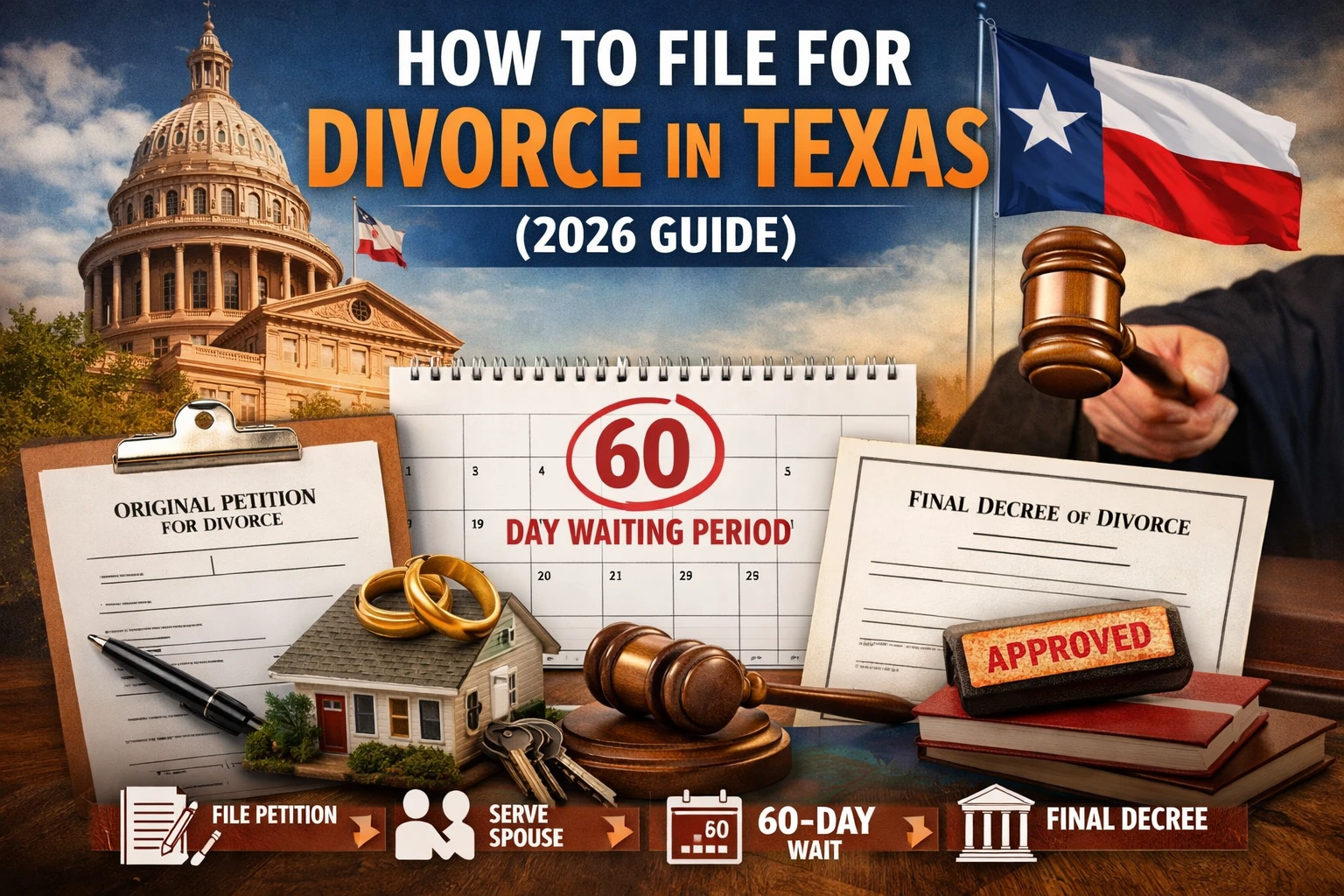
If you are asking where to file divorce papers in Texas, the short answer is this: you usually file in the district clerk’s office in the Texas county that has proper venue for your case. That sounds simple, but the right county matters. Filing in the wrong place can cause delays, extra costs, and unnecessary stress at a time when most people just want a clear path forward.
For many Texans, the real question is not just where to go, but how to make sure the case starts correctly. If your divorce is uncontested and both spouses agree on the major terms, getting the filing location right is one of the first steps toward a smoother process.
Where to file divorce papers in Texas
In Texas, divorce cases are typically filed with the district clerk in the county where either spouse meets the residency and venue rules. Even when online filing is available, the case is still being filed into a specific county court system, not into a statewide divorce office.
That means there is no single Texas divorce filing center. Your divorce belongs in a particular county, and the district clerk for that county is usually the office that receives the Original Petition for Divorce and related documents.
In some counties, filing can be done electronically. In others, people may still choose in-person filing, depending on local procedures and comfort level. Either way, the county is the key issue first.
How Texas decides the right county
Before you file, you need to make sure Texas has jurisdiction and that the county is proper under venue rules. In most divorce cases, one spouse must have lived in Texas for at least six months before filing. In addition, one spouse must have lived in the county where the case will be filed for at least 90 days.
If those rules are met, that county is generally a proper place to file. For example, if you live in Tarrant County and have lived there more than 90 days, you can usually file there as long as the six-month Texas residency requirement is also satisfied. The same general rule applies in counties such as Dallas, Denton, Collin, Ellis, Bexar, and Harris.
There are situations where both spouses may qualify in different counties. If that happens, more than one county may be legally acceptable. In an uncontested divorce, couples often choose the county that is most practical based on residence, convenience, and local filing procedures.
The district clerk is usually where you file
When people search for where to file divorce papers in Texas, they are often trying to figure out whether they should go to the courthouse, county clerk, or family court directly. In most cases, the filing office is the district clerk, not the county clerk.
Texas divorces are generally handled at the district court level, and the district clerk manages the intake of court filings for those cases. Once filed, your case is assigned a cause number and placed into the appropriate court.
This distinction matters because going to the wrong office can waste time. Many people understandably assume all county records go through one clerk, but divorce filings are usually handled through the district clerk’s office for that county.
Filing online versus filing in person
Texas counties commonly allow electronic filing, and for many people that is the most convenient route. It can save a trip to the courthouse and create a digital record of submission. Still, online filing does not remove the need to choose the correct county or use the correct forms.
In-person filing may feel more comfortable if you want direct confirmation that your paperwork was received. Some people also prefer it when they have questions about fees, copies, or local procedures. The trade-off is that courthouse hours, parking, and document handling can make the process less convenient.
The best option depends on your county, your comfort with paperwork, and whether you want hands-on support with preparation before filing.
What you usually file first
The document that opens the case is usually the Original Petition for Divorce. Depending on your circumstances, you may also need additional documents at the beginning, such as a civil case information sheet if required locally, a statement of inability to afford court costs if you qualify, or forms related to children.
If minor children are involved, the paperwork becomes more detailed because the court needs information about conservatorship, possession, support, and medical support. That does not necessarily make the case contested, but it does make accuracy more important.
In uncontested cases, couples sometimes assume that agreement alone is enough. It is not. The court still expects properly prepared documents and compliance with filing rules, even when everyone is cooperative.
County differences can affect the process
Texas divorce law is statewide, but local court procedures can vary by county. One district clerk may have a slightly different checklist, preferred formatting, or process for setting a final prove-up hearing. Another may have different expectations for uncontested cases with children.
This is one reason people get frustrated after finding general information online. The broad rule may be correct, but the local filing steps still matter. A person filing in Harris County may encounter different practical procedures than someone filing in Denton County, even though the legal foundation is the same.
That is also why county-specific guidance can save time. Knowing the right county is only the first layer. Knowing how that county handles uncontested divorce filings is what helps keep your case moving.
What if your spouse lives in another county
You do not always have to file where your spouse lives. If you meet the residency rules in your county, you can often file there even if your spouse now lives somewhere else in Texas. If your spouse lives out of state, the analysis can become more fact-specific, but Texas courts may still have authority if the residency requirements are satisfied.
Where people get tripped up is assuming the county should automatically be based on where the marriage happened or where they last lived together. Sometimes that county is proper, but not always. The safer approach is to focus first on current residency and venue rules.
If there is any uncertainty, it is worth getting procedural guidance before filing. A mistake at the front end can slow down an otherwise simple uncontested case.
What filing does and does not accomplish
Filing your petition starts the divorce case. It does not finalize the divorce. Texas has a mandatory waiting period in most cases, and the court must still sign a Final Decree of Divorce before the marriage is legally ended.
That distinction matters because some people rush to file expecting immediate closure. Filing is the beginning of the legal process, not the end. In an agreed divorce, the rest of the process may still be fairly streamlined, but you will need to complete all required steps, including service or waiver, final documents, and court approval.
Common mistakes when choosing where to file
One common mistake is filing in the wrong county because it seems more convenient. Another is using the county clerk instead of the district clerk. A third is assuming that if forms are accepted at filing, the county choice must have been correct. Acceptance of documents does not always mean every legal requirement has been satisfied.
People also run into problems when they use generic forms that do not match their situation. If children, property, retirement accounts, or a spouse living elsewhere are involved, details matter. An uncontested divorce can still be affordable and efficient, but only when the paperwork fits the facts.
Getting help with an uncontested Texas divorce
If your divorce is agreed and you want to avoid paying for full litigation, process-focused support can make a real difference. The goal is not to make the case more complicated. It is to make sure the documents, filing county, and next steps are handled correctly from the start.
Ready Divorce Service helps Texans with uncontested divorce document preparation and procedural guidance so they can move forward with more confidence and less confusion. That kind of support is especially helpful when you know the divorce should be simple, but the filing rules still feel overwhelming.
The right filing location is the county where your case legally belongs, and in most situations the paperwork goes through that county’s district clerk. Once that piece is clear, the process usually feels much more manageable. A calm, accurate start can make everything that follows easier.
Common Questions About Where to File for Divorce in Texas
🔹 1. Where do I file divorce papers in Texas?
You must file your divorce in a district court in the county where either you or your spouse lives, as long as residency requirements are met.
🔹 2. Can I file for divorce in a different county than where I live?
Yes — you can file in your spouse’s county of residence if they meet the residency requirements (6 months in Texas and 90 days in that county).
🔹 3. What are the residency requirements to file for divorce in Texas?
To file in Texas, one spouse must have lived in Texas for at least 6 months and in the filing county for at least 90 days before filing.
🔹 4. Where exactly do I submit the divorce paperwork?
Divorce papers are filed with the District Clerk’s Office in the appropriate county, either in person or through the Texas e-filing system.
🔹 5. What happens if I file in the wrong county?
If you file in the wrong county, your case can be dismissed or delayed, meaning you may have to refile and pay filing fees again.
Get Started Today – Your Divorce Is Just a Click Away
If you’re in Texas and want your divorce handled quickly, correctly, and without unnecessary stress, we can help you from start to finish.
👉 Start here: Complete the Divorce Questionnaire
📞 Call now: (469) 913-4000