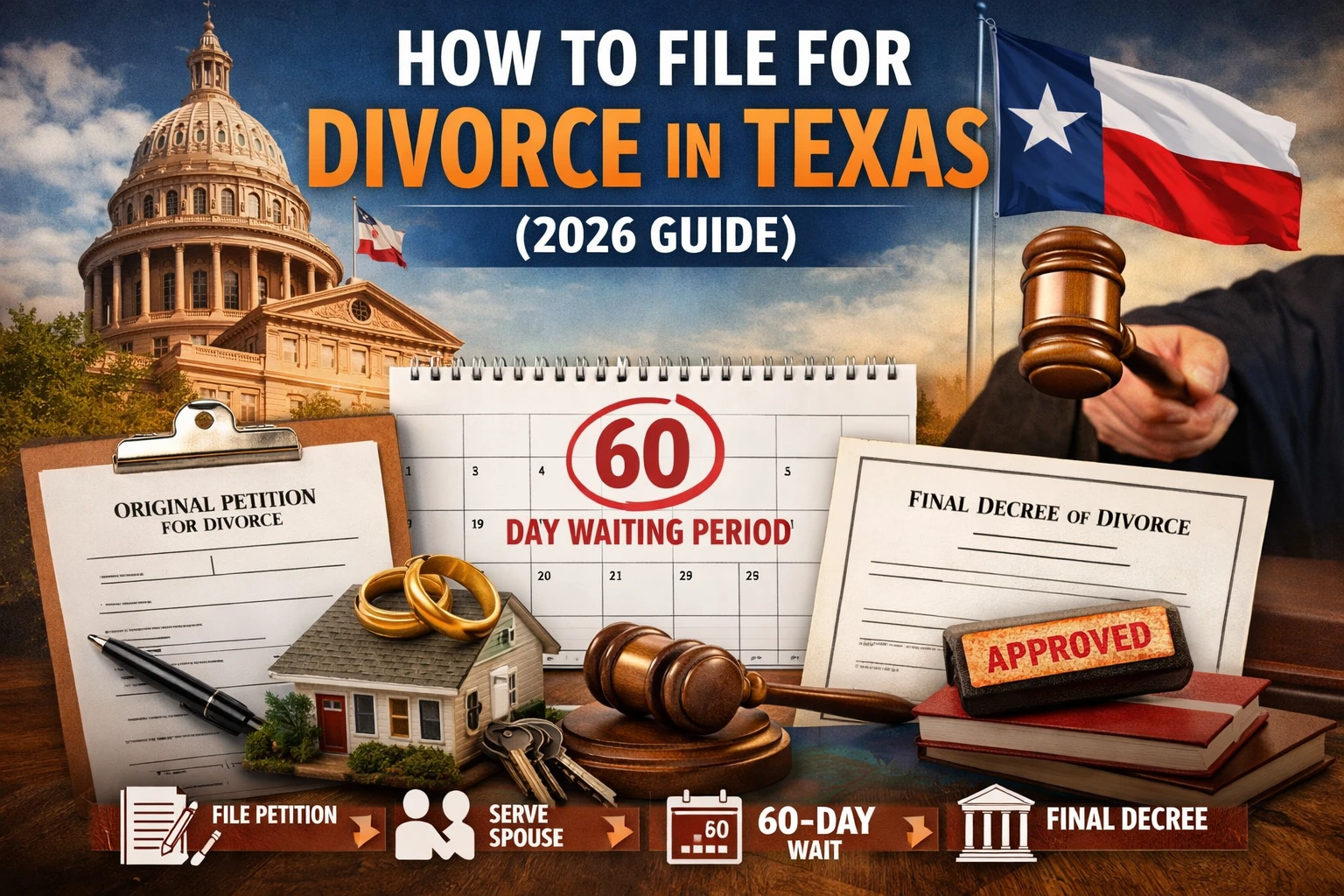
If you and your spouse are already in agreement, the biggest question may not be whether to divorce. It may be whether you can get through the paperwork without turning a workable situation into an expensive one. In many Texas cases, the answer to can both spouses use one divorce service is yes – but only when the divorce is truly uncontested and both people understand what that service can and cannot do.
That distinction matters. A divorce service that prepares documents and guides the filing process is not the same as one lawyer representing both spouses. In Texas, one attorney cannot fully represent both sides in a divorce because of the conflict of interest. But a neutral divorce document preparation service may be able to help both spouses move through an agreed divorce when there is no real dispute to fight over.
Can both spouses use one divorce service in Texas?
Yes, both spouses can often use one divorce service in Texas if they agree on the major terms of the divorce. That usually means they have already worked out issues like property division, debt allocation, parenting arrangements, child support, and whether either spouse will pay spousal maintenance.
When a couple is on the same page, a document preparation service can often help organize the required forms, prepare the divorce paperwork based on the information provided, and explain the filing steps. This can be far more affordable than having each person hire separate litigation attorneys for a case that is not actually contested.
The key is that the service must stay neutral. It cannot take one spouse’s side, give strategic advice against the other spouse, or push terms that benefit one person over the other. Its role is process support, not advocacy.
When using one divorce service makes sense
This approach works best when the case is simple in structure and low in conflict. Some couples have already been living separately, have divided most of their belongings, and just need help putting the agreement into proper legal form. Others have children and still qualify, as long as they are in genuine agreement about conservatorship, possession schedules, support, and decision-making.
A shared divorce service can make sense if both spouses want to keep costs down, avoid unnecessary hearings, and finish the case efficiently. It can also help when neither person is comfortable handling Texas court forms alone and both want step-by-step procedural guidance.
That said, agreement needs to be real, not forced. If one spouse is giving in just to get it over with, or if important details are still unsettled, a one-service approach may not be the right fit.
When it does not make sense
Even if both spouses start out saying they agree, the process can expose gaps. One person may think a retirement account will be split later. The other may assume it stays separate. A parent may believe the standard possession schedule applies, while the other expects a custom arrangement.
If those disagreements are meaningful, a neutral service is limited. It cannot negotiate on behalf of either spouse the way separate attorneys can. It also cannot fix a power imbalance inside the marriage.
Using one divorce service is usually not a good idea when there are allegations of family violence, hidden assets, intimidation, substance abuse concerns affecting parenting, or serious disagreements about property or children. It may also be a poor fit if one spouse wants legal advice about rights and risks before signing anything.
In those situations, paying for individualized legal representation may prevent much larger problems later.
What one divorce service can actually do
People sometimes hear the phrase one divorce service and assume it covers everything an attorney would do. Usually, it does not. In an uncontested Texas divorce, a divorce service often focuses on document preparation, procedural instructions, and helping the couple avoid clerical mistakes that delay the case.
That may include preparing the Original Petition for Divorce, waiver or answer forms, a Final Decree of Divorce, and child-related forms when applicable. It may also include guidance on filing, service, waiting periods, prove-up requirements, and the sequence of next steps.
For many couples, that practical help is exactly what they need. The court process is manageable once someone explains the order of operations clearly.
What one divorce service cannot do
This is where expectations need to be realistic. A neutral service cannot give either spouse legal advice that is tailored against the interests of the other. It cannot tell one person, for example, that they should demand more equity in the house or reject a proposed custody schedule. It also cannot appear as both spouses’ advocate in a contested dispute.
If one spouse needs legal analysis about separate property claims, business valuation, retirement division, or a complex child support issue, that is a sign the case may need attorney involvement. Sometimes couples still use a document service for the agreed parts while one or both get outside legal advice before signing. That can be a practical middle ground.
Can both spouses use one divorce service if children are involved?
Yes, sometimes. Having children does not automatically mean each spouse needs separate legal representation. Many Texas parents already agree on conservatorship, possession, holiday schedules, child support, medical support, and communication expectations. If that agreement is clear and workable, one neutral divorce service may help prepare the necessary paperwork.
But child-related cases require care. Parents may think they agree until they get into the details of exchange times, school decisions, summer schedules, and health insurance. Those details matter because vague agreements can create problems long after the divorce is final.
If children are involved, both parents should make sure the terms are specific, realistic, and centered on the child’s actual routine. A rushed agreement may save time at filing and cost peace later.
Why uncontested couples still need process help
Some spouses worry that using any service at all means their case is not really simple. In reality, Texas divorce procedure has enough moving parts that even fully agreeable couples often want help. There are filing requirements, county procedures, mandatory waiting periods, and final documents that need to be completed accurately.
That is especially true in larger counties where filing expectations and prove-up practices can feel unfamiliar to someone doing this for the first time. Couples in counties such as Tarrant, Dallas, Collin, Denton, Harris, or Bexar may still have a straightforward case, but they benefit from having the paperwork prepared correctly and the next steps explained in plain English.
A service like Ready Divorce Service is built around that need – helping Texans complete agreed divorces without adding unnecessary cost or conflict.
Questions both spouses should answer before sharing one service
Before moving forward together, both spouses should be able to answer a few basic questions honestly. Do we agree on every major term? Do we both understand the property and debt division? Are we both comfortable signing the final paperwork? Does either of us want independent legal advice before proceeding?
If the answer to those questions is yes, a shared service may be a good fit. If the answer is no, slowing down is usually smarter than pushing ahead.
It also helps to ask whether the goal is simply to finish fast or to finish correctly. Those are not always the same thing. A valid uncontested divorce should feel clear, not confusing.
A practical rule of thumb
If your divorce is based on agreement, transparency, and a genuine desire to keep things civil, one neutral divorce service can often be a sensible and cost-effective option. If your divorce involves fear, pressure, missing information, or unresolved disagreement, it probably is not.
The right path depends less on whether you want to save money and more on whether the case is truly agreed from start to finish. That is the difference between a streamlined uncontested divorce and a case that only looks simple on the surface.
If you and your spouse can talk openly, confirm the terms, and stay focused on getting the paperwork done right, using one divorce service may help you move forward with less stress and more confidence.
📞 Get Started Today – Your Peaceful Divorce Is Just a Click Away
When you’re ready to move on, we’re ready to help.
📲 Call us now at (800) 432-0018
🖥️ Start your divorce online today