When people compare divorce mediation vs court filing, they are usually asking a more personal question: how do I get divorced without making this harder than it already is? In Texas, the right path depends less on what sounds official and more on whether you and your spouse can still agree on the major terms.
That distinction matters. Many Texans assume court filing means a courtroom fight, or that mediation replaces filing altogether. Neither is quite true. A Texas divorce still has to be filed with the court, but not every case turns into litigation. Mediation is a settlement process. Court filing is the legal procedure that opens and completes the divorce case. In some situations, you need both. In others, mediation may help you avoid a drawn-out dispute and move into an uncontested filing.
Divorce mediation vs court filing: what is the difference?
Mediation is a structured negotiation process. A neutral third party, called a mediator, helps spouses work through disagreements about property, debts, parenting terms, child support, or other divorce issues. The mediator does not act as a judge and does not decide the case for you. The goal is to help both sides reach an agreement they can live with.
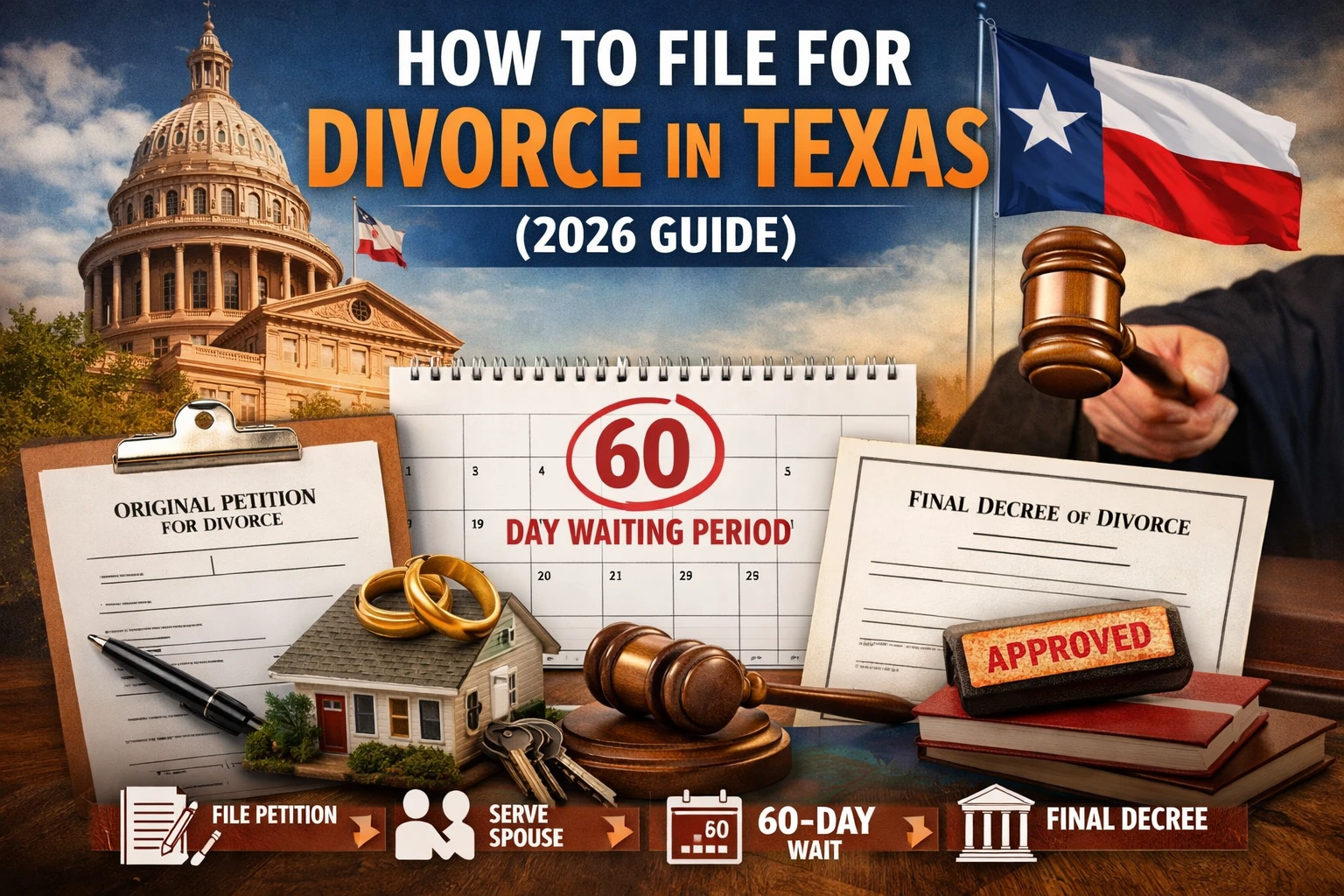
Court filing is the formal legal process of starting and completing a divorce through the Texas court system. It begins when one spouse files an Original Petition for Divorce and ends when the judge signs the Final Decree of Divorce. Even if your divorce is fully agreed, there is still a filing process, paperwork requirements, and a court-approved ending.
So the real comparison is not mediation versus filing as if they are opposites. It is more accurate to think of mediation versus contested litigation within the court process. If you and your spouse can agree, you may be able to file an uncontested divorce with much less stress, lower cost, and fewer delays.
When mediation makes sense
Mediation tends to work best when communication is strained but not impossible. Maybe you agree the marriage is over, but you are stuck on who keeps the house, how to divide retirement, or what the parenting schedule should look like. In those situations, mediation can create a calmer setting than a courtroom and give both people more control over the outcome.
That control is a big advantage. A judge does not know your routines, your finances, or your children the way you do. In mediation, you can work toward practical solutions that fit your family instead of waiting for a court date and hoping the judge sees things your way.
Mediation can also protect time and money. Litigation often means multiple hearings, attorney preparation, discovery, and repeated conflict. Mediation can narrow disputes quickly. If an agreement is reached, that agreement can often be turned into the final divorce paperwork needed for court approval.
But mediation is not a perfect fit for every couple. If one spouse refuses to participate honestly, hides assets, uses intimidation, or creates a major power imbalance, mediation may not be enough. The process depends on both people having a fair opportunity to negotiate.
When court filing becomes more than paperwork
Every Texas divorce requires filing, but not every case requires a courtroom battle. If your divorce is uncontested, court filing may be mostly procedural. You prepare the correct documents, file them with the proper court, meet the waiting period, and finalize the case.
If your divorce is contested, court filing becomes the framework for litigation. That can include temporary orders, formal evidence requests, hearings, and judicial decisions when spouses cannot agree. At that point, the process becomes longer, more expensive, and less predictable.
This is where many people feel overwhelmed. They are not necessarily fighting over everything. They just do not know what paperwork is required, what deadlines matter, or how to move from agreement to completion. For Texans with an agreed case, procedural support can make a major difference because it helps turn an informal agreement into a legally compliant divorce.
Cost differences in divorce mediation vs court filing
Cost is often the first practical concern, and for good reason. A litigated divorce can become expensive quickly. Attorney fees, contested hearings, discovery, and repeated negotiation can push costs far beyond what many families planned for.
Mediation usually costs less than full litigation, especially if it helps resolve disputes early. Still, mediation is not free, and the cost varies depending on the mediator, the complexity of the issues, and how many sessions are needed.
An uncontested court filing is often the lower-cost path overall when both spouses already agree. In that situation, the main expenses are usually filing fees, document preparation, and any support you choose for making sure the case is completed correctly. For many Texas families, this is the most manageable option because it focuses on getting the divorce done rather than funding a long dispute.
The trade-off is simple. If you have unresolved disagreements, trying to force an uncontested case before you are truly in agreement can create mistakes and delays. If mediation can get you to a real agreement, it may save money in the bigger picture.
Timeline: which option is faster?
Texas has a mandatory 60-day waiting period in most divorce cases. That means no divorce can be finalized immediately after filing, even if both spouses agree.
Beyond that minimum, speed depends on conflict. If spouses are in full agreement from the start, court filing for an uncontested divorce is usually the faster path. Once the paperwork is prepared correctly and filed, the process is often straightforward.
Mediation can also move quickly, but only if both people are motivated and responsive. If mediation drags on for weeks or months because one spouse keeps changing positions, the timeline stretches. Litigation through the court system usually takes the longest because you are dealing with crowded court calendars, procedural steps, and more formal disputes.
For people in counties with busy dockets, including larger Texas counties, avoiding unnecessary hearings can save a meaningful amount of time.
Control, privacy, and stress levels
One reason mediation appeals to many couples is that it feels less adversarial. The setting is private, the pace is more flexible, and the discussion stays focused on solutions. That can be especially helpful when children are involved, because the process may reduce the kind of conflict that makes co-parenting harder later.
Court litigation is more rigid. Deadlines are stricter, the record is formal, and decisions may be made by someone who only sees a limited snapshot of your life. Some cases need that structure. If there is serious conflict or noncooperation, court intervention may be necessary.
Still, for couples who want closure with less emotional damage, an agreed process is usually easier on everyone involved. It gives people a chance to move forward instead of staying locked in a fight.
How to choose the right path in Texas
A useful question is not, “Which option is better?” It is, “How much agreement do we actually have right now?”
If you and your spouse agree on property division, debts, children, and support, mediation may not be necessary. You may be ready for an uncontested divorce filing.
If you agree on most issues but are stuck on one or two, mediation may help you bridge the gap and avoid contested litigation.
If there is dishonesty, fear, refusal to cooperate, or deep disagreement on major issues, court involvement may become unavoidable.
That honest assessment saves time. Many couples are closer to agreement than they think, but they need help organizing terms, preparing documents, and following the required steps. Others need to resolve outstanding issues before filing as an agreed case makes sense.
A practical middle ground for uncontested divorces
For many Texans, the best answer is not mediation alone or litigation alone. It is an agreed divorce process supported by accurate paperwork and clear procedural guidance. That is especially true when both spouses want a simple split but do not feel confident handling the legal forms on their own.
In those cases, the goal is not to create more process. It is to remove confusion. A service-focused approach can help people understand what Texas requires, what documents are needed, and how to move from agreement to final decree without unnecessary expense.
Ready Divorce Service works with Texans who want that simpler path in uncontested cases. The value is practical: less guesswork, fewer procedural errors, and a clearer route to completion.
If you are weighing divorce mediation vs court filing, the best choice is usually the one that matches your level of agreement and helps you finish the process correctly. A divorce does not have to become a courtroom fight to be legally valid, and it does not have to stay confusing just because the paperwork feels intimidating. The more clearly you can identify where you and your spouse agree, the easier it becomes to choose the path that gets you to the other side.
👉 Contact us today for a free consultation and learn how clarity, communication, and cooperation can make all the difference in your divorce journey.
✅ Easy step-by-step guidance
✅ Flat-fee pricing — no surprises
📲 Call us now at (800) 432-0018