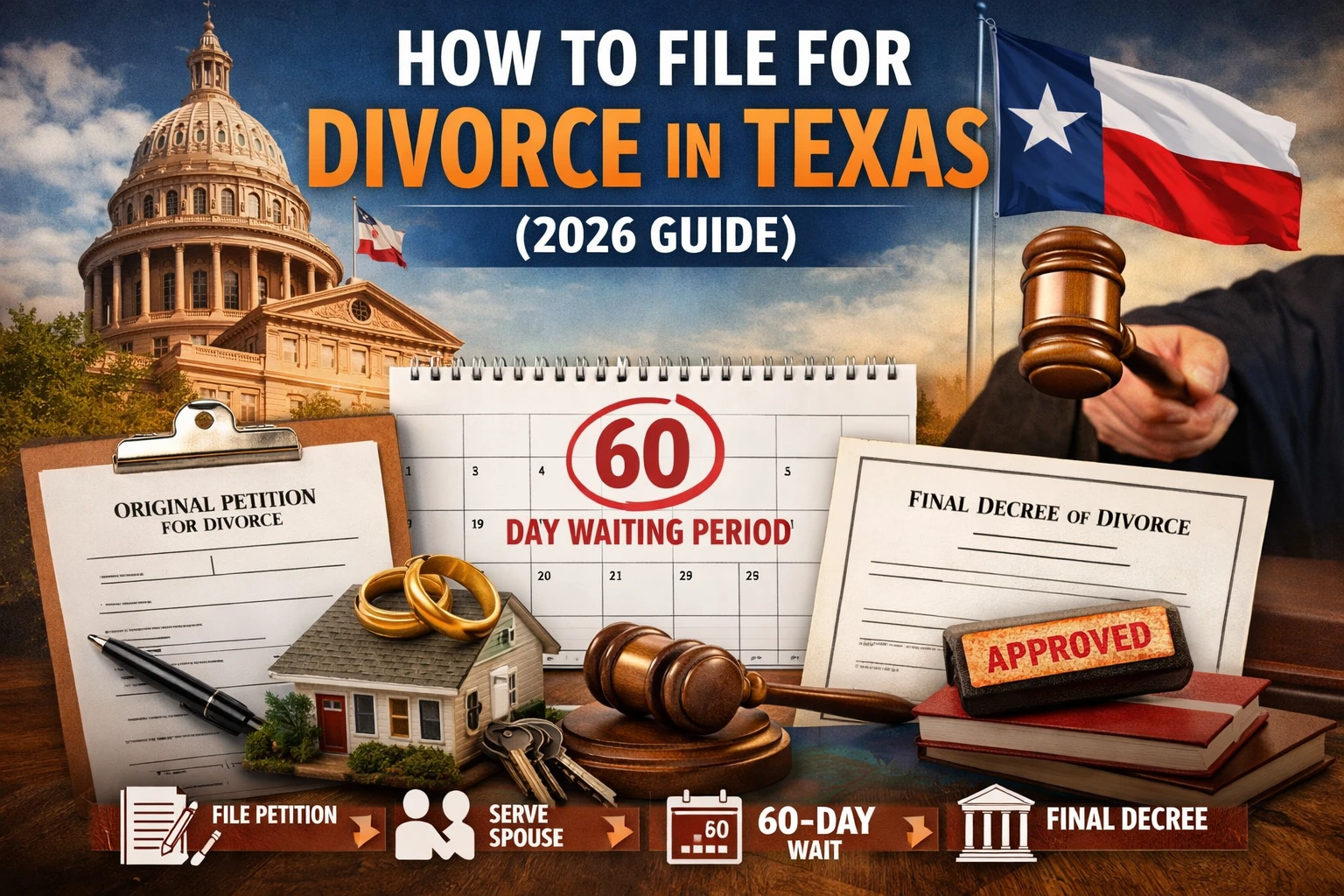
Filing for divorce in Texas often feels harder than the divorce itself – not because the law is always complicated, but because every county has its own filing habits, local forms, and clerk procedures. A good guide to county divorce filing procedures helps you focus on what actually moves your case forward and what can delay it.
If you and your spouse agree on the major terms, the process is usually more manageable than people expect. But manageable does not mean automatic. Even in an uncontested case, you still need the right court, the right documents, proper filing, and careful follow-through.
Why county divorce filing procedures matter
Texas divorce law is statewide, but your case is filed and processed at the county level. That means the basic legal requirements stay the same, while the practical steps can vary depending on where you file.
One county may require specific cover sheets, standing orders, or local notices. Another may have different e-filing expectations, hearing scheduling practices, or clerk preferences for proposed final documents. These differences are not minor when you are trying to finish your case without delays.
This is where many people get stuck. They find a general Texas divorce checklist, assume it applies the same way everywhere, and then learn too late that their county expects something extra. The result can be a rejected filing, a postponed prove-up, or a final decree that needs correction.
Start with the right county
The first step in any guide to county divorce filing procedures is determining where the case belongs. In Texas, you generally file in the county where either spouse has lived for at least 90 days, as long as one spouse has also lived in Texas for at least six months before filing.
That sounds simple, but real life can make it less clear. Maybe one spouse recently moved out. Maybe you separated and now live in different counties. Maybe one of you is trying to file where the children currently live. In those situations, filing in the wrong county can create delays or require corrective action.
For many Texas residents, county choice is straightforward. If you live in places like Tarrant County, Dallas County, Denton County, Collin County, Ellis County, Bexar County, or Harris County, you will usually file in the district court serving that county if residency rules are met. The key is not just where you want to file, but where Texas law allows you to file.
Know whether your case is truly uncontested
Before focusing on paperwork, be honest about whether your divorce is actually uncontested. An uncontested divorce usually means both spouses agree on property division, debt division, child-related terms if children are involved, and the final language to be signed.
If there is real disagreement on any major issue, county filing procedure becomes only part of the problem. The case may still start with the same petition, but it can quickly become contested, which changes timing, costs, and court involvement.
If you do have agreement, that is a major advantage. County filing procedures are much easier to handle when the case is cooperative, because there is less back-and-forth over service, temporary orders, and hearings.
The core documents you will usually need
Most Texas divorces begin with an Original Petition for Divorce. In many cases, you may also need a civil case information sheet or county-required intake forms, although local practice can differ. If children are involved, additional documents may be required, especially if custody, support, or medical support terms are part of the final orders.
Later in the case, you will generally need a Final Decree of Divorce and, depending on the circumstances, a waiver of service, an answer, support-related forms, and possibly income withholding documents. Some counties also expect standing-order compliance or specific notice language.
This is where people often underestimate the process. The problem is not just filling in blanks. The documents must match each other, reflect Texas law, and fit the filing expectations of your county court. If the petition says one thing and the decree says another, the court may not sign off until the inconsistency is fixed.
Filing the case with the county clerk
Most Texas counties now use e-filing for divorce cases, and that is often the fastest route. Still, the filing system is only part of the process. You also need to select the correct court category, upload complete documents, pay the filing fee, and make sure any county-specific attachments are included.
If the filing is accepted, the case gets a cause number and court assignment. If it is rejected, the clerk may provide a reason, but not always a full explanation of how to fix the issue. That can be frustrating when you are trying to keep the process moving.
Filing fees also vary by county. The total cost can depend on whether children are involved and whether additional filings are needed later. If cost is a concern, some filers may qualify for a fee waiver, but that requires separate paperwork and court review.
Service, waiver, and what happens next
After filing, the other spouse usually must be formally notified unless they sign a proper waiver after the case is filed. In an agreed divorce, a waiver of service is common because it avoids the cost and stress of formal service.
That said, a waiver has to be done correctly. It must follow Texas requirements, and timing matters. Signing the wrong form too early or using language the court will not accept can create avoidable problems.
If your spouse is cooperative but cautious, this is normal. Many people are willing to agree but still want to review everything before signing. That can slow the process a little, but it is usually better than rushing and having to redo documents later.
County procedures during the waiting period
Texas has a 60-day waiting period in most divorce cases, counted from the date the petition is filed. This is a statewide rule, not a county rule. But what happens during and after that waiting period often depends on the county.
Some counties make it relatively easy to set an uncontested prove-up once the waiting period ends. Others have more formal scheduling steps, limited hearing slots, or submission requirements for final paperwork before the hearing. Some courts may allow remote appearances in certain situations, while others may want in-person attendance.
This is one of the biggest reasons county-specific guidance matters. Two uncontested divorces can look almost identical on paper but finish on very different timelines because local court practices are different.
Children, property, and the details that slow cases down
Divorces involving children require extra care. Courts pay close attention to conservatorship, possession schedules, child support, medical support, and whether the final terms serve the child’s best interest. Even when both parents agree, the paperwork has to be complete and legally workable.
Property issues can also cause delays, especially when retirement accounts, real estate, or significant debt are involved. A decree that says the house goes to one spouse may still need clear language about refinance deadlines, sale terms, or responsibility for missed payments. If those details are vague, the document may create future conflict even if the divorce is finalized.
So while uncontested divorce is simpler than litigation, simple is not the same as careless. The cleaner the agreement, the smoother the county filing process tends to be.
Common mistakes in county divorce filing procedures
The most common mistakes are surprisingly ordinary. People file in the wrong county, use outdated forms, leave out county-required documents, or submit final orders that do not match the original petition. Others miss the waiting period, fail to handle service correctly, or assume the clerk can give legal guidance.
Another frequent issue is treating every county the same. A process that worked for a friend in one county may not work the same way in another. That is especially true for hearing settings, prove-up requirements, and final submission practices.
If your goal is a faster, more affordable divorce, these are exactly the mistakes you want to avoid. Procedural errors cost time, and time usually means more stress.
When procedural help makes sense
Many Texans do not need full litigation counsel for an agreed divorce, but they do need reliable help with forms, filing steps, and county procedures. That middle ground matters. It can keep the case affordable while reducing the risk of filing mistakes that drag everything out.
For people who want a practical path forward, support services like Ready Divorce Service can help organize the process, prepare documents for uncontested cases, and reduce confusion about what your county expects. That kind of procedural support is often most valuable when you want to move efficiently without guessing your way through court requirements.
A practical way to move forward
The best guide to county divorce filing procedures is one that keeps your attention on the right things: filing in the correct county, using complete and consistent documents, following local court requirements, and respecting the timeline Texas law imposes. When those pieces are handled correctly, an uncontested divorce is often much less overwhelming than it first appears.
If you are trying to close one chapter and start the next, clarity matters more than speed alone. A steady, accurate process usually gets you to the finish line with less stress and fewer costly detours.
📞 Get Started Today – Your Peaceful Divorce Is Just a Click Away
When you’re ready to move on, we’re ready to help.
📲 Call us now at (800) 432-0018
🖥️ Start your divorce online today