A divorce can be agreed in principle and still stall over one missed signature, an incomplete decree, or the wrong filing step. That is why Bexar County divorce forms help matters: the paperwork must reflect your actual agreement and meet Texas court requirements before a judge can finalize the case.
For many spouses, an uncontested divorce is the practical path forward. It can reduce conflict, limit costs, and give both people more control over the outcome. But “uncontested” does not mean informal. You still need the right documents, a complete settlement, and a filing process that follows the rules used by the Bexar County courts.
When an Agreed Divorce May Be the Right Fit
An agreed divorce generally works when both spouses are willing to sign the final paperwork and have resolved the major issues. Those issues include property and debt division, spousal maintenance if applicable, and all child-related terms when there are minor children.
Before preparing forms, make sure Texas has jurisdiction over the case. Usually, at least one spouse must have lived in Texas for the prior six months and in Bexar County for at least 90 days. There can be exceptions and special circumstances, so a case with recent moves, military service, or a spouse living outside Texas may need closer review.
An agreed case is not necessarily a simple case. A couple may agree while still owning a home, carrying credit card debt, or sharing retirement accounts. The key question is whether the agreement is clear enough to put into enforceable court language. If one spouse feels pressured, does not understand the financial picture, or cannot reach a workable agreement, document-preparation support may not be the appropriate next step.
Bexar County Divorce Forms Help Starts With the Correct Case Type
The forms needed for a divorce depend on your family and property situation. Downloading a generic packet without confirming the case type is one of the most common ways people create unnecessary delays.
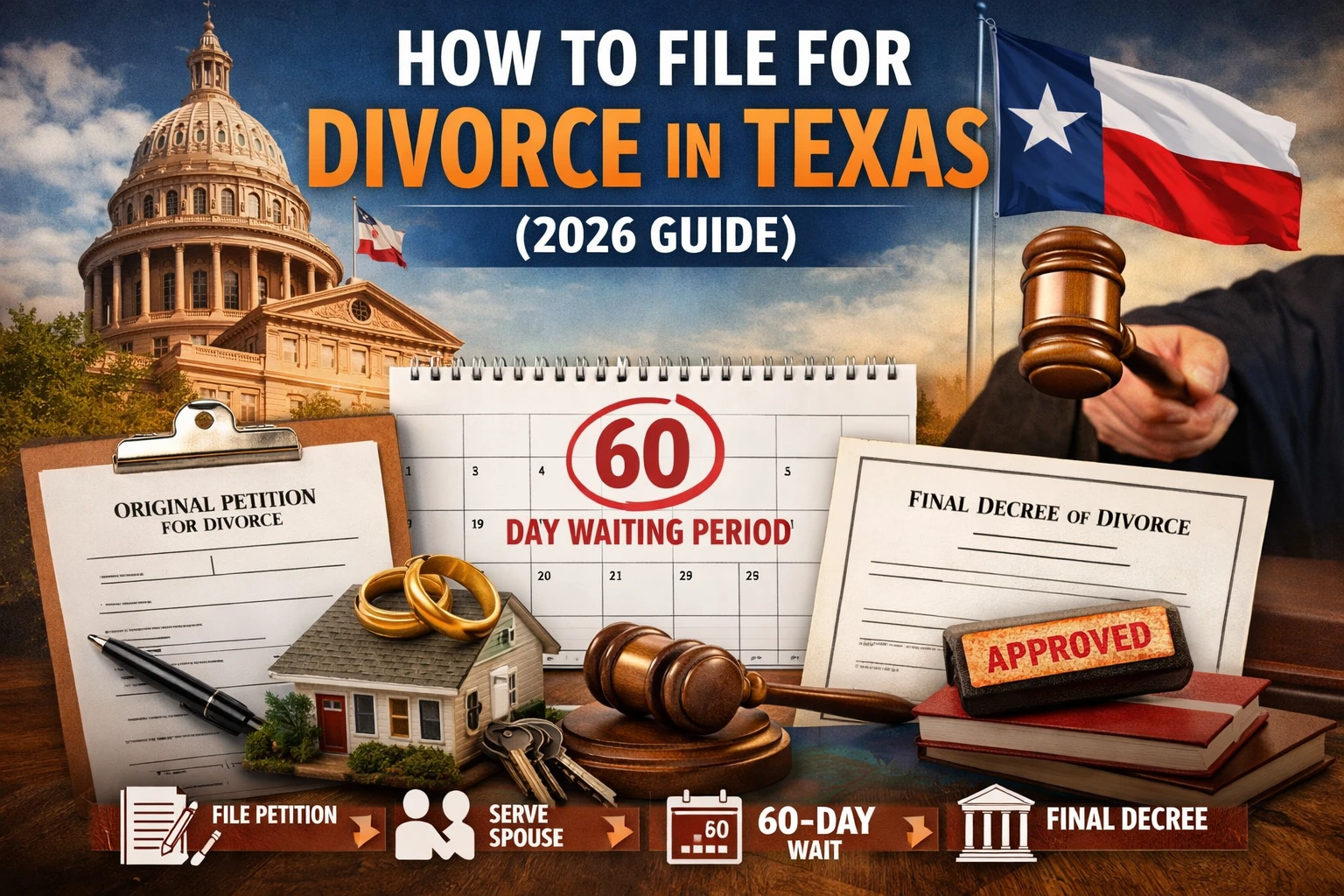
Most agreed Texas divorce cases begin with an Original Petition for Divorce. This document opens the case and tells the court the basic facts, such as the parties’ names, residency, whether children are involved, and the relief requested. After filing, the other spouse must either be formally served or sign the proper paperwork to acknowledge the case and waive service, if that is the plan.
The Final Decree of Divorce is the document that deserves the most attention. It is the court order that divides property and debts, addresses name changes when requested, and sets the terms each spouse must follow after the divorce. A judge signs the decree, but the wording must first be complete and consistent with the petition and the parties’ agreement.
Depending on the circumstances, your packet may also need documents such as:
- A waiver of service or an answer from the other spouse
- A proposed order for withholding if child support is ordered
- Required child support and medical support provisions
- A parenting plan, possession schedule, and child-related orders
- A military status affidavit in certain default situations
- Additional property language for real estate, retirement accounts, or vehicles
Not every case needs every form. For example, spouses without children do not need a parenting plan. On the other hand, parents cannot simply agree to skip child support language because they prefer an informal arrangement. Texas courts generally require orders that address conservatorship, possession and access, support, and medical coverage for minor children.
Filing the Case and Following the Texas Timeline
In Bexar County, a divorce is filed with the district clerk and assigned to a district court. Filing methods, local procedures, and hearing requirements can change, so it is wise to confirm the current process before submitting your documents. A form that is correct in content can still be rejected or delayed if filing information, signatures, attachments, or proposed orders are incomplete.
Texas generally has a 60-day waiting period from the date the divorce petition is filed until the divorce can be finalized. The waiting period applies even when both spouses agree, with limited exceptions that may apply in situations involving family violence. Filing first and assuming the divorce will be finished the same week can create frustration and poor planning.
During the waiting period, use the time to check every term of the proposed decree. Confirm account numbers are accurate where needed, debts are assigned clearly, and deadlines are realistic. If one spouse will refinance a vehicle or home, the decree should say who is responsible, what must happen, and by when. Simply stating that one spouse “gets the house” often does not fully address a mortgage, title, equity, or refinance obligation.
After the waiting period, the case may require a prove-up or another court-approved finalization step. Procedures vary by court and case type. The court may ask questions to ensure the required facts are true, the agreement is voluntary, and the proposed orders are appropriate. Do not assume that signing a decree by yourselves automatically ends the marriage. The divorce is final only when the judge signs the Final Decree of Divorce.
Extra Care When Children or Property Are Involved
Children and significant property raise the stakes because vague language can create expensive problems later. Parents may be on good terms now, but a court order should still answer practical questions: Where will the children live? When will each parent have parenting time? Who carries health insurance? How will uninsured medical expenses be divided?
Property division requires the same level of detail. Texas is a community property state, but that does not mean every asset must be split exactly down the middle. Spouses can reach a different agreement if both consent, provided the terms are clearly stated and the court approves the decree. Separate property claims, business interests, retirement benefits, bankruptcy concerns, tax issues, and disputed assets can make a case unsuitable for a basic uncontested process.
Be especially careful with retirement accounts. Awarding an account in a divorce decree may not be enough to transfer funds correctly. Some plans require a separate qualified domestic relations order or plan-specific paperwork. It depends on the type of account and the plan administrator’s requirements.
Common Problems That Delay an Agreed Divorce
The most frustrating delays are often preventable. One common issue is using forms that do not match the case, such as a no-children decree for parents of minor children. Another is leaving blanks, using conflicting dates, or failing to include the full legal description of real estate when it is needed.
Signature timing also matters. Certain documents must be signed after the petition is filed, and some require notarization. A waiver of service should not be treated as a casual agreement note. It has a specific legal purpose and should be completed correctly.
Finally, do not confuse an agreed divorce with a default divorce. In an agreed case, both spouses participate and sign the final decree. In a default case, one spouse does not respond after proper service. The required documents and procedural steps can differ substantially.
When to Get Bexar County Divorce Forms Help
Professional document preparation and procedural guidance can be a useful middle ground for spouses who agree but do not want to guess their way through court forms. Ready Divorce Service helps Texans understand the paperwork and workflow for qualifying uncontested divorces, with a focus on accuracy, affordability, and a clearer path to completion.
That support is different from attorney representation. If there is active conflict, uncertainty about a fair agreement, domestic violence, hidden assets, complex property, or a spouse who refuses to cooperate, speak with a qualified family law attorney. Getting the right level of help early can protect you from signing terms you later regret.
Can we file if only one spouse lives in Bexar County?
Usually, yes, if the Texas residency requirements are met. At least one spouse generally must satisfy the six-month Texas and 90-day Bexar County residency rules. The other spouse may live elsewhere.
Do both spouses have to go to court?
Not always. The finalization process depends on the assigned court, the documents filed, and the facts of the case. Often, one spouse handles the prove-up in an agreed divorce, but you should follow the court’s current instructions.
How long does an agreed divorce take?
The 60-day Texas waiting period is the minimum in most cases. The actual timeline depends on how quickly forms are completed, whether the other spouse signs promptly, court availability, and whether the paperwork is accepted without corrections.
A well-prepared agreed divorce is not about rushing through a difficult transition. It is about putting clear terms on paper, following the required steps, and giving yourself a dependable starting point for what comes next.
📞 Get Started Today – Your Peaceful Divorce Is Just a Click Away
When you’re ready to move on, we’re ready to help.
📲 Call us now at (800) 432-0018
🖥️ Start your divorce online today