Table of Contents
- Affordable Divorce vs Texas Divorce Online: Quick Comparison
- Understanding the Uncontested Divorce Process
- How to File for Divorce Without a Lawyer
- Average Time for Uncontested Divorce: What to Expect
- Feature Breakdown and Service Tiers
- Pricing, Court Fees, and Hidden Costs
- Which Service Should You Choose?
- Conclusion
Last Updated: August 12, 2026
Affordable Divorce vs Texas Divorce Online: Quick Comparison
When you’re facing divorce in Texas, the choice between affordable divorce vs Texas divorce online services often comes down to cost, complexity, and how much guidance you need. Both approaches offer alternatives to hiring a traditional attorney, but they work differently and suit different situations.
Ready Divorce Service has helped hundreds of Texas residents navigate the uncontested divorce process by offering expert document preparation and step-by-step legal guidance. The key difference between these services isn’t just price, it’s how much hand-holding you get and whether your case complexity exceeds what a document preparation service can handle.
Here’s what matters: an uncontested divorce where both spouses agree on terms can be filed without an attorney in Texas. But the paperwork must be accurate, filed in the right order, and submitted to the correct court. One mistake can delay your case by months or cost you money in filing rejections.
Below, we’ll walk you through how these services compare, what each covers, and exactly when you should choose one over the other.
The real choice isn’t between cheap and expensive, it’s between a document preparation service (which handles paperwork) and a guided service (which walks you through the entire process from filing to final decree).
Understanding the Uncontested Divorce Process
An uncontested divorce process in Texas means both spouses agree on all major terms: property division, debt responsibility, child custody (if applicable), and child support. When there’s no disagreement, you can file without going to court for a trial.
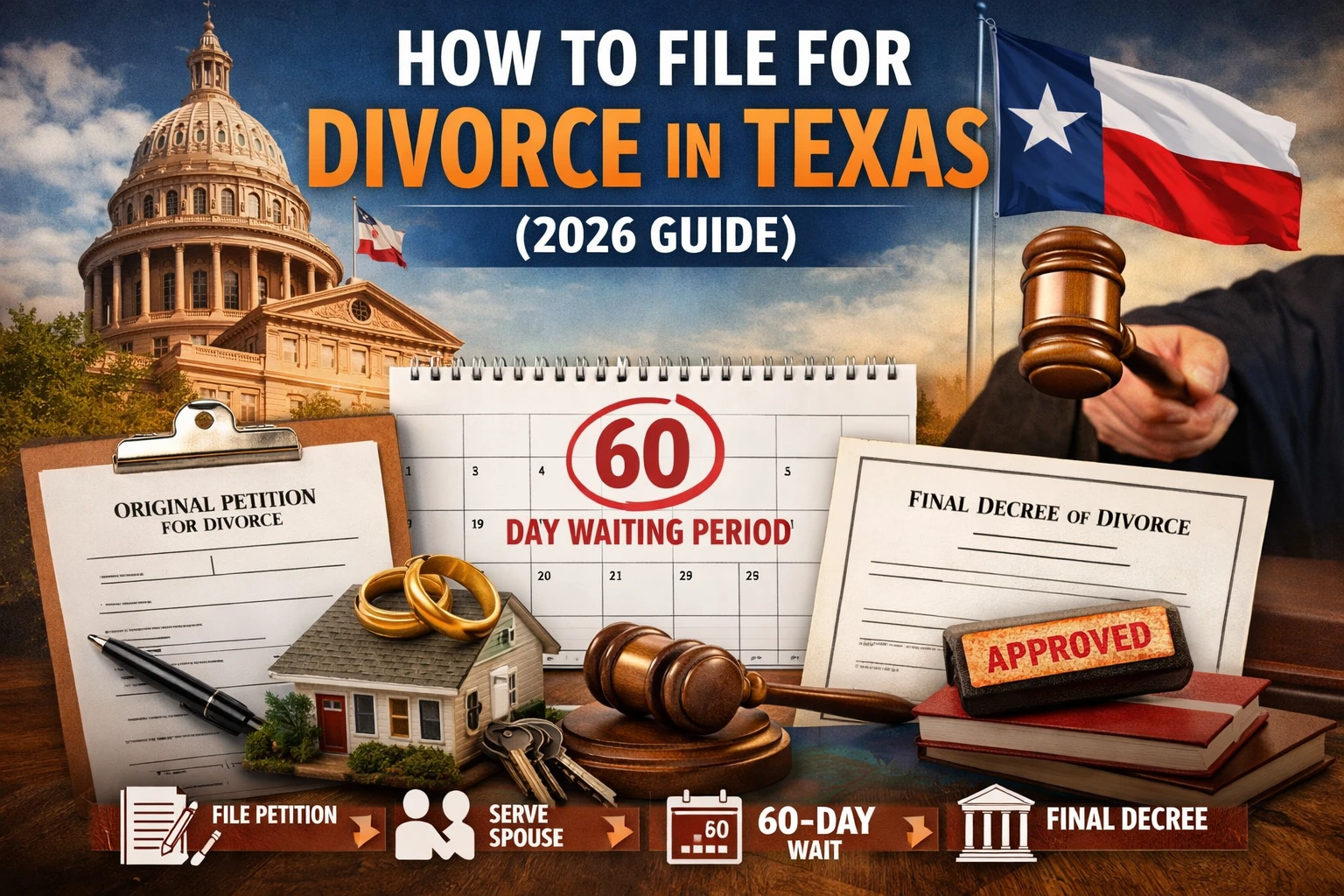
Texas law requires a 60-day waiting period between filing and finalization. During this time, the court ensures both parties had adequate notice and opportunity to respond. If everything is in order and both spouses sign the final documents, the judge approves the divorce decree without a hearing.
The uncontested path is significantly faster and cheaper than contested divorce, where disputes require court appearances and potentially months of negotiation. Most uncontested divorces in Texas complete within 90-120 days total, including the mandatory waiting period.
However, “uncontested” doesn’t mean simple paperwork. Texas requires specific forms, proper service of process (delivering documents to your spouse), and exact compliance with local court rules. Each county has slightly different filing procedures, and mistakes can result in rejection and refiling fees.
This is where services differ. Some handle only document preparation. Others guide you through the entire process, including what to do after filing and how to respond if the court requests corrections.

How to File for Divorce Without a Lawyer
Filing for divorce without a lawyer requires organizing your documents, completing court-approved forms, and submitting them to the right court in your county. You don’t need an attorney for an uncontested divorce in Texas, you just need accuracy and the right information.
Step 1: Complete the Required Documents
Texas requires specific forms for every uncontested divorce. The core documents include the Original Petition for Divorce, the Divorce Settlement Agreement, and the Final Decree of Divorce. If you have minor children, you’ll also need child custody and support documents.
These forms must match Texas Family Code requirements exactly. Many people try to use generic templates or forms from other states, which courts reject immediately. Services like Ready Divorce Service prepare state-specific, county-compliant documents so you don’t have to navigate Texas law yourself.
Step 2: Understand Service of Process
Your spouse must be formally notified of the divorce filing. This is called service of process. In Texas, you can use a waiver of service (where your spouse signs a document agreeing they received notice) or have a process server deliver the documents. The waiver is faster and cheaper, but both spouses must cooperate.
If your spouse refuses to cooperate or won’t sign a waiver, the case becomes contested, and you’ll likely need an attorney.
Step 3: File with Your County Court
File your documents with the district court clerk in your county. Filing fees vary by county but typically range from $300-$500. You’ll need certified copies for your records and the court file.
Step 4: Wait the 60-Day Period
Texas law mandates a 60-day waiting period after filing before the divorce can be finalized. During this time, either spouse can contest the agreement or request changes. If both parties remain in agreement, the waiting period simply runs its course.
Step 5: Submit Final Documents and Obtain the Decree
After 60 days, submit your Final Decree of Divorce to the court. Once the judge signs it, your divorce is official. You’ll receive certified copies showing the divorce is final.

Many people get stuck at step 3 or 4 because they don’t know what to do next or what to submit. This is where guided services add value, they tell you exactly what happens after filing and what documents you need at each stage.
Average Time for Uncontested Divorce: What to Expect
The average time for an uncontested divorce in Texas is 90-120 days from filing to final decree. This includes the mandatory 60-day waiting period plus time for document preparation, filing, and court processing.
However, the actual timeline depends on several factors:
- Document preparation: 1-2 weeks (longer if you’re doing it yourself and making corrections)
- Service of process: 1-2 weeks (faster with a waiver, slower if your spouse is uncooperative)
- Mandatory waiting period: 60 days (non-negotiable in Texas)
- Court processing: 2-4 weeks after the waiting period ends
If you use a service that prepares documents for you, they typically handle steps 1-3 within 2-3 weeks. The 60-day waiting period then begins. After that, submitting final documents usually takes another 1-2 weeks.
The biggest delays come from mistakes in the initial paperwork. If the court rejects your documents for errors, you’re back to square one with new filing fees. Services that specialize in Texas divorce law catch these errors before submission, avoiding costly delays.
If your spouse doesn’t respond or contests the agreement during the 60-day period, your timeline extends significantly. You’ll need to resolve the dispute, which may require mediation or court involvement, potentially adding months.
Feature Breakdown and Service Tiers
Different services offer different levels of support. Understanding what each tier includes helps you choose based on your actual needs.
Document Preparation Only
This tier includes preparing your divorce forms using your information. You receive completed documents that comply with Texas law and your county’s requirements. You handle filing, service of process, and all court interaction yourself.
Best for: People who are comfortable navigating court procedures and just need accurate paperwork. Cost is lowest at this tier.
Drawback: You’re responsible for knowing when and where to file, how to serve your spouse, and what to do if the court requests corrections.
Guided Document Preparation
This tier includes document preparation plus step-by-step guidance on the filing process. You get instructions on where to file, how to serve your spouse, what to expect during the waiting period, and what to submit after 60 days.
Best for: Most people filing uncontested divorce. You get professional documents and someone to answer questions about what comes next.
Drawback: You still handle the actual filing and court interaction. If complications arise, you may need additional support.
Full Service with Filing Assistance
This tier includes everything above plus the service files documents on your behalf. They handle submission to the court, track deadlines, and manage communication with the court clerk.
Best for: People who want minimal involvement or are uncomfortable with court procedures. You provide information; they handle the rest.
Drawback: Highest cost tier. Still limited if your case becomes contested or requires attorney-level legal advice.
Comparison of Service Tiers
| Service Tier | What’s Included | Best For | Time Investment | Complexity Limit |
|---|---|---|---|---|
| Document Prep Only | Forms + compliance review | DIY-comfortable people | High | Simple cases only |
| Guided Prep | Forms + process instructions | Most uncontested cases | Medium | Simple to moderate |
| Full Filing Service | Forms + filing + court tracking | Minimal involvement desired | Low | Simple to moderate |
| Attorney Consultation Add-on | All above + attorney review | Complex assets or children | Low | Any complexity |
Ready Divorce Service offers guided document preparation with step-by-step process support, covering the gap between cheap document services and expensive attorney retainers. You get professional documents and clear instructions without paying full legal representation rates.
Pricing, Court Fees, and Hidden Costs
Understanding the true cost of divorce requires separating service fees from court filing fees. These are two different expenses.
Court Fees (Non-Negotiable)
Filing fees are set by your county court and typically range from $300-$500. These go to the court, not the service provider. You pay these regardless of which service you use or if you file yourself. Some counties charge additional fees for certified copies or expedited processing.
Service Provider Fees
This is where costs vary dramatically. Document preparation services charge one amount. Guided services charge more. Full filing services charge even more.
Ready Divorce Service positions itself as an affordable alternative to traditional litigation while providing more guidance than bare-bones document services.
Hidden Costs to Watch
- Correction fees: If you make errors on initial documents, some services charge to redo them. Services that review carefully before you file avoid this.
- Additional forms: If your situation includes child support or spousal support, additional forms may cost extra with some providers.
- Certified copies: Courts charge for certified copies of your final decree. Budget $20-$50 for extras.
- Service of process: If you can’t use a waiver and need a process server, expect $100-$300.
- Mediation: If disagreements arise during the 60-day period, mediation costs $500-$2,000 depending on complexity.
The most cost-effective approach avoids corrections and disputes. Services that ensure accuracy upfront save money on refiling fees and delays.
Ask any service about their error correction policy before signing up. Some include corrections if they made a mistake; others charge for every revision. This difference can add $200-$500 to your total cost.
Which Service Should You Choose?
Choosing between services depends on your situation’s complexity and how much guidance you need. Here’s how to decide:
Choose a document preparation service if:
- You’re comfortable with legal processes and court procedures
- Your divorce is straightforward with no children and minimal assets
- You want the lowest possible cost
- You don’t mind handling filing and court interaction yourself
Choose a guided service (like Ready Divorce Service) if:
- You want professional documents plus clear instructions on what to do next
- You have children or moderate assets to divide
- You want someone to answer questions about the process
- You want to avoid costly mistakes that delay your divorce
- You value knowing exactly what happens at each stage
Choose a full-service filing option if:
- You want minimal involvement in the process
- You’re uncomfortable with court procedures or filing paperwork
- You can afford the premium for complete handling
- You want the service to manage deadlines and court communication
Choose an attorney if:
- Your case is contested (spouses disagree on terms)
- You have significant assets, business interests, or complex finances
- You have custody disputes or complex child support situations
- Your spouse has an attorney
- You need legal advice beyond document preparation
The reality is that most uncontested divorces in Texas fall into the guided service category. You need accurate documents and someone who understands the process, but you don’t need full legal representation if both spouses agree on terms.
Ready Divorce Service specializes exactly in this middle ground, providing expert guidance and document preparation without the cost of traditional attorney representation. For Texas residents with straightforward uncontested divorces, this approach balances cost savings with the security of professional oversight.
Navigating divorce paperwork on your own can feel overwhelming, especially when one mistake can delay your case and cost you money in filing rejections. Ready Divorce Service provides step-by-step guidance and accurate document preparation to ensure your filing complies with Texas law from start to finish. Our approach is designed for uncontested divorces where both spouses agree on terms, the most common and affordable path to finalization. Get started with Ready Divorce Service and move through your divorce process with confidence and clarity.
Frequently Asked Questions
What is the difference between an uncontested and contested divorce?
An uncontested divorce occurs when both spouses agree on all key terms: asset division, debt responsibility, child custody, and support. A contested divorce involves disagreement on one or more issues, requiring court intervention or litigation. Uncontested divorces are faster, less expensive, and less adversarial. Online divorce services like Affordable Divorce and Texas Divorce Online are designed specifically for uncontested situations where both parties have already reached agreement.
Can you get a divorce online if you have minor children?
Yes, you can file for divorce online if you have minor children, provided the divorce is uncontested and both parents agree on custody, child support, and visitation. Both Affordable Divorce and Texas Divorce Online support cases with children. However, Texas courts require specific child-related documentation and compliance with child support guidelines. You must accurately address all child-related matters in your filing. If disputes exist over custody or support, you’ll need traditional legal representation.
Are online divorce services legally binding?
Yes, documents prepared by online divorce services are legally binding if they comply with your state’s requirements and are properly filed with the court. Both Affordable Divorce and Texas Divorce Online prepare court-approved forms that meet Texas legal standards. The key is accuracy: courts will only accept filings that follow state law exactly. If documents contain errors or omissions, the court may reject them, delaying your divorce. This is why choosing a service with strong compliance expertise matters.
Is it cheaper to use an online divorce service than a lawyer?
Yes, online divorce services cost significantly less than hiring a traditional attorney. Attorney retainers typically start at $3,000 or more, while online document preparation services offer flat fees at a fraction of that cost. However, costs vary by service and complexity. For straightforward, uncontested divorces with no children or minimal assets, online services deliver the best value. For cases with children, shared debt, or property disputes, compare service tiers carefully to ensure the service covers your specific needs.
What happens if the court rejects my divorce documents?
If the court rejects your documents due to errors or incomplete information, you must correct and refile, which delays your divorce and may cost additional filing fees. This is why document accuracy is critical. Both Affordable Divorce and Texas Divorce Online are designed to prevent rejection by ensuring compliance with Texas law. Before choosing a service, confirm they offer document review or error guarantees. Some services provide support if documents are rejected; others do not. Clarify this before signing up.
📞 Get Started Today – Your Peaceful Divorce Is Just a Click Away
When you’re ready to move on, we’re ready to help.
📲 Call us now at (800) 432-0018
🖥️ Start your divorce online today