Last Updated: October 27, 2026
Quick Summary
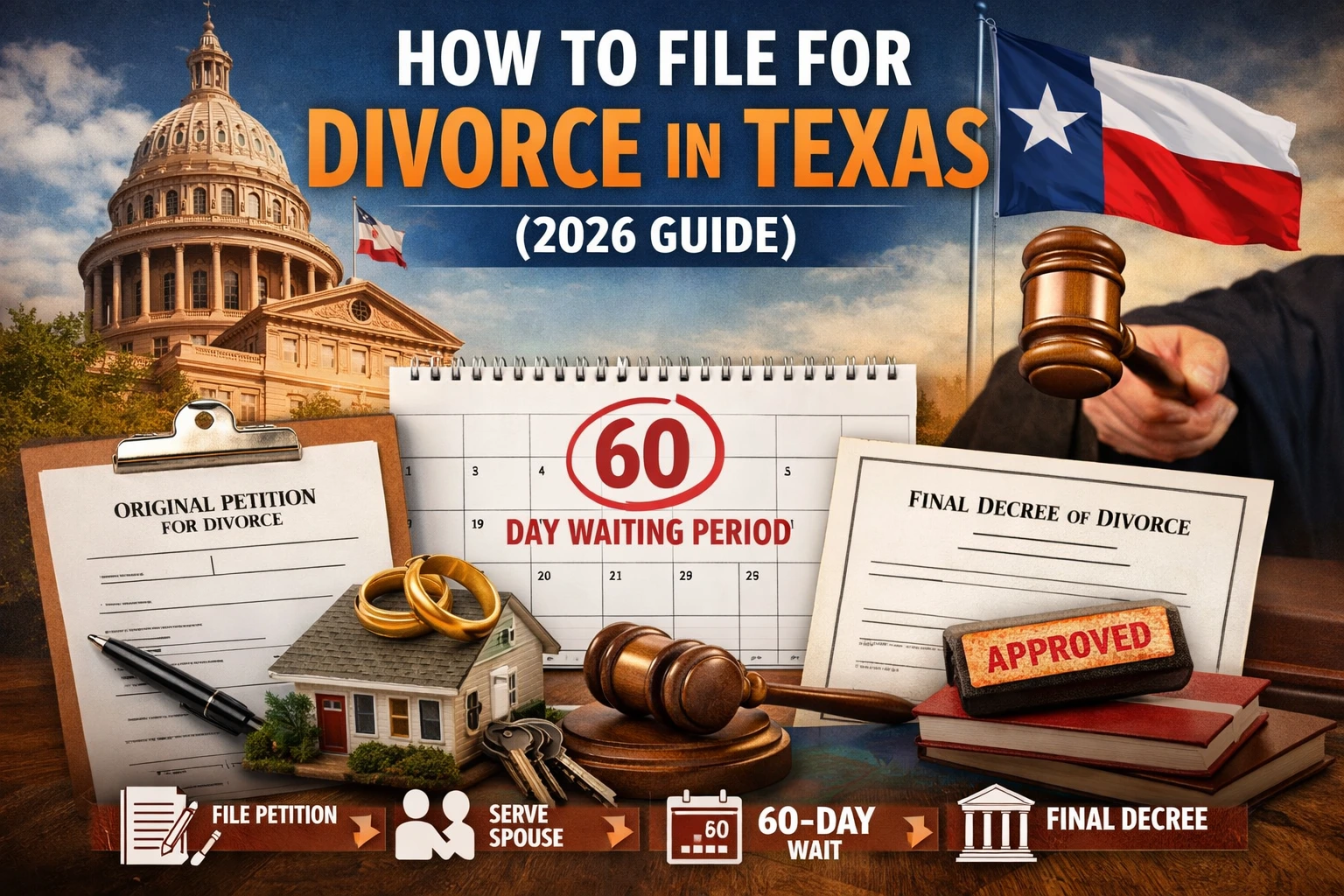
The texas divorce process timeline depends on your case type, your county, and how quickly both spouses move. An agreed divorce with waiver of service typically takes about 60 to 90 days, while contested cases with heavy disputes can take a year or more. A divorce in Texas cannot be granted before the 60-day waiting period ends.
- An uncontested divorce with a signed decree usually takes about 60 to 120 days.
- Contested cases with few disputes generally run six months to a year.
- The 60-day waiting period is a floor, not a promise of a final decree.
- Court scheduling, judge availability, and county queues drive delays after the waiting period.
- After the decree, record deeds, update beneficiaries, and confirm any name change.
Table of Contents
- How the Texas Divorce Process Timeline Actually Works
- The Texas Divorce Waiting Period and What Happens During It
- Texas Divorce Filing and Service of Process: The Steps That Start the Clock
- How the Texas Divorce Process Timeline Actually Compares by Case Type
- When Does the Final Divorce Decree Take Effect?
- What to Do at Each Stage of the Texas Divorce Process
- Frequently Asked Questions
How the Texas Divorce Process Timeline Actually Works
The Texas divorce process timeline depends on your case type, your county, and how quickly both spouses move.
A divorce in Texas cannot be granted before the 60-day waiting period ends, a floor, not a promise.

| Case Pathway | Typical Timeline | Main Driver of Delay |
|---|---|---|
| Agreed divorce, waiver of service | About 60 to 90 days | Court scheduling after the waiting period |
| Uncontested with signed decree | About 60 to 120 days | Judge availability and county queue |
| Contested, few disputes | Six months to a year | Discovery and negotiation |
| Contested, heavy disputes | A year or more | Trial settings and continuances |
The Texas Divorce Waiting Period and What Happens During It
For the rules and exceptions, read our guide to the Texas divorce 60-day waiting period.
Texas Divorce Filing and Service of Process: The Steps That Start the Clock
For the full sequence, see our breakdown of the 9 basic steps for a divorce in Texas and our guide on what happens after filing divorce in Texas.
How the Texas Divorce Process Timeline Actually Compares by Case Type
For a start-to-finish view, see our guide to the Texas divorce filing timeline and the steps to finalize an uncontested Texas divorce.
When Does the Final Divorce Decree Take Effect?
Post-decree tasks matter too: record deeds or transfer vehicle titles, update beneficiary designations and account ownership, adjust payroll and insurance, confirm any name change, and calendar support and custody obligations.
What to Do at Each Stage of the Texas Divorce Process
If you are unsure which path fits your situation, our guide on which plan is right for you walks through the options. You can also review starting the divorce process for the requirements before you file.
Frequently Asked Questions
How fast can a divorce be finalized in Texas?
Texas law requires a 60-day waiting period from the date the petition is filed before a court can grant a divorce. That is the floor, not the finish line. After day 60, the case still needs a judge’s signature on the final decree, and court scheduling varies by county. An agreed, uncontested case can move quickly once the waiting period ends, but no one can promise a specific date. Contested issues over children, property, or debt push the timeline out further.
What is the biggest mistake people make during a Texas divorce?
Filing incomplete or inconsistent paperwork is the most common problem. A missing signature, an incorrect case number, or a petition that does not match the agreed terms can send documents back and add weeks. Service mistakes are close behind: skipping proper service or a valid waiver of service can stall the case before it starts. Reviewing every form against the county’s requirements before filing avoids most of these delays.
What happens after a divorce petition is filed in Texas?
After the Original Petition for Divorce is filed and stamped by the court, the other spouse must be served or must sign a waiver of service. The respondent then has a deadline to file an answer. If the divorce is agreed, the parties exchange and sign the final decree and related documents. Once the 60-day waiting period has passed, the case goes to the judge for approval. In many uncontested cases, the judge signs the decree without a formal hearing, but county practices differ.
The Texas divorce process timeline is predictable when your paperwork is right and your terms are agreed. Ready Divorce Service helps clients move through each stage with document preparation, case coordination, and procedural guidance from petition to final decree. We offer electronic signatures, online notarization when appropriate, and support in English and Spanish. Get started with Ready Divorce Service and take the confusion out of your Texas divorce filing.