Last Updated: October 22, 2026
Quick Summary
How long does legal separation last depends on your state and situation. In most states, a legal separation lasts indefinitely with no automatic expiration date and remains in effect until you reconcile, modify it, or convert it to divorce. A minority of states impose statutory limits or require periodic review.
- Most states allow indefinite legal separation with no built-in expiration date unless modified by court order
- A few states impose statutory limits or require periodic review, forcing conversion to divorce or extension
- Legal separation is not a divorce waiting period; it is a separate legal status that continues until you take action
- In Texas, separation agreements have no expiration date but may include time limits on specific provisions like spousal support
- You must file a motion to terminate, dismiss, or convert a separation to divorce; it will not end automatically
Table of Contents
- What Legal Separation Means and How Long It Lasts
- How Long Can You Be Legally Separated
- Legal Separation Agreement in Texas: Duration and Terms
- Does Legal Separation Lead to Divorce
- How to File for Divorce After Separation in Texas
- What Happens When a Separation Period Expires
- Frequently Asked Questions
What Legal Separation Means and How Long It Lasts
Legal separation is a court order that lets married couples live apart while remaining legally married. Unlike divorce, it keeps your marriage status intact but lets you legally separate finances, custody, and property.
How long does legal separation last? It depends on your situation and state law. A legal separation can last indefinitely, there’s no automatic expiration date. You remain legally separated until you reconcile or convert it to divorce.
How Long Can You Be Legally Separated
There is no single nationwide answer to how long a legal separation lasts. In most states, it continues indefinitely until a court order ends it, the spouses reconcile and dismiss the case, or one spouse converts it to divorce. A handful of states impose statutory limits, and several treat a separation period as a prerequisite to divorce rather than a standalone status.
Three different duration rules you need to separate
1. Indefinite separation (the majority rule). In most states, a legal separation judgment or court-approved agreement has no built-in expiration date and remains enforceable until a court modifies or terminates it.
2. Statutory limits and automatic expiration. A minority of states place outer limits on separation orders or require periodic review, forcing parties to convert to divorce or seek an extension.
3. Separation as a divorce prerequisite. Several states require spouses to live “separate and apart” for a set period before filing for divorce on separation grounds.
State-by-state duration comparison
The table below summarizes the general duration framework in a sample of states. It is a starting point, not legal advice; statutes and local rules change.
| State | General duration framework | Key detail to verify |
|---|---|---|
| California | Indefinite; separation judgment remains until modified or terminated | Whether the judgment includes a reserved jurisdiction over marital status |
| Texas | Indefinite; no standalone legal separation status, but separation agreements are enforceable as contracts | Whether the agreement is incorporated into a later divorce decree |
| New York | Indefinite; separation judgment or agreement can support a later divorce after a statutory period | The statutory separation period required before conversion |
| Florida | Indefinite; separation agreements are contracts and are not court-supervised like a divorce | Whether either spouse later files for divorce |
| Illinois | Indefinite; legal separation judgment remains until modified or terminated | Grounds and conversion requirements |
| Pennsylvania | Indefinite; separation agreements are enforceable contracts | Whether a divorce complaint has been filed |
| Ohio | Indefinite; separation agreements are contracts | Whether the agreement addresses support and property |
| Georgia | Indefinite; separate maintenance actions can establish support without divorce | Whether the order includes child custody and support |
| North Carolina | Indefinite; separation agreements are contracts | The one-year separation requirement for divorce |
| Washington | Indefinite; separation contracts are enforceable | Whether the contract is merged into a divorce decree |
Use this table to identify your state’s framework, then confirm the current statute and local rules. A family law attorney licensed in your state can tell you whether your order has an expiration date and how to convert it to divorce.
What actually controls the duration
- The court order or agreement itself. Read the termination, review, and modification clauses. Some include a review date or sunset provision; most do not.
- State statute. A few states impose limits or require periodic court review, overriding the parties’ preferences.
- The parties’ actions. Filing for divorce, reconciling, or petitioning for modification all change the duration.
Do not assume your separation will end automatically. Most separation orders and agreements have no expiration date. If you want the separation to end, you generally must file a motion to terminate, dismiss the case, or convert the matter to divorce.
The distinction that resolves the confusion
A legal separation’s duration is not the same as a divorce waiting period, which is a statutory minimum, such as days between filing and final judgment, or a period of living separate and apart before filing on separation grounds. A separation’s duration is open-ended unless a statute, court order, or agreement says otherwise.
In most states, a legal separation lasts indefinitely until a court order ends it or the spouses convert it to divorce. A minority of states impose statutory limits or require periodic review, and several states require a separation period before divorce. Confirm your state’s rule before relying on a general answer.
Legal Separation Agreement in Texas: Duration and Terms
The agreement itself has no expiration date. Once signed and notarized, its terms remain in effect until you change them, though some provisions have built-in time limits:
- Spousal support, May be set for a specific number of years or indefinitely, depending on what you agree to.
- Child support, Typically continues until the child reaches age 18 or graduates high school, whichever is later.
- Property division, Once finalized, property divisions are usually permanent unless fraud or mistake is proven.
The duration depends on what you and your spouse negotiate: some agreements are temporary while you consider divorce; others last for years.

If you’re unsure which approach fits your situation, our Which Plan is Right for You? resource can help you explore your options.
Does Legal Separation Lead to Divorce
Not automatically. A legal separation does not convert to divorce on its own, you must take deliberate steps to file. Some couples use it as a permanent solution; others view it as a bridge to eventual divorce.
If circumstances have changed, you may need to renegotiate some terms. The court will review any new agreement to ensure it’s fair and protects minor children.
A legal separation is not a waiting period for divorce. It’s a separate legal status that can remain in place indefinitely unless you choose to modify it or convert it to a divorce.
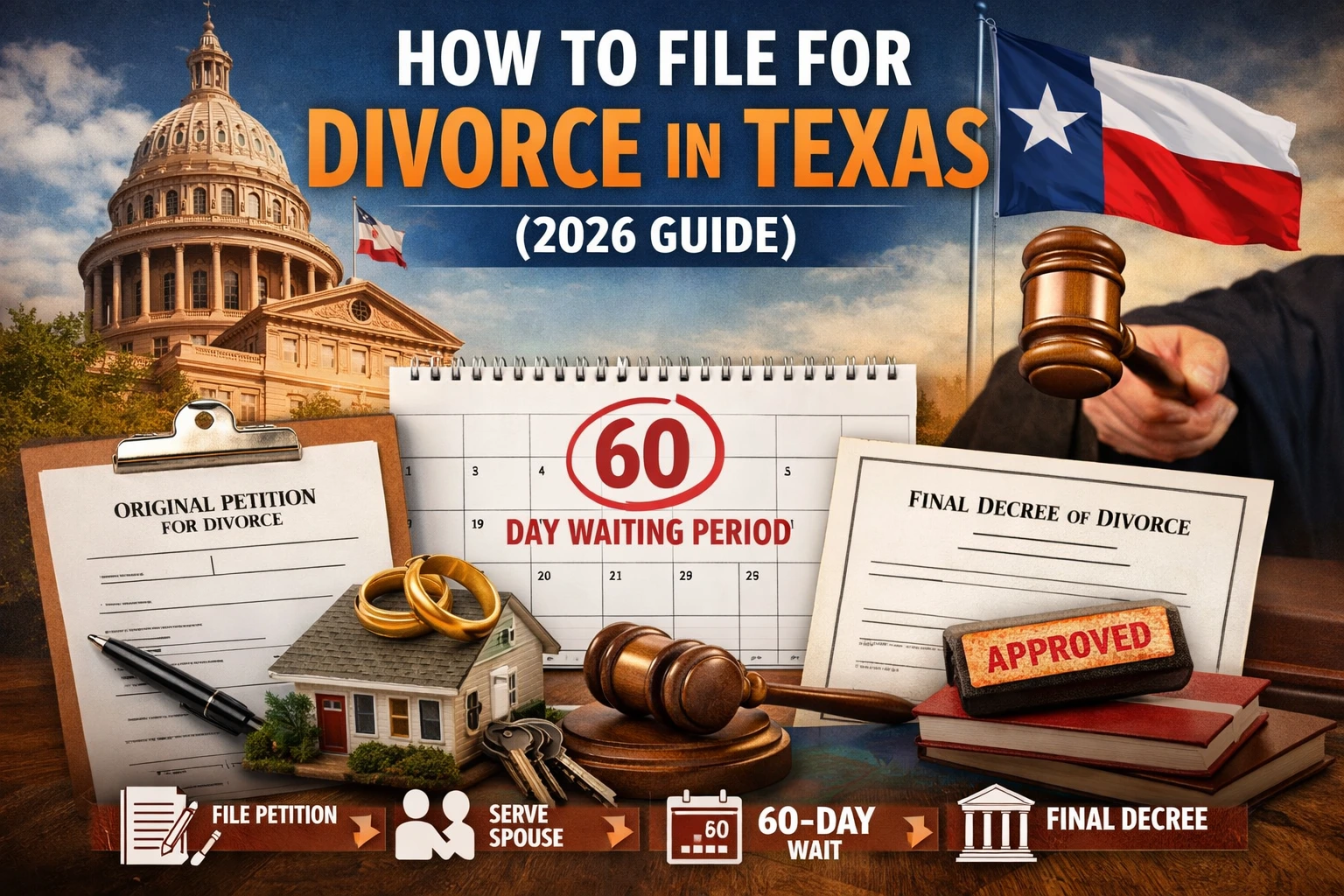
How to File for Divorce After Separation in Texas
If you’ve been legally separated and now want to finalize a divorce, the process is simpler than starting from scratch.
Step 1: Review your separation agreement. Determine which terms will carry over to your divorce and which need adjustment.
Ready Divorce Service assists with document preparation at each stage. Learn more about Starting the Divorce Process to understand what comes next.
What Happens When a Separation Period Expires
Most legal separations do not expire on their own. But some do, because a statute sets an outer limit, a court order includes a review or sunset date, or the parties agreed to a fixed term. When a separation period or order does expire, the consequences depend on what the order or agreement says and on state law.
First, determine whether your separation actually has an expiration date
- Read the order or agreement. Look for language such as “terminates on,” “shall be reviewed on,” “sunset provision,” or “expires.” Most separation agreements have no such clause.
- Check your state statute. A few states impose limits or require periodic court review, which can end or freeze an order even if the document is silent.
- Check local court rules. Some courts require periodic status reports or review hearings.
What happens to the terms when the separation ends
If a statute imposes a limit: The court may be required to dismiss or convert the separation case.
If the parties agreed to a fixed term: The agreement controls.
If one spouse files for divorce: The separation order does not automatically terminate, but the divorce case typically supersedes it.
If the spouses reconcile: The separation order can be dismissed, returning the parties to married status without a separation order.
A practical checklist before any deadline
- Calendar the date. Put the expiration or review date on your calendar at least 60 days in advance.
- Pull the current order and agreement. Confirm exactly what terminates and what survives.
- Document changed circumstances. Income changes, relocation, new child-related needs, and remarriage plans all affect what should happen next.
- Decide your goal. Extend the separation, modify its terms, terminate it, or convert it to divorce.
- File before the deadline. Courts generally will not extend an order after it has expired without a separate motion, and some will not do so at all.
- Serve the other spouse. Most motions require notice and an opportunity to respond.
- Get a written order. Do not rely on an informal understanding; the enforceable terms are the ones in the signed order.
Never assume a separation order will renew itself. If your order has an expiration or review date, file the appropriate motion before that date. Waiting until after expiration can leave you without enforceable support, custody, or property terms.
How changes in circumstances affect separation terms
Even when a separation has no expiration date, major life changes can require modification or termination of specific terms:
- Remarriage plans. A separation order does not prevent planning a remarriage, but remarrying before the marriage is dissolved can create legal complications. Consult an attorney first.
- Reconciliation. If the spouses resume living together as a married couple, the separation may be treated as ended. Some states require a formal dismissal; others treat cohabitation as evidence of reconciliation.
- Income changes. Support terms can be modified on a showing of a substantial change in circumstances.
Cross-state considerations
If you move to another state while a separation order is in effect, the original court generally retains authority to modify and enforce it, but the new state may have a role in enforcement or a later divorce. The Uniform Child Custody Jurisdiction and Enforcement Act (UCCJEA) governs which state has authority over custody, and the Full Faith and Credit Clause generally requires states to honor each other’s court orders.
A separation period rarely expires on its own, but when it does, the terms can lose their court-enforced status. Read the order, calendar the deadline, and file any extension, modification, termination, or conversion before the date passes. If you move, confirm which state’s order controls.
Frequently Asked Questions
Can a legal separation last indefinitely?
Yes, a legal separation can last indefinitely. Unlike divorce, which is a final dissolution of marriage, a legal separation does not end your married status. You remain legally married for as long as the separation agreement remains in effect. Many couples maintain indefinite separations for personal, financial, or religious reasons without converting to divorce. However, if circumstances change or you decide to remarry, you will need to either modify the separation or file for divorce through the court.
What is the difference between legal separation and living apart?
Legal separation involves a court order or signed separation agreement that outlines property division, child custody, support obligations, and other financial responsibilities. Living apart simply means spouses occupy separate residences without formal court involvement or documentation. Legal separation provides legal protection and enforces terms through court authority, while living apart has no legal standing. If you live apart without a separation agreement, financial and custody matters remain unresolved, which can create complications if one spouse files for divorce or passes away.
How long does the average marriage separation last before conversion to divorce?
There is no fixed average duration. Some separations last months before conversion to divorce, while others continue for years or indefinitely. The timeline depends on personal circumstances, reconciliation prospects, financial complexity, and whether both spouses agree to convert. In some cases, spouses use separation as a trial period to determine if divorce is necessary. Others maintain separation permanently. If you decide to file for divorce after separation, you can do so at any point, subject to your state’s waiting periods and filing requirements.
Does legal separation automatically turn into divorce?
No, legal separation does not automatically convert to divorce. A separation agreement or court judgment keeps you legally married indefinitely unless you take additional steps. To end your marriage, you must file a petition for divorce with the court, even if you already have a separation agreement in place. Some separation agreements include conversion clauses that simplify the process, but you still must file divorce paperwork and comply with state waiting periods. Without filing for divorce, your marital status remains unchanged, which affects remarriage, inheritance, and insurance benefits.