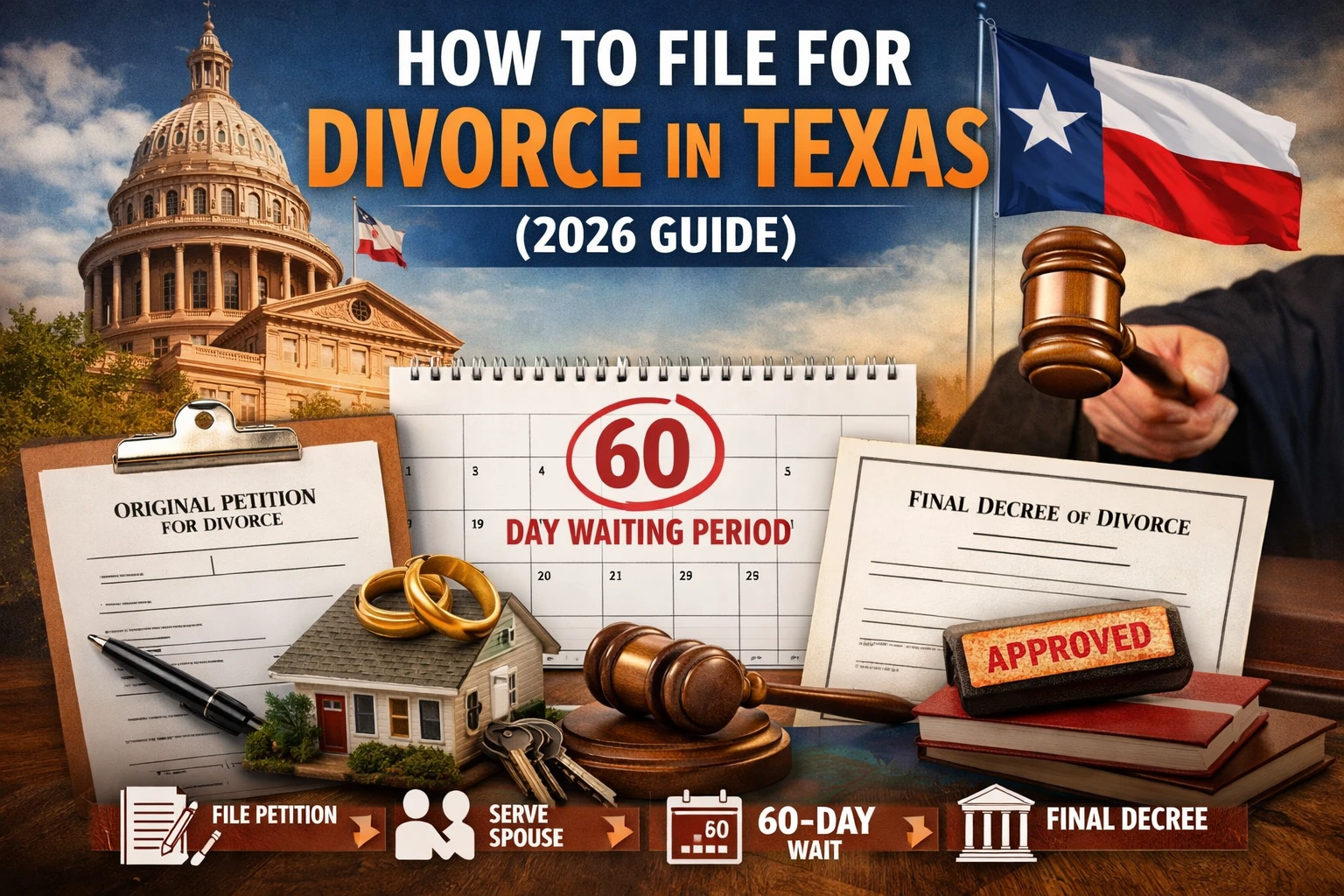
When both spouses are ready to end a marriage without a courtroom fight, Collin County agreed divorce support can turn a confusing legal process into a clear sequence of manageable steps. Agreement alone does not finalize a divorce. The court still needs complete, accurate documents, proper filing, required waiting time, and orders that address every issue in the case.
An agreed divorce is often the most practical path for Texas couples who want to control costs, reduce stress, and move forward. It works best when both spouses can communicate enough to reach and keep a fair agreement through the final hearing.
What an agreed divorce means in Collin County
An agreed divorce, also called an uncontested divorce, generally means both spouses agree that the marriage should end and agree on the terms the court must include in the Final Decree of Divorce. There may still be difficult conversations about money, parenting, or property. The key difference is that the spouses resolve those issues without asking a judge to decide a contested dispute.
For a Texas court to grant the divorce, at least one spouse must usually have lived in Texas for the previous six months and in the county where the case is filed for at least 90 days. If Collin County is the proper county, the case is filed there even if one spouse has moved elsewhere after meeting the residency requirements.
Most Texas divorces have a 60-day waiting period that begins when the Original Petition for Divorce is filed. Limited exceptions may apply in certain family-violence situations, but most agreed cases should be planned around the standard waiting period. Filing the petition is the start of the legal case, not the finish line.
When an agreed case is a good fit
A straightforward agreed divorce may be a good fit when both spouses are willing to sign the necessary paperwork and can agree on the major terms. Those terms commonly include how to divide community property and debts, whether either spouse will keep a home or vehicle, and whether either spouse will change a name.
If the couple has children under 18, the agreement must also address conservatorship, possession and access, child support, medical support, and health insurance. Texas courts focus on the child’s best interest. A parenting agreement that seems reasonable to both parents may still need revisions if it does not provide the details the court requires.
An agreed divorce is not always the right route. It may be worth getting individualized legal advice if there are threats, coercion, hidden assets, a business, substantial retirement accounts, complicated real estate, immigration concerns, or serious disagreement about parenting or support. Lower conflict is valuable, but it should not come at the cost of signing an order you do not understand.
The paperwork that moves the case forward
The documents in an agreed divorce do more than tell the court that both spouses agree. They become the legal record that governs property, debt, parenting responsibilities, and support after the divorce is final. Small omissions can create expensive problems later.
The process typically begins with an Original Petition for Divorce. Depending on the facts of the case, the filing package may also include a civil case information sheet or county-required cover materials, a waiver of service or an answer from the other spouse, and required notices or information sheets. If children are involved, additional child-related forms and support documents may be needed.
The Final Decree of Divorce is the document that deserves the closest attention. It should clearly identify who receives each asset and who is responsible for each debt. General wording such as “we will divide things later” is usually not enough. Bank accounts, credit cards, vehicles, household property, retirement funds, and the marital home each need language that fits the actual agreement.
A retirement account deserves particular care. The decree may award a portion of an account, but a separate qualified domestic relations order or similar order can be necessary before a plan administrator will divide certain benefits. This is one example of why a simple divorce can still involve technical details.
A practical path from agreement to final decree
The most efficient cases begin before filing. Each spouse should gather basic information about income, debts, property, account balances, vehicle titles, and any existing court orders. This makes it easier to prepare a complete agreement and reduces last-minute revisions.
Next, confirm that Collin County is the proper filing location and that the required Texas residency rules are met. Prepare the petition and the documents that fit the family’s circumstances. The other spouse must receive legal notice of the case, either through formal service or by signing appropriate paperwork that acknowledges the case and waives service when appropriate.
After filing, use the waiting period productively. Review the draft decree carefully. Make sure names are spelled correctly, addresses and legal descriptions are accurate where needed, and the agreement says exactly what both spouses intend. If children are involved, confirm that the possession schedule and support provisions are complete and workable in real life.
Once the waiting period has passed and all required documents are ready, the case can move toward finalization. Court procedures can vary, and some cases require a brief prove-up hearing where one spouse answers basic questions under oath. The judge reviews the paperwork and, if everything is in order, signs the decree. The divorce is final only after the judge signs the Final Decree of Divorce.
Common mistakes that slow down agreed divorces
The most common delays are usually preventable. One is assuming that verbal agreement is enough. Courts need signed documents with specific terms, not a general understanding between spouses. Another is leaving debt out of the decree. Even if a divorce order assigns a credit card balance to one spouse, the creditor may still pursue the other spouse if both names remain on the account.
Parents also sometimes underestimate the detail required in child-related orders. Child support, medical support, exchange times, holidays, and decision-making authority need clear language. A vague parenting plan can create conflict long after the divorce is final.
Finally, do not sign documents simply because the other spouse says they are standard. Read every page. Ask questions before signing. An agreed divorce should be efficient, but efficiency comes from preparation and accuracy, not from rushing.
How document preparation support can help
For many couples, the hardest part is not reaching agreement. It is translating that agreement into Texas court documents and following the correct filing sequence. Document preparation and procedural guidance can help organize the case, explain what information is needed, prepare appropriate forms based on the circumstances, and reduce avoidable filing mistakes.
This type of support is different from attorney representation. A legal support service does not replace legal advice or advocate for one spouse against the other. It can be a practical option for couples who have already agreed on the terms and want affordable help completing a process that still has real legal consequences.
Ready Divorce Service focuses on helping Texans move through agreed divorce paperwork and filing steps with clarity. The goal is to make the process more manageable while respecting the fact that a divorce decree affects a family’s finances, property, and future.
Questions people ask about Collin County agreed divorce support
Do both spouses have to go to court?
It depends on the court’s current procedures and the facts of the case. In some agreed cases, one spouse may handle the final prove-up. In others, the court may require additional appearances or documents. It is wise to verify the current requirements before scheduling finalization.
Can we use an agreed divorce if we have children?
Yes, if both parents can agree on the required parenting and support terms and the proposed orders meet Texas requirements. Cases with children generally involve more paperwork and more details than cases without children.
What if we agree now but later disagree?
An agreed case can become contested if a spouse no longer agrees to the proposed terms. That does not mean the divorce cannot proceed, but the process may require a different strategy, additional court involvement, and potentially legal counsel.
A calm, complete agreement gives both spouses something valuable: a defined path forward. Take the time to get the paperwork right, follow the required steps, and choose support that helps you finish this chapter with fewer surprises.
📞 Get Started Today – Your Peaceful Divorce Is Just a Click Away
When you’re ready to move on, we’re ready to help.
📲 Call us now at (800) 432-0018
🖥️ Start your divorce online today