When people ask, do both spouses sign divorce papers, they are usually trying to answer a bigger question: can this divorce move forward if one person is cooperative and the other is not? In Texas, the answer depends on which divorce papers you mean. Some documents are signed by only the spouse who starts the case. Others may be signed by both spouses if the divorce is agreed.
That distinction matters because many people assume a divorce cannot happen unless both parties sign everything. That is not how Texas divorce works. A spouse cannot block a divorce forever just by refusing to sign. But if both spouses are willing to cooperate, the process is usually faster, less stressful, and less expensive.
Do both spouses sign divorce papers in Texas?
Sometimes yes, sometimes no. Texas divorce involves more than one form, and each document serves a different purpose.
The Original Petition for Divorce is typically signed only by the spouse who files the case, known as the petitioner. That person is asking the court to start the divorce. The other spouse, called the respondent, does not need to sign the petition for the case to be filed.
Later in the process, the respondent may sign other documents. In an uncontested divorce, both spouses often sign the Final Decree of Divorce because it reflects the agreement they both accept. The respondent might also sign a Waiver of Service, which means they do not require formal service by a constable, sheriff, or process server.
So if you are asking whether both people must sign every divorce paper, the answer is no. If you are asking whether both people often sign documents in an agreed Texas divorce, the answer is yes.
Which divorce papers each spouse usually signs
The easiest way to understand this is by looking at the role of each document.
The petition
The petition starts the case. Only the filing spouse signs it. Texas courts do not require both spouses to sign the petition before a divorce can begin.
The waiver of service
If the respondent is willing to cooperate, they may sign a Waiver of Service. This tells the court they received notice of the divorce and do not need to be formally served. That can save time and reduce conflict.
Texas has specific rules about when and how a waiver can be signed. It generally must be signed after the petition is filed, not before. It also needs to be completed correctly to avoid delays.
The answer
Instead of signing a waiver, the respondent may file an Answer. This is a formal response to the divorce case. It is signed only by the respondent or their attorney if they have one.
The final decree
In an agreed divorce, both spouses often sign the Final Decree of Divorce. This is one of the most important documents in the case because it sets out the final terms for property, debt, children, support, and any other agreed issues.
If both spouses sign the decree, it usually signals that the divorce is uncontested and ready to be finalized, assuming everything else is in order.
When both spouses signing helps the most
The biggest benefit of both spouses signing is that it shows agreement. In a Texas uncontested divorce, that agreement can simplify almost every stage of the case.
If both spouses agree on property division, debt division, parenting arrangements, child support, and any spousal support issues, signing the right documents can keep the divorce on a smoother track. It often reduces the need for contested hearings, service problems, and back-and-forth disputes over paperwork.
This is especially helpful for couples who want a practical, low-conflict process. If the goal is to finish the divorce correctly and move on, cooperation usually saves money and time.
When one spouse does not sign
A spouse may refuse to sign for different reasons. Sometimes they disagree with the terms. Sometimes they are avoiding the process. Sometimes they are upset and believe that refusing to sign will stop the divorce.
In Texas, refusal to sign does not automatically stop the case. If the respondent will not sign a waiver or agreed decree, the filing spouse can still move the divorce forward by serving them properly and following court procedure.
That said, the process may become more complicated. A refusal to sign can turn an expected uncontested divorce into a contested one, or at least create extra steps. You may need formal service, additional filings, and possibly a hearing where the court resolves open issues.
This is where accuracy matters. A case can slow down quickly if the paperwork is incomplete, service is handled incorrectly, or the final documents do not match Texas court requirements.
Do both spouses have to sign for an uncontested divorce?
Not necessarily every document, but both spouses generally need to cooperate with the overall process. An uncontested divorce means there is no fight over the major terms. That usually means the respondent either signs a waiver, files an answer, and signs the final decree, or otherwise clearly participates without contesting the case.
In practical terms, most uncontested Texas divorces involve signatures from both spouses on at least some key documents, especially the final decree. If one spouse refuses to approve the final terms, the case is no longer fully agreed, even if it began that way.
So the better question is not just do both spouses sign divorce papers, but whether both spouses are willing to complete the paperwork needed for an agreed outcome.
Texas timing and signature issues
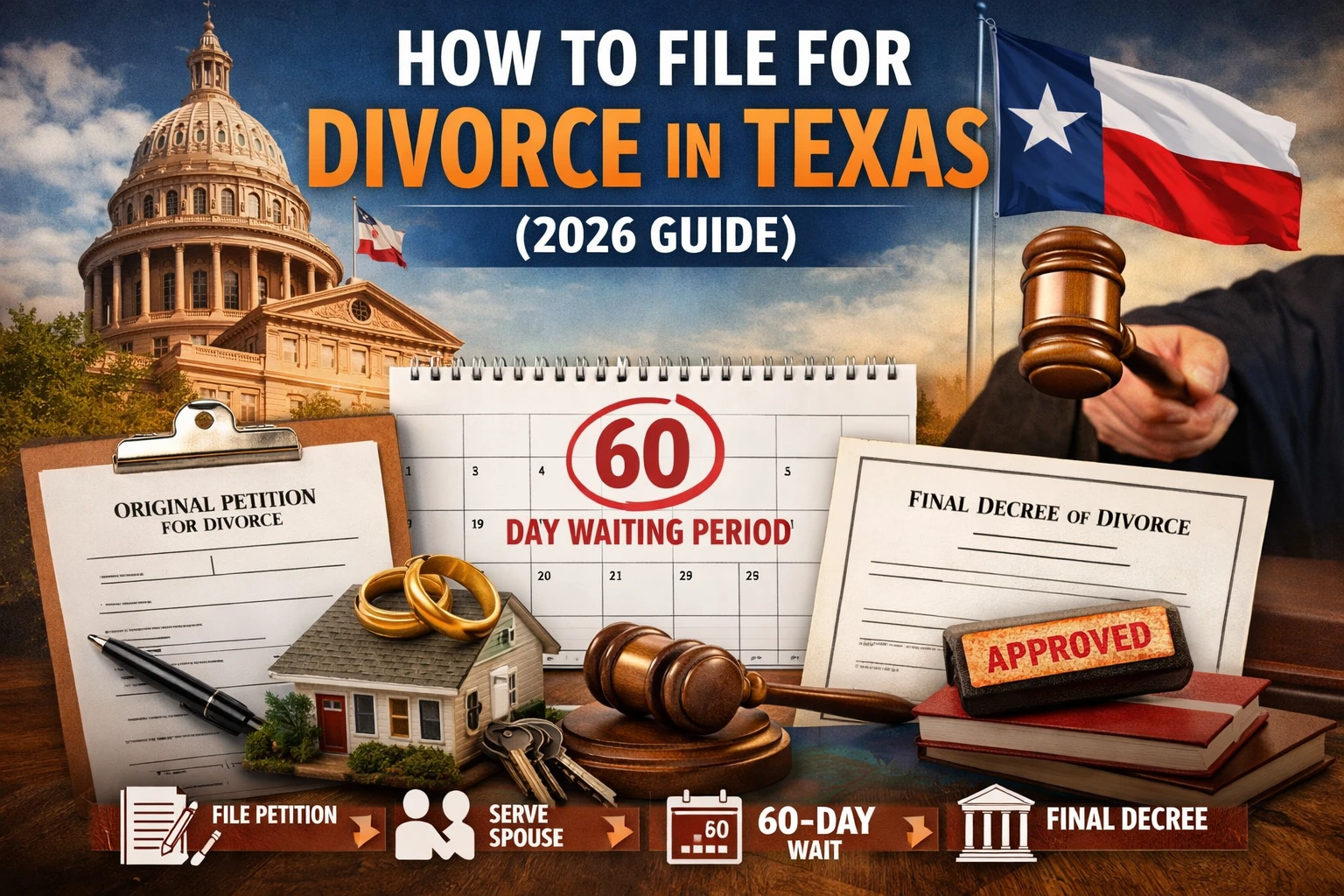
Texas has a mandatory waiting period in most divorce cases. Generally, a divorce cannot be finalized until at least 60 days have passed from the date the petition was filed. Even if both spouses sign everything quickly, the court still usually requires that waiting period.
This surprises a lot of people. Signing early can help the case stay organized, but it does not erase the statutory timeline.
There is also a practical timing issue with signatures. Some forms must be signed at the correct stage of the case. For example, a waiver signed too early may not be valid. A final decree signed before all terms are fully worked out can create confusion or require revisions.
That is one reason many Texas couples want help with document preparation. The process is more manageable when each form is completed in the right order.
Common misunderstandings about signing divorce papers
One of the most common misunderstandings is that a spouse can “not allow” the divorce by refusing to sign. Texas does not work that way. Marriage is a legal relationship, but one spouse does not have veto power over the other person’s decision to seek divorce.
Another misunderstanding is that if both spouses are friendly, they can sign whatever forms they find online and be done. Friendly does help, but the court still expects legally sufficient paperwork. Missing language, incorrect formatting, or incomplete child-related terms can cause delays.
People also assume that signing means giving up all rights. Not always. A respondent may sign certain documents to acknowledge the case without agreeing to every requested term. The meaning depends on the form.
How to make the signing process easier
If your divorce is agreed, the best approach is to be organized from the beginning. Make sure both spouses understand what each document does and why it matters. Small misunderstandings often create bigger delays than actual disagreement.
It also helps to settle the major issues before final paperwork is prepared. That includes property, debts, parenting schedules, child support, and who will handle practical matters like refinancing, title transfers, or account closures. The clearer the agreement, the easier it is for both spouses to sign with confidence.
For Texas couples trying to keep things uncontested, the goal is not just collecting signatures. The goal is preparing accurate documents that reflect a complete agreement and meet court requirements.
In counties with high filing volume, such as Dallas County, Tarrant County, Harris County, or Bexar County, even minor paperwork mistakes can lead to avoidable delays. Careful preparation can make a real difference.
When professional help can save time
If both spouses are mostly in agreement but feel stuck on the paperwork, support with document preparation can be a practical middle ground. You may not need full litigation, but you also may not want to guess your way through forms that affect your finances, children, and final court order.
For uncontested Texas divorces, a service like Ready Divorce Service can help people understand which documents need one signature, which need both, and how to move through the filing process without unnecessary confusion. That kind of support is often most valuable when people want a simpler path but still want the paperwork done carefully.
If you are wondering whether both spouses need to sign your divorce papers, the real answer starts with identifying where your case stands – agreed, partially agreed, or contested. Once that is clear, the next steps usually become much easier to see, and a stressful process starts to feel more manageable.
📞 Get Started Today – Your Peaceful Divorce Is Just a Click Away
When you’re ready to move on, we’re ready to help.
📲 Call us now at (800) 432-0018
🖥️ Start your divorce online today