If you and your spouse agree the marriage is over, the hardest part may not be the decision itself. It is making sure your uncontested divorce with kids in Texas is handled correctly, especially when child custody, support, and visitation terms must be clear enough for a judge to approve.
That is where many people get stuck. They assume that because both parents agree, the paperwork will be simple. In reality, Texas courts still expect a complete, legally compliant case. When children are involved, the court is not just reviewing your agreement as spouses. It is also looking at whether the final orders protect the best interests of the children.
What counts as an uncontested divorce with kids in Texas?
An uncontested divorce means both spouses agree on the major issues and are willing to sign the required paperwork. In a case with children, that usually includes agreement on conservatorship, possession and access, child support, medical support, and how final decisions about the children will be made.
This does not mean every family situation is identical. Some parents agree to follow a standard possession schedule. Others need a custom parenting plan because of work schedules, school needs, or distance between homes. What makes the case uncontested is not whether the arrangement is basic. It is whether both parties fully agree.
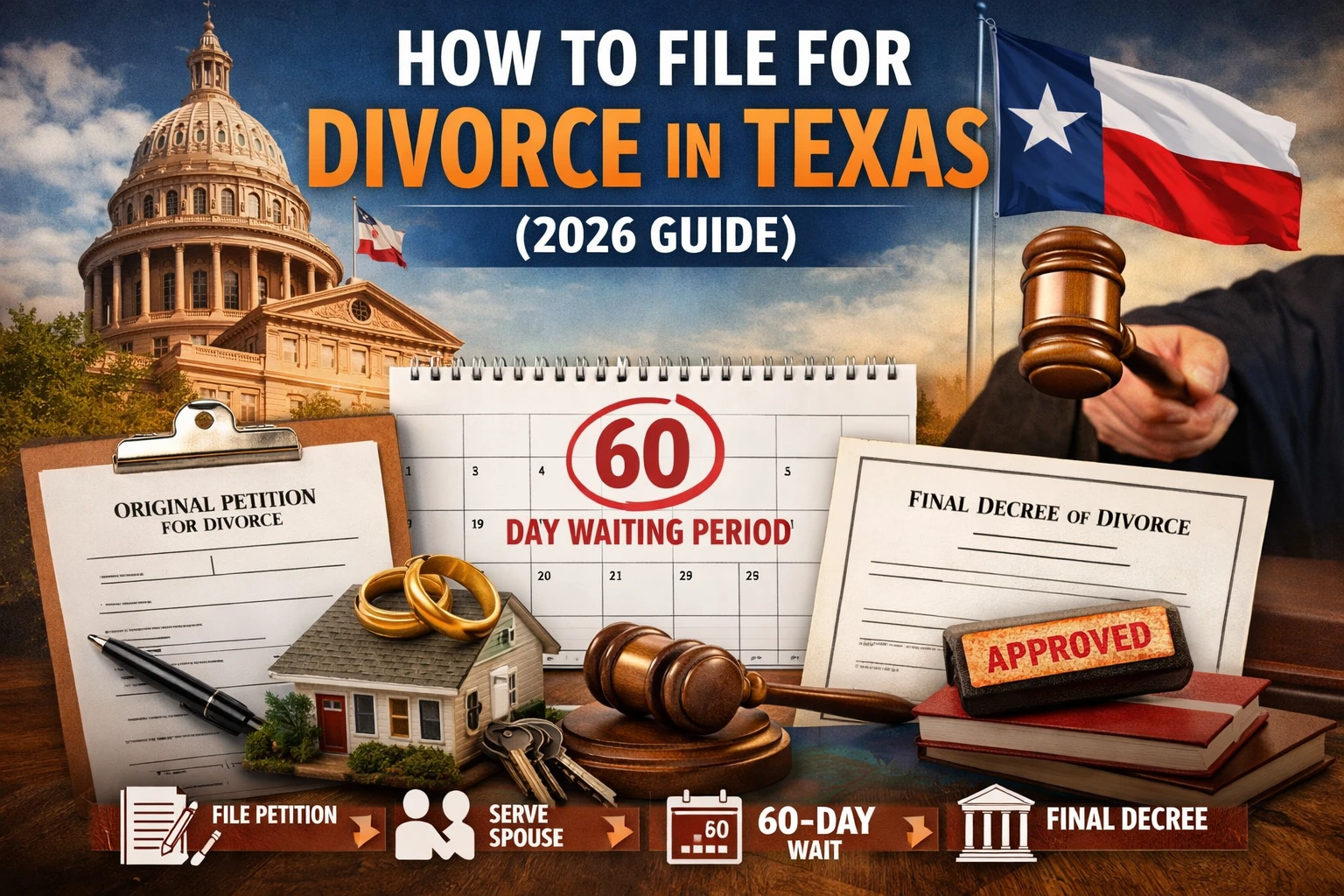
Texas courts generally require that at least one spouse has lived in Texas for the last six months and in the county of filing for at least 90 days. There is also a mandatory 60-day waiting period in most divorces, counted from the date the petition is filed. Even when everything is agreed, that waiting period still applies unless a narrow legal exception exists.
Why children make the paperwork more detailed
When there are no children, an agreed divorce mainly focuses on ending the marriage and dividing property and debts. With children, the court wants detailed orders that reduce future conflict.
That means your final decree usually needs to address who has the right to make decisions for the child, where the child will primarily live, when each parent has parenting time, who pays child support, who carries health insurance, and how uninsured medical costs are split. If any of those terms are vague, incomplete, or inconsistent, the judge may reject the paperwork or require corrections.
This is one reason parents should not treat an agreed divorce as a fill-in-the-blank exercise. The process can still be affordable and efficient, but only if the documents are prepared carefully.
The issues parents must agree on
For an uncontested divorce with kids in Texas to move forward smoothly, both spouses need a full agreement, not a partial one. If you agree on support but disagree on the visitation schedule, the case is not truly uncontested.
The biggest areas of agreement usually involve conservatorship and possession. In Texas, many parents are named joint managing conservators, but that does not automatically mean everything is split equally. One parent may still have the exclusive right to determine the child’s primary residence, while both parents share other rights and duties.
Child support is another common pressure point. Texas has guideline support rules, but parents still need orders that reflect the facts of their case. If one parent is self-employed, has irregular income, or provides health insurance through work, the numbers and language need to be handled with care.
Property division matters too. Even if your main concern is the children, your divorce still needs to address marital property and debts. Leaving those issues unclear can create delays or future disputes.
How the process usually works
Most agreed divorces start when one spouse files an Original Petition for Divorce in the proper Texas county. After filing, the other spouse will typically sign a waiver or file an answer, depending on the case strategy and timing.
From there, the case moves toward preparing the final documents. For parents, this often includes the Final Decree of Divorce and child-related orders that spell out conservatorship, possession, support, and medical coverage. Accuracy matters at every stage because courts expect the final paperwork to match the filing facts, the agreement between the parties, and Texas requirements.
After the 60-day waiting period has passed, one spouse usually appears for a brief prove-up hearing unless the county allows another approved process. Some counties in Texas have local procedures that affect scheduling, forms, or submission steps. That is why county-specific guidance can save time, especially in places like Dallas County, Tarrant County, Collin County, Denton County, Harris County, Bexar County, or Ellis County.
Common mistakes that cause delays
The most common problem is not conflict between spouses. It is incomplete or inconsistent paperwork.
Parents often run into trouble when one document says the child will live primarily with one parent, but another section uses language that suggests something different. Support calculations may be omitted or entered incorrectly. Medical support terms may be missing. Some people also use generic forms that do not fit their family situation, which can lead to a rejected decree.
Another issue is assuming verbal agreements are enough. They are not. If it is not written clearly into the final orders, it may not be enforceable later. That can create real problems after the divorce, especially around exchanges, holiday schedules, and payment responsibilities.
There is also the practical side. Missing signatures, filing in the wrong county, using outdated forms, or misunderstanding local court requirements can slow down a case that should have been straightforward.
Can you do it without full attorney litigation?
Yes, many families can complete an uncontested divorce without hiring two litigating attorneys and going through a drawn-out court battle. That is one reason agreed divorce services appeal to parents who want a more affordable and lower-conflict option.
Still, lower conflict does not mean lower standards. When children are involved, the court expects legally sound documents and proper filing steps. If your case is truly agreed and there are no major disputes, process-focused support can help you move forward with more confidence and less expense than traditional litigation.
That is especially useful for people who feel overwhelmed by the forms but do not need a courtroom fight. Services like Ready Divorce Service are built around that gap, helping Texans prepare and complete uncontested cases more efficiently.
When an uncontested divorce may not be the right fit
Sometimes couples want an agreed divorce, but the facts say otherwise. If there are serious disputes about custody, hidden assets, family violence, or one spouse refuses to cooperate, the case may no longer be uncontested.
The same is true if one parent wants terms that are unlikely to be approved by the court. Judges will not simply sign off because both adults agree. If a proposed order does not appear to protect the child’s best interests, the court can require changes.
There are also cases where emotions are still too raw for practical agreement. A couple may agree in principle to divorce but continue arguing over school choice, holidays, tax claims, or transportation. In that situation, trying to force an uncontested filing too early can waste time.
What parents can do before filing
The smoother cases usually start with better preparation. Before filing, it helps to make sure both spouses have discussed the core child-related terms in realistic detail, not just broad ideas.
For example, it is not enough to say, “We will share custody.” You need to know where the child will primarily live, what the weekly schedule looks like, how holidays are handled, and who pays support and insurance. If one parent works nights, travels often, or plans to move, those facts should be addressed early.
It also helps to gather the practical information the paperwork will require, including children’s full legal names, dates of birth, addresses, income information for support purposes, and health insurance details. Good preparation reduces revision requests and keeps the process moving.
A calmer path is possible
Divorce with children is never just paperwork. It affects routines, finances, and the sense of stability your family needs next. But when both parents are committed to agreement, an uncontested divorce with kids in Texas can be a workable way to move forward without adding unnecessary conflict or cost.
The key is to treat the process with the seriousness it deserves. Clear agreements, accurate documents, and Texas-specific guidance can make the difference between a frustrating delay and a clean transition into the next chapter. If your goal is closure with less stress, the right support can help you get there.
Get Started Today – Your Divorce Is Just a Click Away
If you’re in Texas and want your divorce handled quickly, correctly, and without unnecessary stress, we can help you from start to finish.
👉 Start here: Complete the Divorce Questionnaire
📞 Call now: (469) 913-4000