Table of Contents
- Why Serving Divorce Papers Correctly Matters
- Step 1: File the Original Petition for Divorce
- Understanding the Texas Waiver of Service Form
- Step 2: Personal Delivery by Sheriff, Constable, or Process Server
- What Is the Cost of Process Server Texas Residents Pay?
- Certified Mail and Other Alternative Service Methods
- Uncontested Divorce Timeline Texas: What to Expect
- Troubleshooting Failed Service and Common Mistakes
- Frequently Asked Questions
Last Updated: September 4, 2026
Why Serving Divorce Papers Correctly Matters
Serving divorce papers in Texas uncontested cases is the single step where a straightforward filing most often stalls. If the respondent is not properly notified according to the Texas Rules of Civil Procedure, the court cannot exercise jurisdiction over them, which means your case cannot move forward regardless of how complete your paperwork is. Serving divorce papers correctly is not a formality; it is a legal requirement that protects the respondent’s right to due process.
In an uncontested divorce, you control most of the timeline. Understanding the service requirement before you file saves you from the most common reason cases get delayed or dismissed.
The core rule is simple: the respondent must receive the citation and a copy of the original petition through a method the court recognizes. Below, we walk through each accepted method, what they cost, and how to avoid common mistakes.
Step 1: File the Original Petition for Divorce
The service process cannot begin until you file your original petition for divorce with the district court clerk in the county where you or your spouse resides. This document starts your case and triggers the court to issue a citation, the official notice delivered to your spouse.
When you file, the clerk assesses filing and issuance fees, which vary by county, and issues the citation that a process server, constable, or sheriff will deliver.
For anyone handling this without an attorney, e-filing is the most efficient route. Most Texas counties require electronic filing through the clerk’s portal, providing an immediate timestamp and receipt.
Confirm the exact spelling of your spouse’s legal name and their current address before filing. A citation with a wrong name or an outdated address is the most frequent reason service fails, and it costs you both time and the filing fee all over again.
Understanding the Texas Waiver of Service Form
The Texas Waiver of Service form is the fastest and least expensive way to complete service in an uncontested divorce. This form, governed by Rule 119 of the Texas Rules of Civil Procedure, allows the respondent to formally acknowledge they received the petition and give up their right to be personally served.
The respondent must sign the waiver, and critically, their signature must be notarized. The waiver then gets filed with the court, serving as proof of service and eliminating the need for a process server or certified mail.
A common mistake is having the respondent sign the waiver before the petition is filed. The waiver must reference your specific cause number, which only exists after the court opens your case.
Step 2: Personal Delivery by Sheriff, Constable, or Process Server
Personal delivery is the most straightforward method when a waiver is not an option. A constable, sheriff, or certified process server physically hands the citation and petition to the respondent, then completes a return of service, an affidavit filed with the court documenting when and where delivery occurred.

The constable or sheriff serves papers only within their county. If your spouse lives elsewhere, request service from that county’s constable or sheriff, or hire a private process server who operates there.
Private process servers are often faster and more flexible than government servers, particularly for spouses with unpredictable schedules, as they typically attempt delivery multiple times at different hours.
What Is the Cost of Process Server Texas Residents Pay?
Process server costs in Texas vary by county, distance, and the number of delivery attempts required. Fees for constable or sheriff service are set by each county and are generally lower than private server rates.
Since pricing is not standardized, request quotes from multiple servers in the respondent’s county before committing. The cost is typically minor compared to the overall filing, but it adds up if a second attempt is needed.
For couples willing to cooperate, the waiver of service eliminates this cost entirely. If you doubt your spouse’s willingness to sign a notarized waiver, budget for professional service instead of waiting weeks for a signature that may not come.
Do not attempt to serve the papers yourself. Texas law prohibits the petitioner from personally delivering the citation, and improper service can invalidate the entire proceeding, forcing you to restart the case from the beginning.
Certified Mail and Other Alternative Service Methods
When personal delivery is impractical, certified mail with return receipt requested is an accepted alternative under Texas Rule of Civil Procedure 106(a)(2). The clerk mails the citation and petition, and the signed green card (USPS Form 3811) serves as proof of delivery. This works well when the respondent is willing to sign for the letter but lives far away, though it fails if they refuse delivery.
Substituted Service Under Rule 106(b)
If the respondent cannot be personally served despite diligent effort, Texas Rule of Civil Procedure 106(b) allows you to request substituted service, a court-ordered method permitting service by:
- Leaving a copy of the citation and petition with anyone over 16 years old at the respondent’s usual place of abode, or
- Any other manner that the court finds will be reasonably effective to give the respondent notice (e.g., leaving at their workplace or mailing to a different address).
To obtain a Rule 106(b) order, you must file a motion supported by an affidavit detailing the attempts made to serve the respondent, showing they are not reasonably accessible to personal service. The judge will review the motion and, if satisfied, sign an order authorizing the alternative method. This adds time, typically 1 to 2 weeks, but is far more reliable than citation by publication.
Citation by Publication: The Last Resort
If the respondent’s whereabouts are truly unknown, you may need to serve by publication under Rule 109. This requires filing an affidavit stating that the address is unknown and that you have used due diligence to locate them. The court then orders notice published in a newspaper in the county where the case is filed, once a week for four consecutive weeks. After publication, the court may enter a default judgment, but only after a hearing where you must prove your case. This method is slow (often 6-8 weeks) and can complicate the divorce if the respondent later appears, but it is the only option when the spouse is truly missing.
Digital Service Nuances: What Texas Courts Allow (and Don’t)
A common question is whether you can serve divorce papers via email, text message, or social media. The short answer: not for initial service under the Texas Rules of Civil Procedure. Rule 106 does not list these as permissible methods, and the court will not accept a screenshot as proof of service.
However, there is a narrow exception: after you have attempted personal service and obtained a Rule 106(b) order, the court may authorize service by email or social media if the movant proves the method is reasonably calculated to give notice. This is rare and requires a strong factual showing, such as evidence the respondent is actively using that account. In practice, most judges prefer physical methods, so do not rely on digital service without explicit court approval.
Do not attempt to serve your spouse via email or social media without a court order. Improper service can invalidate the entire proceeding, forcing you to restart the case from the beginning.
Practical Tips for Alternative Service
- Certified mail: Use the clerk’s office to send the citation, not your own mailing. The clerk will handle the mailing and retain the receipt.
- Rule 106(b) motion: Keep a detailed log of every attempt, including dates, times, and who answered the door. This strengthens your affidavit.
- Publication: You must publish in a newspaper that is likely to give the respondent notice; check with the court clerk for approved newspapers in your county.
- Costs: Certified mail is inexpensive (around $10-$15), but Rule 106(b) motions may require a hearing fee, and publication can cost $100-$300 depending on the newspaper.
For those who want to avoid these pitfalls entirely, Ready Divorce Service provides step-by-step guidance through the process, including document preparation that complies with Texas law. Our team helps ensure your waiver is notarized correctly and your filings are complete before they reach the clerk, reducing the risk of rejection. You can compare which plan fits your situation to determine the right level of support for your case.
Uncontested Divorce Timeline Texas: What to Expect
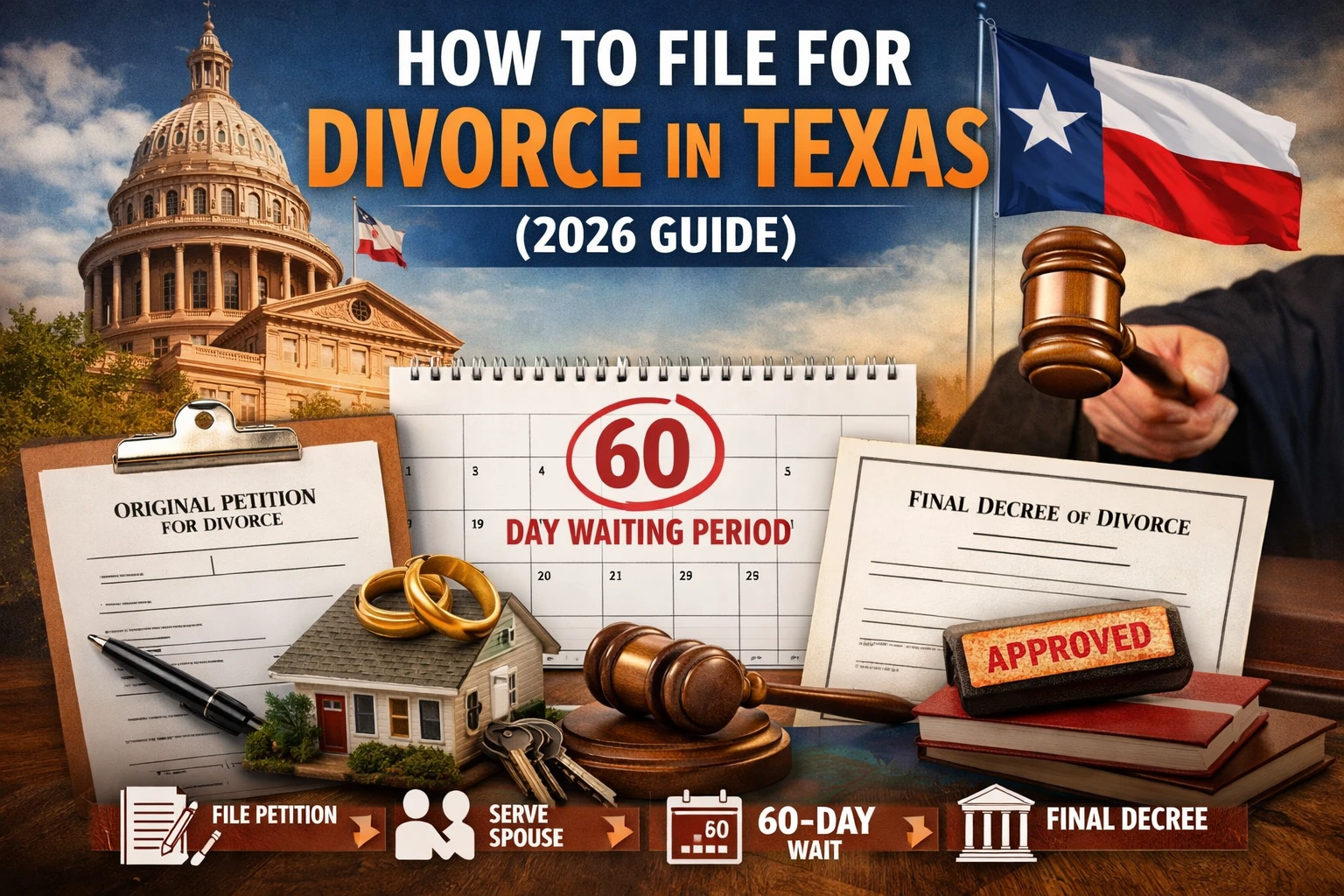
The uncontested divorce timeline Texas law requires includes a mandatory 60-day waiting period. This period begins when the petition is filed, and the court cannot grant the divorce before 60 days have passed, even if both parties agree.
Service must be completed during this window, which is why the method you choose matters. A waiver can be signed and filed within days, while process server delivery depends on locating the spouse, and substituted service can take months.
Here is a realistic sequence for a smooth uncontested divorce:
- File the petition and pay the filing fee (day one)
- Deliver the citation and petition to the respondent
- Respondent signs a notarized waiver of service or accepts personal delivery
- File the proof of service with the court
- Wait out the remainder of the 60-day period
- Submit the final decree for the judge’s signature
The 60-day clock runs concurrently with service, so starting the service process immediately after filing keeps your case on the shortest possible track.
Troubleshooting Failed Service and Common Mistakes
Service fails for predictable reasons, and most are avoidable. The most common issue is an incorrect address, which wastes the filing fee and adds weeks to the timeline. Before choosing a service method, verify the respondent’s address through a recent utility bill, tax record, or mutual contact, or ask a process server to do a skip-trace before the first attempt.
A second frequent problem is the respondent refusing to accept the papers. Process servers are trained to handle this, and in most cases, leaving the documents in the respondent’s presence counts as valid delivery even if they refuse to take the envelope. The server will note the refusal on the return of service, and the court will accept it as valid.
What to Do If Your Spouse Is Evading Service
If your spouse is actively avoiding service, not answering the door, ignoring certified mail, or changing addresses, you have several options, but you must act methodically.
- Document every attempt. Keep a log of dates, times, and what happened (e.g., “No answer at 7:15 PM on Tuesday”). This log will be essential for a Rule 106(b) motion.
- Try different times and days. Process servers often attempt delivery on weekends or early mornings when the respondent is more likely to be home.
- Use a private process server. Sheriffs and constables may only make one or two attempts, while private servers are paid per attempt and will be more persistent. Ask the server to conduct surveillance to find a time when the respondent is present.
- File a Rule 106(b) motion. If personal service fails after multiple attempts, file a motion with the court requesting substituted service, attaching an affidavit from the process server detailing the attempts. The judge may authorize leaving the papers with a household member over 16 or another method.
- Consider citation by publication. If you truly cannot locate your spouse, you may need to serve by publication. This is a last resort because it requires a hearing and can delay the divorce, but it is the only way to proceed when the spouse is missing.
The Waiver of Service Notarization: A Checklist to Avoid Rejection
The waiver of service notarization is another point of failure. If the notary block is incomplete or the waiver references the wrong cause number, the court will reject it. If you are unsure, have the waiver reviewed by the court clerk before filing, or use a service that double-checks these details.
What to Do If the Return of Service Is Defective
Sometimes the process server completes the return incorrectly, wrong date, wrong address, or missing signature. If the return is defective, the court may not accept it as proof of service. You can ask the server to file a corrected return, or you may need to re-serve the respondent. Always review the return before it is filed and ask the server to confirm all fields are correct.
For those who want to avoid these pitfalls entirely, Ready Divorce Service provides step-by-step guidance through the process, including document preparation that complies with Texas law. Our team helps ensure your waiver is notarized correctly and your filings are complete before they reach the clerk, reducing the risk of rejection. You can compare which plan fits your situation to determine the right level of support for your case.
Frequently Asked Questions
What is a Waiver of Service and when should it be used in an uncontested divorce?
A Waiver of Service is a form your spouse signs to confirm they received the divorce petition and give up their right to be formally served by a process server or sheriff. It is ideal for uncontested divorces where your spouse agrees to the terms. The form must be notarized and filed with the court. Using it saves time and removes the need for personal delivery.
Do I need a process server for an uncontested divorce in Texas?
Not always. If your spouse signs a notarized Texas Waiver of Service form, you can skip the process server entirely. A process server is only necessary when your spouse will not sign the waiver or cannot be located. For a truly uncontested divorce where both parties cooperate, the waiver route is faster, simpler, and more affordable.
How long does the uncontested divorce process take in Texas?
Texas law requires a 60-day waiting period from the date the petition is filed before a judge can sign the final decree. If service is completed quickly and your spouse signs the waiver, the total timeline typically runs 60 to 90 days. Delays happen when service fails, documents are rejected, or the court calendar is backed up.
What happens if my spouse refuses to sign the divorce papers?
If your spouse refuses to sign the Waiver of Service, you must arrange formal service through a sheriff, constable, or certified process server. Your spouse has a set number of days to respond after being served. If they do not respond, you may request a default judgment. If they respond and contest the divorce, the case is no longer uncontested.
This article was written using GrandRanker