A peaceful divorce is not about pretending the marriage never mattered or agreeing to terms that leave one person unprotected. It is about making clear decisions, completing the required Texas steps correctly, and avoiding conflict that does not improve the outcome. For many couples, the best way to finalize divorce peacefully is an agreed, uncontested process built on honest communication and accurate paperwork.
That approach is not right for every situation. If there is family violence, hidden assets, serious intimidation, or a major disagreement over children or property, additional legal support may be necessary. But when both spouses are willing to cooperate, an uncontested divorce can offer a more affordable and less stressful path to closure.
What a Peaceful Divorce Requires
In Texas, a divorce is generally considered uncontested when both spouses agree on the terms that must be included in the Final Decree of Divorce. Agreement does not mean every conversation is easy. It means both people can reach a workable decision without asking a judge to resolve disputed issues.
Before filing, take time to identify the decisions that need to be made. If there are no children under 18, the focus is usually on property, debts, vehicles, bank accounts, retirement funds, and whether either spouse will request spousal maintenance. If children are involved, the agreement must also address conservatorship, possession and access, child support, medical support, and other parenting responsibilities.
The strongest agreements are specific. Saying that the parties will “split things fairly” may feel cooperative, but it does not tell either spouse what happens to a particular car loan, credit card balance, or retirement account. Clear terms prevent confusion after the divorce is final.
Start With the Right Conversation
A peaceful process usually begins with a practical conversation, not a debate about the marriage. Choose a calm time, keep the discussion focused on decisions ahead, and use written notes to track what has been agreed. Email or a shared document can be useful when direct conversations become tense.
Try to separate emotional closure from legal negotiations. Both matter, but they often require different settings. The divorce paperwork needs answers to questions such as who will keep the home, who will pay a joint debt, and how the children’s schedule will work. Revisiting old arguments rarely helps answer those questions.
If a topic is difficult, narrow it. Instead of arguing broadly about parenting, discuss school-week exchanges, holiday schedules, transportation, and how medical expenses will be handled. Smaller, concrete decisions are often easier to resolve than a single large, emotional question.
Keep children out of the conflict
Parents may be ending a marriage, but they are not ending their responsibilities to their children. Avoid asking children to carry messages, take sides, or report on the other parent. A child-centered agreement should provide stability, predictability, and support.
Texas courts expect parenting orders to address conservatorship and possession and access. Child support and medical support also need to be handled appropriately. A peaceful plan is one both parents understand and can realistically follow, not one designed to punish either parent.
Confirm That an Uncontested Texas Divorce Fits
Before investing time in documents, make sure Texas has jurisdiction over the case. In most situations, at least one spouse must have lived in Texas for the previous six months and in the county where the divorce is filed for at least 90 days.
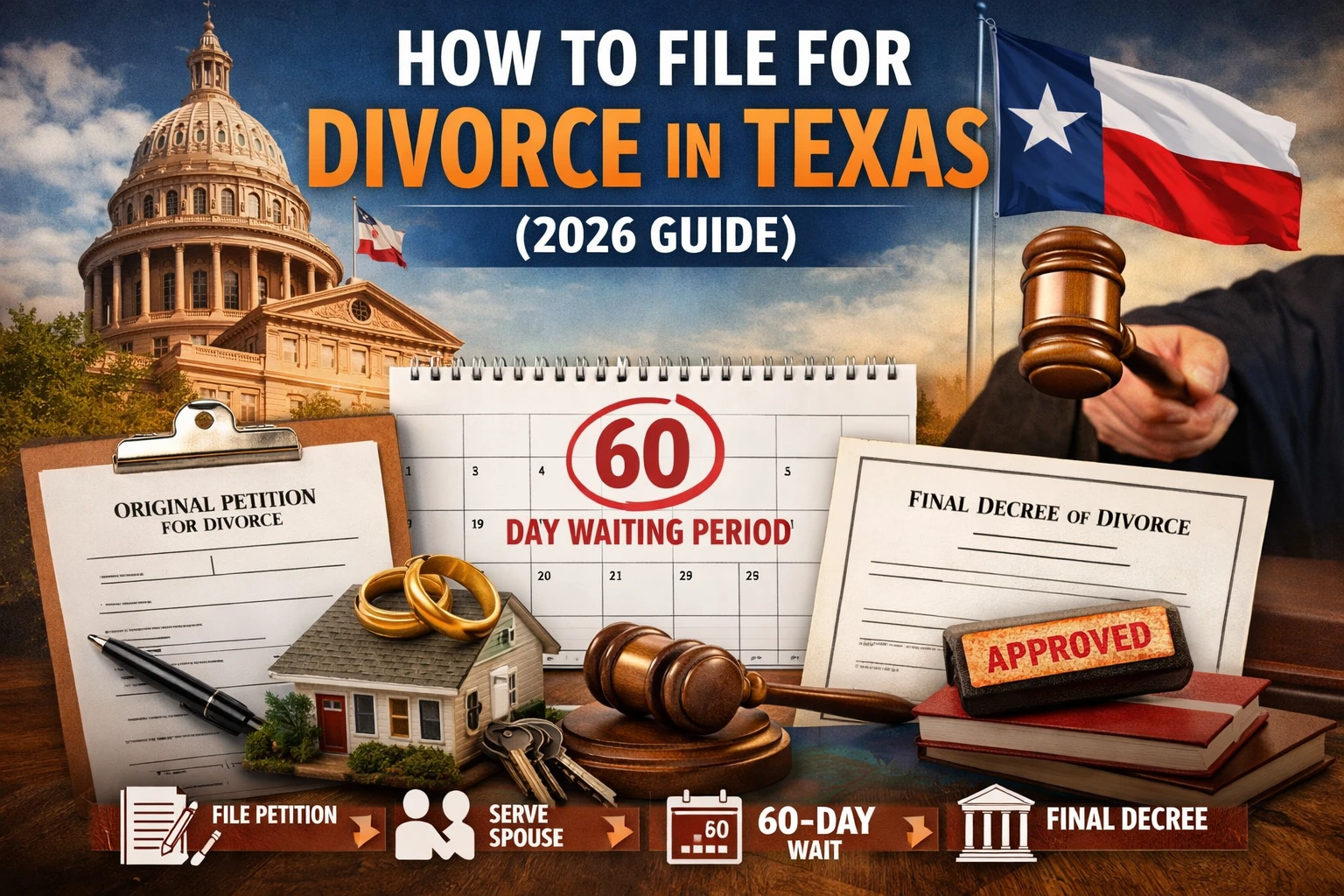
Texas also has a waiting period. Most divorces cannot be finalized until at least 60 days have passed after the Original Petition for Divorce is filed. There are limited exceptions in certain circumstances, but couples should generally plan around the 60-day requirement rather than assume a judge can finalize the case immediately.
An agreed divorce can still involve important legal and financial issues. It may be less suitable when either spouse does not understand the finances, one person is pressured to sign, there are complicated business interests, or a retirement division requires specialized orders. Peaceful should never mean rushed or uninformed.
Put Every Agreement in Writing Before Filing
One of the most effective ways to reduce conflict is to resolve the major terms before preparing final documents. Create a simple written inventory of property and debts. Include the marital home or lease, vehicles, accounts, household items, credit cards, personal loans, tax concerns, and retirement benefits.
For each item, identify who will receive it, who will be responsible for any related debt, and what deadline applies. If one spouse will refinance a vehicle or home loan, address what happens if refinancing cannot be completed. If property will be sold, state who will manage the sale and how proceeds will be divided.
This work can feel detailed, but it is often where peaceful divorces are won or lost. Vague assumptions create future disputes. A complete agreement gives both spouses a shared plan and makes the final paperwork more accurate.
Follow the Texas Filing Process Carefully
The typical agreed-divorce process begins with filing an Original Petition for Divorce in the appropriate county. After filing, the other spouse may sign a waiver of service or be formally served, depending on the circumstances. In a cooperative case, a properly completed waiver can help avoid unnecessary service costs and delay.
The case then moves through the waiting period and required paperwork. Depending on the county and the facts of the case, this may include civil case information, child-related forms, income information, and a Final Decree of Divorce. Some counties have local procedures, filing systems, or hearing requirements that affect how the final step is completed.
The Final Decree is especially important because it becomes the court order after the judge signs it. It should match the parties’ actual agreement and include all required provisions. A missing asset, unclear debt assignment, or incorrect child-support provision can create expensive problems later.
For Texans who want guidance without the cost of traditional litigation, document preparation and procedural support can help organize the process. Ready Divorce Service focuses on agreed Texas divorce paperwork and filing steps so clients can move forward with clearer expectations and fewer avoidable mistakes.
Do not sign just to get it over with
A common mistake is treating the final decree as a formality. It is not. Read every provision before signing, even if you trust your spouse and even if the agreement has already been discussed. Confirm names, addresses, legal descriptions, account references, support amounts, and deadlines.
If you do not understand a provision or believe the document does not reflect the agreement, stop and get clarification before the divorce is finalized. Reopening or correcting orders after the fact can be much harder than addressing an issue upfront.
Use Respectful Boundaries to Keep the Case Moving
Cooperation works best with boundaries. Decide how you will communicate, how quickly each person should respond, and which topics need to stay in writing. Keep messages brief and factual. A statement such as “I reviewed the vehicle terms and agree to the proposed deadline” is more useful than a long message about blame.
It also helps to set reasonable deadlines. Delays can happen when someone needs to locate a statement, review a draft, or arrange a notarized signature. Still, leaving every decision open-ended can turn a straightforward divorce into a drawn-out process. Agree on next steps, put them in writing, and follow through.
If direct communication is no longer productive, consider a neutral method for resolving a limited issue. Mediation may help couples who are close to agreement but stuck on one or two points. The goal is not to force a settlement. It is to find terms both parties can accept without escalating the case.
The Best Way to Finalize Divorce Peacefully Is to Plan for Life After Court
A signed decree is a legal ending, but it is also the beginning of separate financial and family routines. After the judge signs the divorce, follow the order promptly. Transfer titles where required, close or separate joint accounts, update beneficiaries when appropriate, and keep certified copies of the final documents in a secure place.
For co-parents, the first months after divorce may require adjustment. A calm, consistent approach to exchanges, school information, and expenses can protect the stability the agreement was designed to create. If a small issue comes up, try to address it as a practical problem rather than proof that the divorce was a mistake.
A peaceful divorce does not require a perfect relationship. It requires enough cooperation to make informed decisions, complete the Texas process correctly, and leave each person with a clear order to follow. That clarity can be one of the most valuable forms of closure.
📞 Get Started Today – Your Peaceful Divorce Is Just a Click Away
When you’re ready to move on, we’re ready to help.
📲 Call us now at (800) 432-0018
🖥️ Start your divorce online today