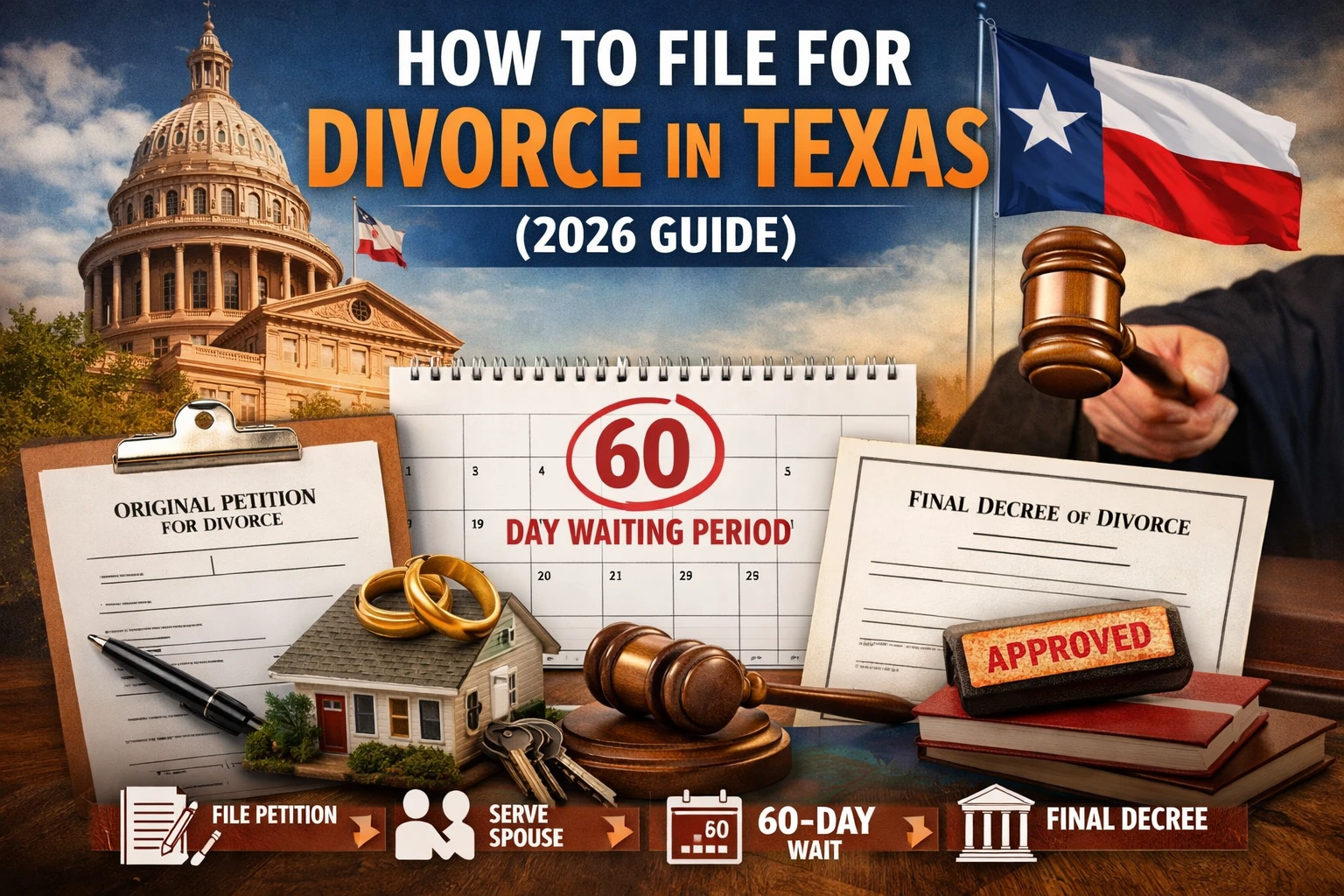
A missing bank statement, an outdated deed, or an unsigned agreement can slow down a divorce that both spouses expected to finish quickly. Gathering the top documents needed for divorce before preparing or filing your case gives you a clearer picture of what must be divided, what must be addressed for children, and whether an agreed divorce is truly ready to move forward.
For a Texas uncontested divorce, the goal is not to produce every paper you have ever received. The goal is to collect accurate information that supports the required court forms and the agreements you and your spouse have made. What you need can vary depending on your property, debts, children, and county, but a well-organized file reduces last-minute confusion.
Start With the Documents That Establish Your Case
The divorce paperwork itself needs basic facts about the marriage and the people involved. Keep copies of your marriage certificate if you have it, although it is not always required to file. More commonly, you will need each spouse’s full legal name, current address, date of birth, and the date and place of marriage.
You should also have your Social Security numbers available for the required forms, but do not place sensitive information in documents unless the form specifically calls for it. Texas courts use privacy protections and redacted filings for certain personal data. Follow the instructions for your county carefully.
Residency matters as well. Generally, one spouse must have lived in Texas for at least six months and in the filing county for at least 90 days before filing. A current driver’s license, lease, utility bill, voter registration, or similar record can help confirm where you live if residency becomes a question.
If either spouse has changed names, collect the records that explain the change, such as a prior divorce decree or name-change order. Consistent names across your documents prevent avoidable errors when the final decree is prepared.
Top Documents Needed for Divorce: Financial Records
Even when spouses agree on how to divide property, each person should understand the financial picture before signing final paperwork. Texas is a community property state, which generally means property and income acquired during the marriage may need to be addressed in the divorce. That does not mean every item must be split exactly down the middle. It does mean the agreement should be informed and specific.
Gather recent financial records for both spouses where available. Useful documents include:
- Recent pay stubs and proof of other income, including self-employment income, bonuses, commissions, retirement income, or benefits.
- Federal tax returns, W-2s, 1099s, and business records for the most recent one to three years.
- Bank, credit union, investment, and retirement account statements.
- Credit card statements, loan statements, personal debt records, and collections notices.
- Documents for real estate, vehicles, insurance policies, valuable personal property, and any business interests.
These papers help answer practical questions: Which accounts will be closed or divided? Who will keep the house or vehicle? Is there a loan that needs refinancing? Are there debts in both names? A divorce decree can assign responsibility for a debt between spouses, but it does not automatically remove a spouse’s name from a lender’s contract. That distinction deserves careful attention before finalizing an agreement.
For retirement accounts, obtain the most recent statement and identify whether the account existed before marriage. Dividing some retirement plans may require a separate court order after the divorce, often called a qualified domestic relations order for certain employer plans. Do not assume the final decree alone completes every transfer.
Property and Debt Documents Make Agreements Clearer
Agreed divorces move more smoothly when the final decree describes property precisely. For a home, collect the deed, current mortgage statement, property tax information, and any home equity loan or line of credit records. If one spouse will keep the house, the agreement should address ownership, payments, refinancing expectations, and deadlines.
For vehicles, have the title information, loan payoff amount, registration, and VIN available. If a vehicle is paid off but titled in both names, the title transfer still needs to be handled after the divorce. For a financed vehicle, check with the lender about the process required to remove or replace a borrower’s obligation.
Also review less obvious assets and debts. This may include cryptocurrency accounts, stock plans, frequent-flyer balances, digital payment accounts, storage units, tax refunds, and family loans. Not every small item needs a separate paragraph in the decree, but major assets and meaningful debts should not be left to vague verbal promises.
If You Have Children, Gather Parenting and Support Information
When a divorce involves children under 18, Texas courts require more than a property agreement. Parents need orders covering conservatorship, possession and access, child support, medical support, and other child-related responsibilities.
Start with each child’s full legal name, date of birth, and current address information as required by the court forms. You may also need health insurance details, daycare costs, school information, and records of any existing support or custody orders.
Income documents are especially relevant because child support calculations are tied to the paying parent’s net resources. Pay stubs, tax returns, and information about health insurance premiums can help prepare terms that are realistic and consistent with Texas requirements. If a parent is self-employed, records may need more careful review because income is not always shown on a standard pay stub.
If you and your spouse have created a parenting schedule outside the standard Texas possession order, write it down in detail. A workable agreement identifies exchange times, holiday schedules, transportation arrangements, communication expectations, and how parents will handle school or medical decisions. The more specific the agreement, the less room there is for conflict later.
Prior Court Orders and Special Circumstances
Bring together any legal documents that affect your marriage, children, property, or safety. This includes prior divorce decrees, paternity orders, child support orders, protective orders, bankruptcy filings, immigration-related concerns, and orders involving a child from another case.
A pending bankruptcy, active protective order, disputed parentage issue, or significant disagreement about property can make a standard uncontested divorce process inappropriate or more complicated. The same is true if one spouse cannot be located or will not sign. In those situations, getting individualized legal advice may be the safer next step.
If your spouse is in the military, deployed, incarcerated, or living outside Texas, additional procedures and timing considerations may apply. Do not rely on a general checklist alone when the facts are unusual.
Prepare the Filing Forms and Final Decree Carefully
Your supporting documents provide the facts, but the court will also require the correct divorce forms. In a typical agreed Texas divorce, this may include an Original Petition for Divorce, a Civil Case Information Sheet where required, a waiver of service or respondent’s answer, the Final Decree of Divorce, and child-related forms when applicable.
The exact filing package can differ by county and by the details of your case. Courts may also require local cover sheets, standing-order acknowledgments, or specific filing procedures. In counties such as Tarrant, Dallas, Denton, Collin, Ellis, Bexar, and Harris, local practices can affect what you submit and how you schedule the final step.
Before signing, compare the final decree against your financial records and agreement. Check account numbers where needed, legal property descriptions, vehicle identification numbers, loan responsibility, child support amounts, and all deadlines. A decree should be complete enough to carry out without either spouse having to guess what was intended.
Organize Your Divorce File Before You File
Create one secure folder for court-ready documents and another for supporting records. Label files by category and date, and keep originals in a safe place. Electronic copies are useful, but protect financial information with strong passwords and avoid sending sensitive documents through unsecured channels.
You do not usually file every bank statement, pay stub, or private record with the court in an agreed divorce. Instead, these documents help you make informed decisions and accurately complete the forms. Filing unnecessary sensitive information can create privacy concerns without helping your case.
If you are unsure whether your agreement covers every required issue, do not wait until the final hearing to find out. Ready Divorce Service helps Texans organize the required information, prepare appropriate uncontested divorce paperwork, and understand the filing steps for a more efficient process.
A complete document file will not remove the emotion from divorce, but it can remove many of the preventable delays. Start with what you can access today, identify what is missing, and give yourself the benefit of an agreement built on clear information rather than assumptions.
📞 Get Started Today – Your Peaceful Divorce Is Just a Click Away
When you’re ready to move on, we’re ready to help.
📲 Call us now at (800) 432-0018
🖥️ Start your divorce online today