Table of Contents
- What Affects Texas Divorce Document Preparation Pricing
- Uncontested Divorce Cost in Texas: Breaking Down the Expenses
- Texas Divorce Filing Fees by County
- Filing for Divorce in Texas Without a Lawyer: What It Costs
- Document Preparation Services vs. Attorney Representation
- Hidden Costs and Fee Waivers You Should Know About
- How to Keep Your Divorce Document Preparation Costs Low
- Conclusion
Last Updated: August 18, 2026
What Affects Texas Divorce Document Preparation Pricing
The cost of preparing divorce documents in Texas depends on several interconnected factors that go well beyond the simple filing fee.

Complexity is the primary cost driver. An uncontested divorce where both spouses agree on all terms costs far less than a contested case requiring negotiation and litigation. Your asset level and family situation matter tremendously, divorces involving minor children, substantial property, or business interests require more detailed documentation. Community property considerations in Texas mean all property acquired during marriage must be properly classified and divided.
Whether you handle the process yourself or hire professional assistance shapes your overall expenses. DIY document preparation using online resources costs less upfront but carries higher risk of errors. Professional document preparation services offer middle-ground pricing between DIY and full attorney representation. Hiring a lawyer is the most expensive option but provides comprehensive legal guidance.
The county where you file influences costs directly through filing fees and clerk procedures. Texas counties set their own filing fees within state guidelines, creating variation across jurisdictions. Your familiarity with legal processes also affects how much support you’ll need. Ready Divorce Service helps clients navigate county-specific requirements to ensure documents meet local standards.
Uncontested Divorce Cost in Texas: Breaking Down the Expenses
An uncontested divorce in Texas typically involves lower overall costs because both parties have reached agreement on all major issues.
The basic cost structure includes court filing fees, document preparation costs, and service of process expenses. Filing fees vary by county but represent a fixed cost you cannot avoid. Service of process, which notifies your spouse of the divorce filing, may require a process server depending on your situation.
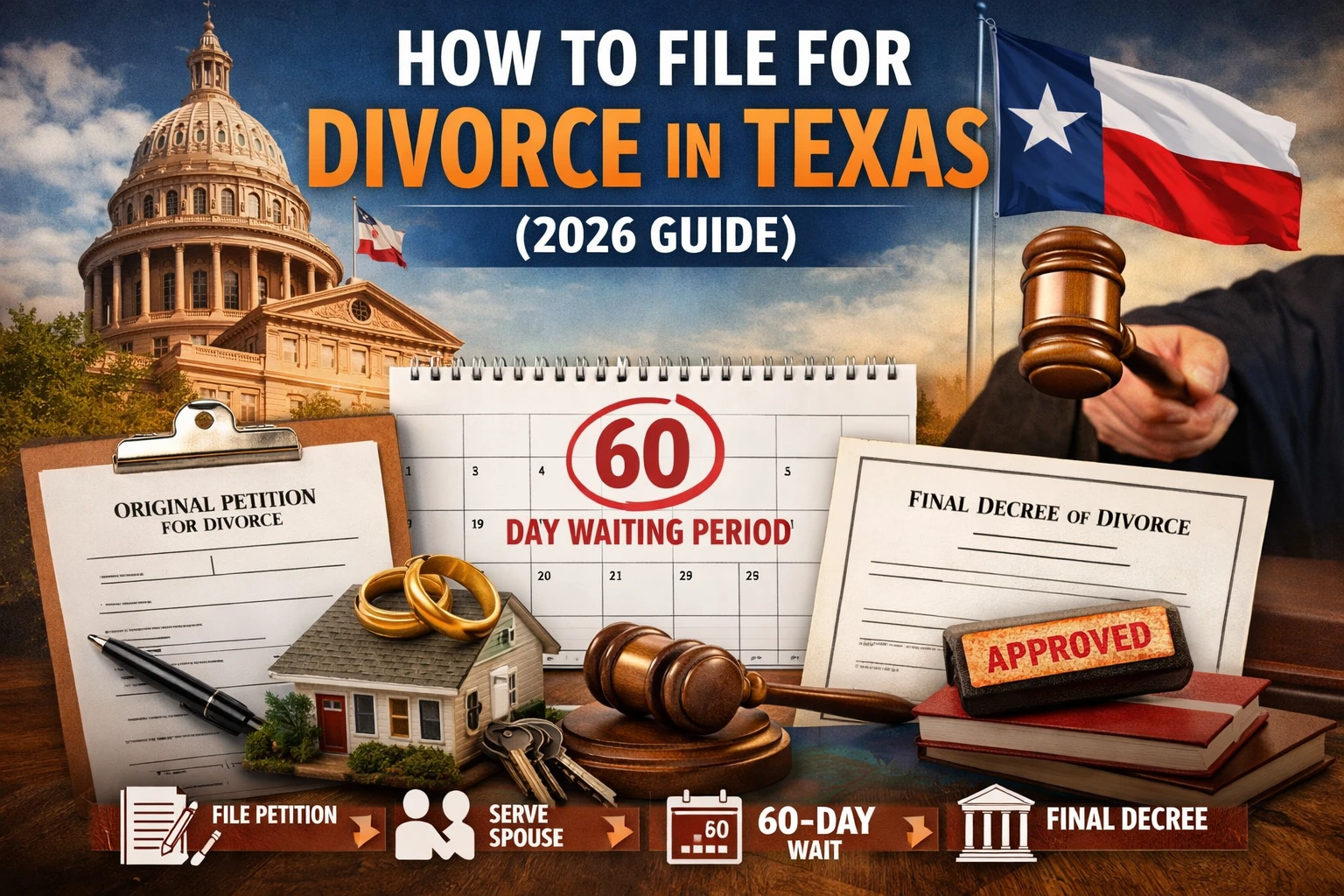
Texas law requires a minimum 60-day waiting period between filing and finalization, during which no final decree can be issued. This mandatory waiting period applies to all divorces regardless of complexity. Many couples choose mediation during this period to resolve remaining disagreements without litigation. Mediation costs depend on the mediator’s hourly rate and how many sessions you need, but skilled mediation often costs less than litigation.
Document preparation for an uncontested divorce includes the petition for divorce, marital settlement agreement, and decree. The petition initiates the case and provides basic information about both spouses and any children. The marital settlement agreement documents all agreements about property division, custody, support, and other terms. The final decree formalizes these agreements and becomes the official court order.
Ready Divorce Service specializes in helping couples prepare these documents accurately and efficiently, ensuring compliance with Texas law and court requirements while reducing the risk of rejection or delays.
Texas Divorce Filing Fees by County
Filing fees in Texas vary by county, though all counties operate within state fee guidelines. Each Texas county sets its own filing fee for divorce petitions, typically ranging within a standard range established by state law. The district clerk in your county can provide exact current fees.
Beyond the basic filing fee, additional costs arise for certified copies of your divorce decree. You’ll likely need multiple certified copies for updating your name with Social Security, your employer, insurance companies, and financial institutions. Each certified copy carries a per-page fee set by your county clerk.
Some Texas counties offer electronic filing systems that may reduce processing time and allow you to file without visiting the courthouse in person. E-filing fees may differ from paper filing fees, though they’re typically comparable.
The district clerk’s office in your county maintains a fee schedule available online or by phone. If you cannot afford the filing fee, Texas courts allow you to request a fee waiver based on indigent status. The court may order you to repay these fees once your financial situation improves.
Filing for Divorce in Texas Without a Lawyer: What It Costs
Filing for divorce without a lawyer, known as proceeding pro se, is legally permissible in Texas and can significantly reduce your costs compared to full attorney representation.

When you file without a lawyer, you assume responsibility for preparing all required documents, meeting deadlines, and following court procedures. Texas courts do not provide legal advice to pro se litigants, so you must educate yourself about applicable laws and requirements. Errors in your documents or procedures can delay your case or result in dismissal.
Your expenses as a pro se filer include the filing fee, document preparation costs if you use a service, and any fees for service of process. If you use online document preparation software or a document preparation service, these costs are typically modest compared to attorney fees.
Service of process can be handled through waiver of service if your spouse agrees, or through a process server if they do not. A waiver of service costs nothing beyond having your spouse sign the waiver document. A process server charges a fee, typically modest, to deliver the petition to your spouse.
Many pro se filers discover that professional document preparation assistance is worth the cost to avoid costly mistakes. Ready Divorce Service provides document preparation assistance that helps pro se filers navigate the process correctly, reducing the risk of expensive errors while keeping costs significantly lower than full attorney representation.
Document Preparation Services vs. Attorney Representation
Understanding the differences between document preparation services and full attorney representation helps you choose the option that matches your needs and budget.
Document preparation services focus specifically on drafting and formatting your divorce documents correctly. These services do not provide legal advice, represent you in court, or negotiate on your behalf. Instead, they use information you provide to create documents that comply with Texas requirements.
Document preparation services cost substantially less than attorney representation because they provide focused, limited scope work. You handle decision-making about settlement terms, while the service handles technical documentation work.
Attorney representation includes legal advice, negotiation, court representation, and full case management. This comprehensive approach costs significantly more because you’re paying for the attorney’s expertise, time, and professional judgment across all aspects of your case.
Flat-fee arrangements for document preparation or limited attorney services provide cost certainty. Hourly billing, common among attorneys, makes total costs unpredictable because the final bill depends on how many hours your case requires.
The choice between document preparation and attorney representation depends on your situation’s complexity and your comfort with self-representation. Uncontested divorces with straightforward terms are well-suited to document preparation services. Contested cases with significant disagreement require attorney representation to protect your interests.
Ready Divorce Service provides document preparation assistance that bridges the gap between DIY filing and full attorney representation, ensuring your documents meet all legal standards while keeping costs manageable.
Document Preparation Services vs. Attorney Representation
| Aspect | Document Preparation Service | Attorney Representation |
|---|---|---|
| Legal Advice | No | Yes |
| Document Drafting | Yes | Yes |
| Court Representation | No | Yes |
| Negotiation | No | Yes |
| Cost Structure | Flat fee typically | Hourly or retainer |
| Best For | Uncontested, simple cases | Contested, complex cases |
| Timeline | Faster, self-directed | Depends on attorney availability |
| Risk Level | Higher without legal guidance | Lower with legal expertise |
Hidden Costs and Fee Waivers You Should Know About
Beyond obvious filing and document preparation costs, several hidden expenses can accumulate during your divorce process.
Service of process fees represent a common hidden cost. If your spouse will not voluntarily accept service of the divorce petition, you must hire a process server. Process server fees vary by county but typically range from modest amounts for simple service to higher amounts if your spouse is difficult to locate.
Certified copy fees add up quickly when you need multiple copies of your final decree. Banks, employers, Social Security Administration, and insurance companies may each require certified copies. Planning ahead and ordering extra copies at the time of filing sometimes reduces per-copy costs.
Court costs beyond the filing fee include fees for requesting specific court orders or filing amendments. If you need to modify your documents before finalization, amendment fees apply.
Mediation costs depend on the mediator’s hourly rate and number of sessions needed. Mediation can prevent more expensive litigation, making it cost-effective even though it represents an additional expense.
If you file pro se and make errors requiring document resubmission, you may face resubmission fees and extended timelines. The cost of correcting mistakes often exceeds the cost of professional document preparation from the start.
Fee waivers allow individuals who cannot afford filing fees to proceed without payment. To qualify, you must demonstrate indigent status. The process involves filing an affidavit with the court explaining your financial situation. Courts may grant a complete waiver or a partial waiver requiring payment of a reduced amount.
How to Keep Your Divorce Document Preparation Costs Low
Strategic decisions throughout your divorce process directly impact your total costs.
Reach settlement agreements with your spouse before filing whenever possible. An uncontested divorce costs far less than a contested case requiring negotiation and court intervention. Spending time in advance discussions about property division, custody, and support terms prevents costly disputes later.
Use document preparation services rather than full attorney representation if your case is uncontested and straightforward. This middle-ground approach protects you from costly errors without the expense of full legal representation.
Handle service of process through waiver of service if your spouse will cooperate. If your spouse will sign a waiver of service document, you avoid process server fees entirely.
Prepare your financial information thoroughly before beginning the divorce process. Having organized records of assets, debts, income, and expenses allows you to make informed settlement decisions quickly.
Understand Texas community property law before negotiating settlement terms. Texas presumes that property acquired during marriage is community property subject to division. Knowing which assets are community property helps you negotiate fairly and prevents disputes about property classification.
Use e-filing if your county offers it. E-filing often simplifies the process and may reduce processing time at no additional cost.
Order certified copies of your final decree at the time of filing rather than requesting them later. Ordering multiple copies upfront often costs less per copy than ordering them individually after finalization.
Ready Divorce Service helps you navigate these cost-saving strategies through step-by-step guidance, ensuring your filing is accurate and complete while reducing the risk of costly errors or rejections.
Conclusion
Divorce document preparation costs in Texas vary significantly based on your situation’s complexity, whether your case is contested or uncontested, and which services you choose. Understanding the components of these costs, filing fees, document preparation, service of process, and potential hidden expenses, helps you budget accurately and make informed decisions about which services are worth the investment.
For couples with uncontested divorces seeking an affordable, straightforward path forward, Ready Divorce Service provides expert document preparation that ensures compliance with Texas law while keeping costs manageable. Our step-by-step guidance walks you through the entire process, from initial document preparation through finalization. Get started with Ready Divorce Service and move forward with confidence that your documents meet all Texas requirements and court standards.
Frequently Asked Questions
How much does it cost to file divorce paperwork in Texas?
The cost depends on your county's filing fees and whether you use document preparation services. Court filing fees range based on your district clerk's schedule, typically several hundred dollars. If you prepare documents yourself, you pay only court costs. With document preparation services, you add the service fee on top of court filing costs. For an uncontested divorce without a lawyer, total costs are significantly lower than full legal representation, which can involve hourly billing or retainers.
What is the difference between document preparation services and hiring a divorce attorney?
Document preparation services help you draft and organize the paperwork required for your uncontested divorce filing, but they don't provide legal advice or represent you in court. Attorneys provide legal consultation, negotiate terms, handle service of process, and represent your interests throughout litigation if disputes arise. For uncontested divorces where both parties agree on all terms, document preparation is often sufficient and costs far less than hiring an attorney on an hourly basis or retainer.
Can I file for divorce in Texas without a lawyer?
Yes. You can file for divorce in Texas without a lawyer by preparing your own documents or using document preparation services. You'll need to complete a petition for divorce, any required agreements like a marital settlement agreement, and file them with your district clerk. The process is more affordable than hiring legal representation, though you're responsible for ensuring compliance with Texas law. Many people successfully complete uncontested divorces this way, especially when both parties agree on property division, child support, and custody arrangements.
Are there hidden fees when using document preparation services?
Reputable document preparation services clearly disclose all costs upfront. Beyond the service fee, you'll pay court filing fees to your district clerk, and potentially costs for certified copies of your divorce decree. Some services charge extra for rush processing or additional document revisions. Always ask about the total cost before signing up, including whether the quoted price covers all documents you need or if certain items cost extra. Fee transparency is essential when choosing a document preparation provider.
This article was written using GrandRanker