If you and your spouse agree the marriage should end, the biggest challenge is often not the decision itself. It is figuring out the paperwork, the filing steps, the county rules, and the waiting period without turning a peaceful split into a stressful legal mess. That is where a texas divorce service for couples can make a real difference.
For many Texans, the goal is simple: finish an uncontested divorce correctly, keep costs under control, and move forward. You may not need a courtroom fight or two attorneys billing for every phone call. But you do need a process that is accurate, organized, and built around Texas requirements.
What a Texas divorce service for couples actually does
A divorce service for couples is not the same as hiring a litigation attorney to prepare for conflict. It is a practical support option for agreed divorces, where both spouses are on the same page about the major terms. That usually means agreement on property division, debt division, and, if children are involved, the basic terms for conservatorship, possession, support, and decision-making.
In that kind of case, the real work is procedural. Someone has to prepare the right documents, make sure the forms match the facts of the case, explain the filing sequence, and help avoid mistakes that can delay the final decree. A Texas-focused divorce service is built for that job.
This can be especially helpful for couples who want to stay cooperative but do not feel confident handling legal paperwork on their own. The issue is not always disagreement. Often, it is confusion.
When this type of service makes sense
A texas divorce service for couples is usually a strong fit when both spouses want a straightforward, lower-conflict path. If you already agree on the outcome, paying for a full contested case may not make financial sense.
That said, uncontested does not mean casual. The divorce still has to meet Texas legal requirements. You still need proper documents. You still have to file in the right county, observe the waiting period, and present final papers that the court can approve.
This kind of service often makes sense if:
- both spouses agree the divorce should happen
- neither side plans to fight over property or debts
- there is a workable agreement involving children, if applicable
- the couple wants to avoid unnecessary attorney fees
- the couple needs help understanding the process, not courtroom representation
It may not be the right fit if there is domestic violence, hidden assets, serious power imbalance, or major disagreement about children or finances. In those cases, more individualized legal advice may be necessary. Knowing the difference matters.
The core steps in an uncontested Texas divorce
Texas keeps the divorce process structured, even when the case is agreed. That structure is good for clarity, but it can feel overwhelming if you are trying to do it alone.
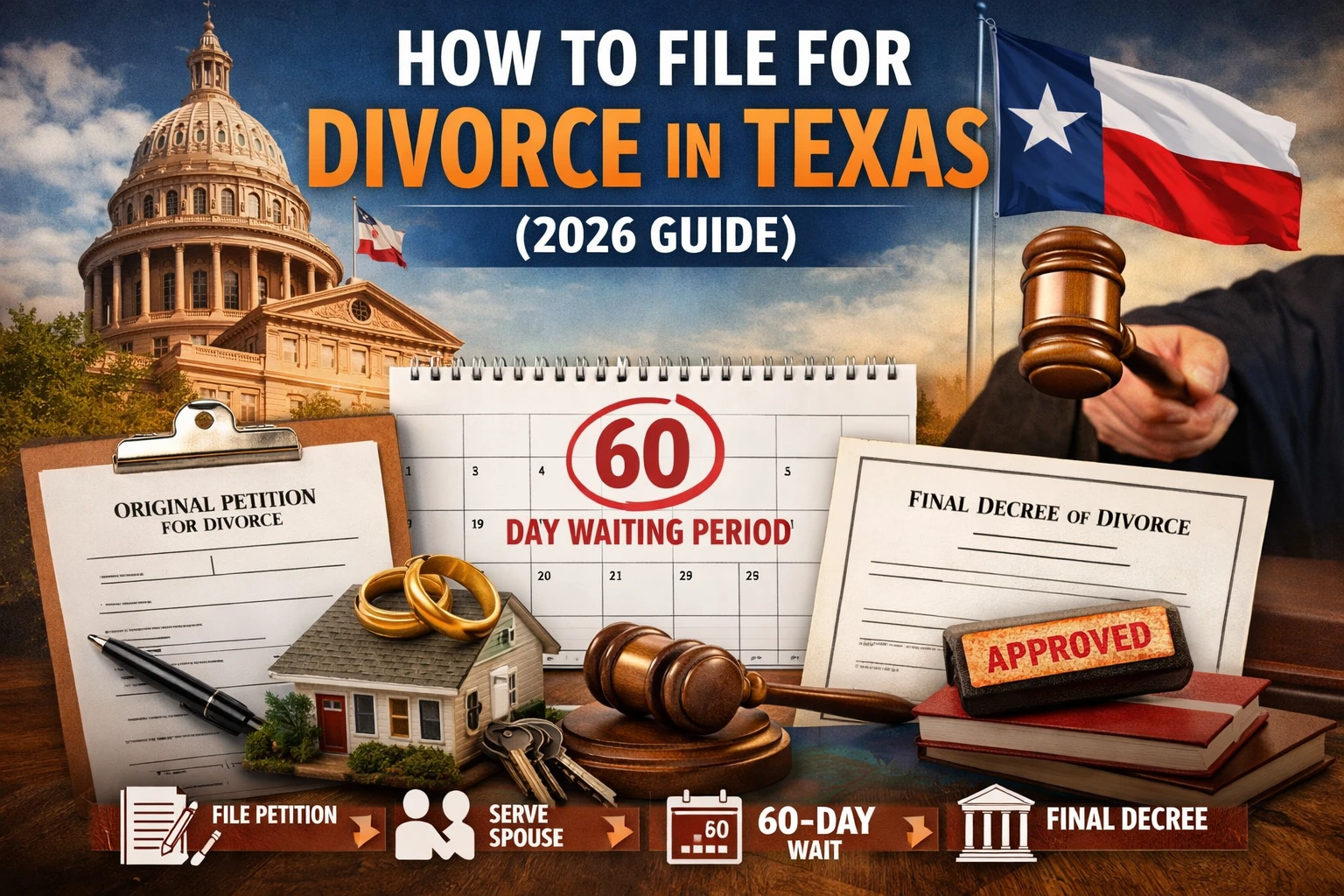
The case usually starts when one spouse files the Original Petition for Divorce in the proper county. Texas residency and county filing rules apply, so the case must be filed where the law allows. Once filed, the other spouse typically signs a waiver or otherwise participates in a way that keeps the case uncontested.
After that, the case moves through the required 60-day waiting period in most situations. During that time, the parties finalize the divorce terms and make sure the final decree reflects the agreement clearly. If children are involved, additional documents may be required, and the language must be handled carefully because the court will review child-related terms closely.
At the end, the case is presented for finalization. In many counties, that means a brief prove-up hearing. The judge reviews the paperwork, confirms the legal requirements have been met, and signs the Final Decree of Divorce if everything is in order.
None of these steps are impossible. But each one has details that matter. A missed signature, an incorrect form, or inconsistent wording can slow the case down.
Why couples choose a service instead of doing it all themselves
The do-it-yourself route looks cheaper at first. Sometimes it works. But many people underestimate how much time they will spend trying to locate the right forms, understand county procedures, revise documents, and fix errors.
A service built around agreed Texas divorces can help reduce that friction. Instead of piecing together instructions from scattered sources, couples get a clearer path. That usually means better document preparation, better understanding of the sequence, and fewer surprises.
Affordability is a major reason people choose this option. Traditional attorney-led divorce can be expensive, especially if the case drags on. For couples who are cooperating, paying only for the level of help they actually need often feels more reasonable.
There is also an emotional benefit. Divorce is stressful even when it is amicable. Having a process-oriented service handle the paperwork side can take pressure off both spouses and make it easier to stay focused on practical decisions.
Child-related issues require extra care
When children are involved, an uncontested divorce can still be smooth, but the paperwork has to be done carefully. Texas courts take child-related terms seriously, and they should. Parents may agree in principle, but the final documents need to spell out the details in a way the court can accept.
That includes conservatorship terms, parenting schedules, child support, medical support, and other responsibilities. A couple may say, “We already worked it out,” but if the decree is vague or incomplete, that creates problems later.
This is one area where process support is especially valuable. The goal is not just to finish the divorce. It is to finish it with documents that are clear enough to support stability after the case is over.
County procedures can change the experience
Texas divorce law is statewide, but filing procedures can vary by county. That is one reason Texas-specific support matters. A couple filing in Dallas County may have a slightly different experience than one filing in Tarrant, Collin, Denton, Harris, Bexar, or Ellis County.
The underlying legal standards remain the same, but practical details can differ. Courts may have different filing systems, local preferences, scheduling processes, or document expectations. A service that regularly works with Texas divorce filings is better positioned to help couples prepare for those procedural differences.
This is not about making the process sound harder than it is. It is about avoiding preventable delays.
What to look for in a divorce service
Not every divorce help option is built the same way. If you are comparing providers, look for clarity. You should understand what the service includes, what it does not include, and whether it is designed specifically for uncontested Texas cases.
Good support should feel organized and straightforward. The service should explain eligibility, gather the information needed for your documents, prepare the paperwork accurately, and guide you through next steps. It should also be honest about when a case is too complex for an agreed-divorce model.
For many couples, bilingual accessibility matters too. When legal paperwork is already stressful, being able to communicate clearly in the language you are most comfortable with can make the process much easier.
A company like Ready Divorce Service is built around that practical need: helping Texans complete agreed divorces with less confusion, lower cost, and a clearer path from filing to final decree.
The trade-off to understand
A divorce service for couples is a strong solution for the right case, but it is not one-size-fits-all. The biggest trade-off is that affordability and efficiency depend on agreement. If the case starts uncontested but turns disputed, the path changes.
That does not mean the service was the wrong choice. It means the facts changed. Many couples begin in agreement and finish smoothly. Others discover unresolved issues once the paperwork starts. The smart move is to be realistic from the beginning about whether both spouses are truly aligned.
If the answer is yes, a guided uncontested process can save substantial time, money, and stress. If the answer is maybe, it helps to pause and sort out the unresolved points before moving ahead.
A simpler path is still a serious legal process
One of the most helpful mindset shifts is this: simple does not mean careless. An uncontested divorce can be faster and more affordable, but it still needs to be handled correctly. The paperwork matters. The filing rules matter. The final decree matters.
The good news is that couples do not have to figure it all out alone. With the right support, the process becomes much more manageable. You can keep the case cooperative without leaving the legal details to guesswork.
If you and your spouse are ready for a practical next step, the right help is not about adding drama. It is about reducing confusion so you can close this chapter with fewer delays, fewer costs, and a better sense of control.
📞 Get Started Today – Your Peaceful Divorce Is Just a Click Away
When you’re ready to move on, we’re ready to help.
📲 Call us now at (800) 432-0018
🖥️ Start your divorce online today