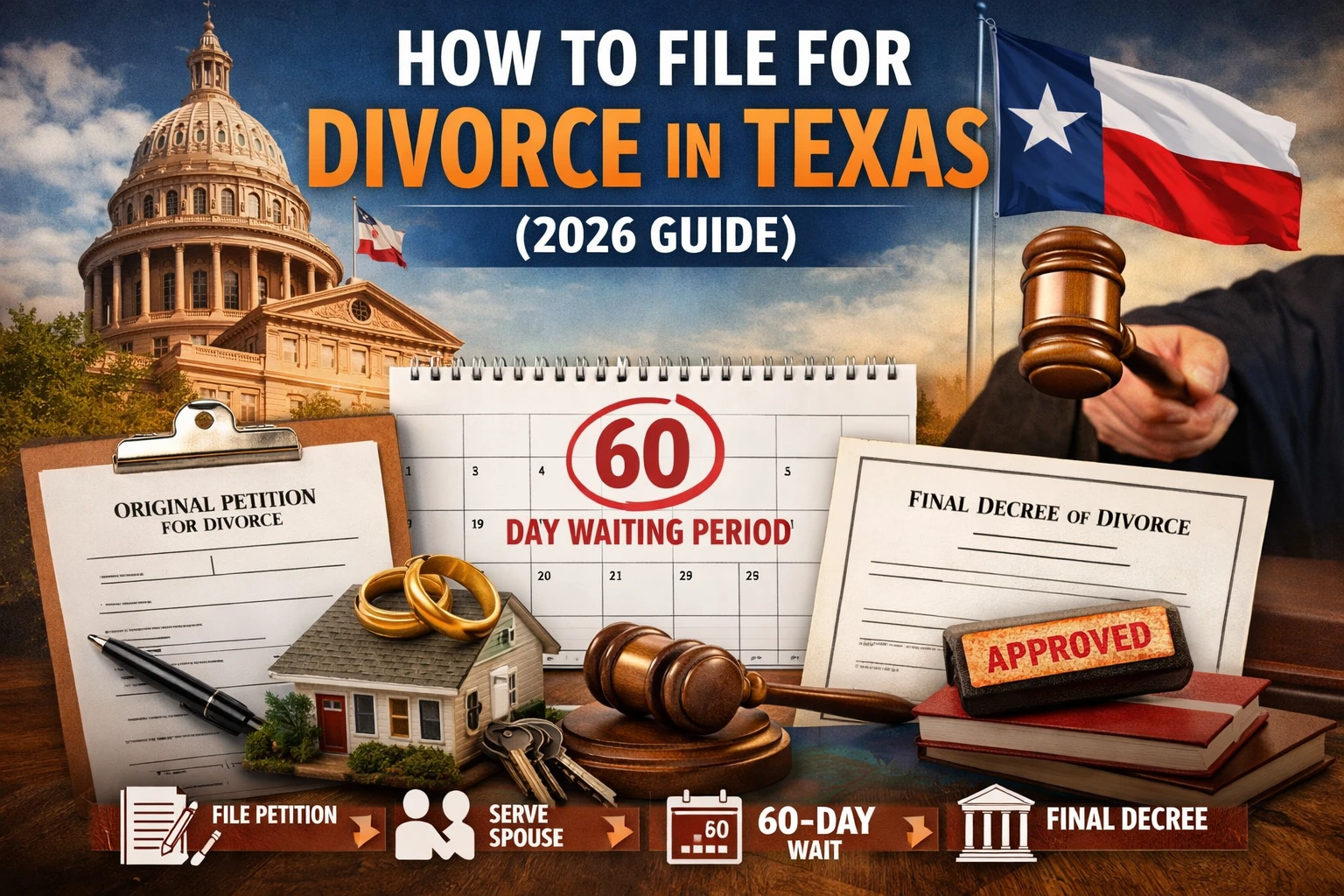
How to Get a Divorce in Texas: A Comprehensive Guide
Divorce may be an exhausting and emotional experience. If you are considering seeking a divorce in Texas, you may be wondering where to begin and what steps to take. That’s where this detailed guide on getting a divorce in Texas comes in.
In this ultimate guide to getting a divorce in Texas, we’ll walk you through the divorce process, providing you with the information you need to make informed decisions. From understanding the residency requirements to filing the necessary paperwork, we leave no stone unturned.
If you’re ready to start this new chapter in your life, Ready Divorce Service will help you every step of the way. We’ll go over the legal terminology, the many types of divorces accessible in Texas, and the issues that can influence property division and child custody.
Understanding the Legal Requirements for Divorce in Texas
Before diving into the process, it’s important to understand the legal requirements for getting a divorce in Texas. To file for divorce in the Lone Star State, at least one spouse must have been a resident for at least six months before filing. Additionally, one of the spouses must reside in the county where they file for divorce for at least 90 days.
Texas is a no-fault divorce state, meaning neither spouse must prove fault or wrongdoing to file for divorce. This can make the process smoother and less contentious, as it focuses on the dissolution of the marriage rather than assigning blame.
Divorce in Texas can be categorized as either contested or uncontested. In an uncontested divorce, both spouses agree on all major issues, such as child custody, property division, and spousal support. In a contested divorce, the spouses cannot reach an agreement, and the court may need to intervene to make decisions on their behalf.
Call (800) 432-0018 or click here to submit a questionnaire form now.
Types of Divorces in Texas
Divorce in Texas can be categorized into two primary types: contested and uncontested.
1) Uncontested Divorce:
An uncontested divorce in Texas is often considered ideal when a marriage ends amicably. In this type of divorce, both spouses agree on the major issues that need resolution, such as child custody, property division, and spousal support. They work together to reach a mutually acceptable arrangement without the need for extensive litigation.
Uncontested divorces are typically faster and less expensive compared to their contested counterparts. They require less time in court, fewer attorney fees, and lower overall legal costs. This type of divorce is often chosen when the spouses maintain open communication and are willing to compromise for a smoother and more cost-effective separation.
2) Contested Divorce:
A contested divorce, on the other hand, is the more contentious of the two types. In these cases, spouses cannot reach a consensus on key issues, leading to disagreements and disputes that often necessitate court intervention. The court will decide on behalf of the divorcing couple when they cannot agree on matters such as child custody arrangements, division of marital assets and debts, or spousal support.
Contested divorces tend to be more time-consuming, as they involve lengthy legal proceedings, and more costly due to the necessity of legal representation and court appearances. Additionally, the emotional toll on both parties can be higher, as the adversarial nature of contested divorces can strain relationships and prolong the divorce process.
Divorce Process in Texas: A Comprehensive Guide

1. Filing for Divorce in Texas
The divorce process in Texas begins with filing a divorce petition. This legal document outlines the grounds for divorce, including insupportability (irreconcilable differences), cruelty, adultery, or abandonment. The spouse initiating the divorce, the petitioner, must complete and file this document with the appropriate Texas court.
Once the petition is filed, the court will issue a citation, which serves as formal notice to the other spouse that a divorce has been filed. Properly serving divorce papers to your spouse is crucial to ensure they are officially made aware of the proceedings and have the opportunity to respond.
2. Serving Divorce Papers to Your Spouse
Serving divorce papers to your spouse is a pivotal part of the process. How divorce papers can be served includes:
- In-person service
- Through certified mail with return receipt requested
- Via a constable or process server
After the divorce papers have been served, your spouse has a specific timeframe to respond. Failure to respond within this timeframe may result in the court proceeding with a default judgment, allowing the divorce to move forward without your spouse’s input.
3. Responding to Divorce Papers
If you are the spouse served with divorce papers, it is crucial to respond within the designated timeframe. Your response should address each allegation in the petition, either admitting or denying the claims made by the petitioner. Additionally, you can use this opportunity to raise counterclaims or requests for relief, such as child custody arrangements or spousal support.
Consulting with a divorce attorney is highly advisable to ensure you fully understand your rights and options when responding to divorce papers. An attorney can help you navigate the legal process effectively.
4. Temporary Orders and Hearings

During the divorce process, the court may issue temporary orders to address immediate concerns such as child custody, visitation, spousal support, or the use of marital property. Typically, these temporary orders remain in effect until a final divorce decree is issued.
If the spouses cannot agree on these temporary issues, the court may schedule a hearing. Both parties can present evidence and arguments to support their positions during the hearing. The court will then make a decision based on the best interests of the children involved and fairness to both parties.
5. Discovery and Disclosure
In a divorce, both parties can gather information about each other’s assets, income, and debts through discovery. This process can involve various methods, including:
- Requests for documents: These are formal requests for specific documents, such as financial records, tax returns, and bank statements.
- Interrogatories: Interrogatories are written questions that one party submits to the other, and they must answer them under oath
- Depositions: Depositions involve oral testimony under oath, typically conducted in a lawyer’s office, where parties and witnesses answer questions.
- Subpoenas: Legal orders compelling the production of documents or the attendance of witnesses.
Full disclosure of assets and liabilities is crucial for equitable property division. Failure to provide accurate and complete information can have serious consequences, including financial penalties or a reopening of the divorce case.
6. Negotiating a Settlement or Going to Trial
Once the spouses have disclosed all necessary information through the discovery process, they can attempt to negotiate a settlement agreement. This agreement outlines the divorce terms, including property division, child custody, child support, and spousal support. Negotiation may occur between the parties or through mediation, where a neutral third party helps facilitate the discussions.
The case may go to trial if the spouses cannot settle through negotiation or mediation. Each party will present evidence and arguments to support their position during the trial. The judge presiding over the case will then decide on the unresolved issues, including property division, child custody, and support arrangements.
7. Finalizing the Divorce

The final piece of the divorce process is obtaining a final divorce decree. This document legally dissolves the marriage and sets forth the divorce terms, including property division, child custody, visitation, child support, and spousal support. Ensuring the final decree accurately reflects the agreements reached or the court’s decision is crucial.
Once the judge signs the final decree, it turns into a binding court order, and both parties have a legal obligation to comply with its terms. It’s essential to adhere to the stipulations outlined in the decree to avoid legal consequences. If any modifications or enforcement actions become necessary, you can pursue them through the appropriate legal channels.
Conclusion and Resources for Further Assistance
In conclusion, getting a divorce in Texas is a multi-part process that requires careful consideration and understanding of the legal requirements. While divorce can be emotionally challenging, with the right knowledge, guidance, and support, you can navigate it successfully and emerge on the other side with a fresh start.
This comprehensive guide has provided you with an in-depth overview of the divorce process in Texas, from residency requirements to the finalization of the divorce. However, divorce cases can vary greatly depending on individual circumstances. Therefore, we strongly recommend that you consult with a qualified family law attorney to receive personalized advice and guidance tailored to your specific situation.
Remember that divorce is a difficult journey but can also be an opportunity for personal growth and a fresh start in life.
💬 Frequently Asked Questions
What are the Texas law requirements for divorce proceedings involving minor children?
In Texas, divorce proceedings involving minor children require special attention to uphold the children’s best interests. Texas law emphasizes the welfare of minor children during divorce. Courts consider custody arrangements, visitation schedules, child support, and more to ensure a stable environment for the children involved.
How does Texas law handle cases of family violence during divorce proceedings?
Texas law takes family violence seriously in divorce cases. Suppose there is a history of family violence. In that case, courts may issue protective orders, modify custody arrangements, or take other measures to ensure the affected party’s and minor children’s safety. Seeking the assistance of a divorce attorney experienced in handling cases involving family violence is essential in such situations.
Can a spouse with a physical or mental disability seek a divorce in Texas?
Yes, a spouse with a physical or mental disability can seek a divorce in Texas. A disability does not prevent an individual from initiating divorce proceedings. However, it’s important to consider the unique circumstances and potential implications of the disability, especially when addressing issues like child custody, support, and property division.
How does Texas law define separate property in divorce cases?
Texas law distinguishes between community property and separate property in divorce cases. Separate property includes assets owned before marriage, inheritances, gifts, and personal injury settlements. Understanding separate property classifications is crucial during property division in divorce proceedings to protect your rights and assets.
What forms do you need to file for divorce in Texas?
When initiating divorce proceedings in Texas, specific divorce forms are necessary. These forms include the Petition for Divorce, Citation, Waiver of Service, and Final Decree of Divorce, among others. Properly completing and filing these divorce forms is crucial for the divorce process. Consulting with a qualified divorce attorney can ensure that you file all the required forms correctly and on time
📣 Ready to File for a Divorce in Texas?
Achieving a smooth divorce in Texas is possible if you understand the legal process, utilize uncontested divorce options, and consider self-representation.
Our goal at Ready Divorce Service is to provide clarity and support tailored to your individual needs. By choosing us, you’re not just getting legal assistance; you’re gaining a partner who will be with you every step of the way as you embark on a new chapter of your life.
✅ Easy step-by-step guidance
✅ Flat-fee pricing — no surprises
Let’s make your divorce fast, affordable, and stress-free.
🖥️ Start your divorce online today
📲 Call us now at (800) 432-0018