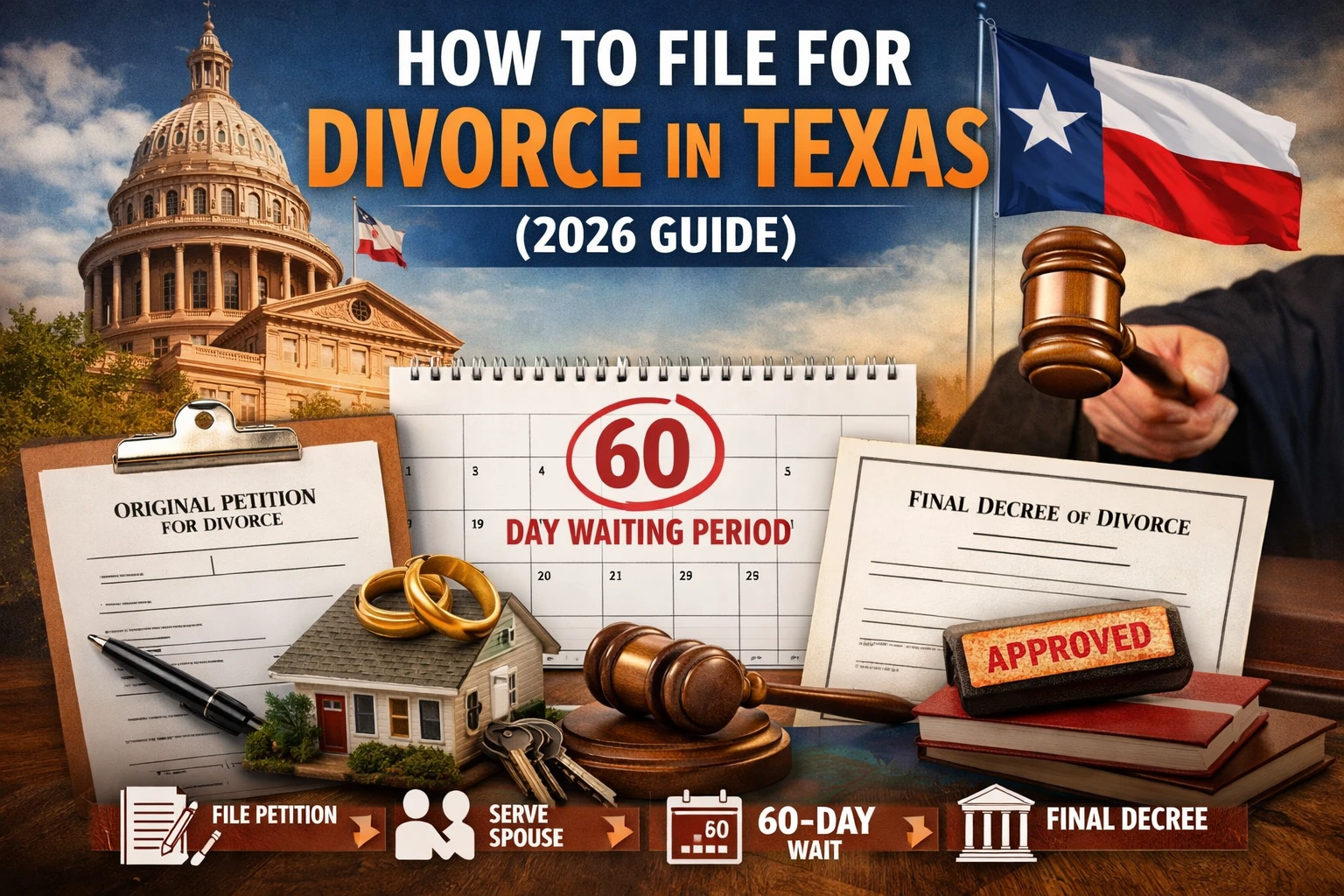
A Texas divorce can look simple on paper until you are staring at a petition, a decree, and a list of county filing requirements. A divorce paperwork example for Texas couples can make the process easier to understand, especially when both spouses agree that the marriage should end and have already worked out the major decisions.
The goal is not to copy someone else’s divorce documents word for word. Your paperwork must reflect your own family, property, debts, and agreements. But seeing how the documents work together helps you recognize what belongs in an agreed Texas divorce and where small errors can create delays.
What an agreed Texas divorce packet usually includes
An uncontested divorce means the spouses agree on the divorce and all material terms before the final hearing. That may include how property and debts will be divided, whether either spouse will keep a vehicle or home, and, when children are involved, conservatorship, possession, child support, and medical support.
The exact packet depends on your circumstances and county, but most agreed cases include an Original Petition for Divorce, a Civil Case Information Sheet or county-required cover document, a Waiver of Service or Respondent’s Original Answer, and a Final Decree of Divorce. Some counties also require local forms, standing-order acknowledgments, or a proposed order for the judge to sign.
When there are minor children, the packet is more detailed. It may include an Income Withholding for Support order, medical support language, a possession schedule, and child support calculations. If retirement accounts, real estate, or a business are involved, additional documents or more careful drafting may be necessary.
Divorce paperwork example for Texas couples without children
Consider a hypothetical couple, Maria and Daniel. They live in Tarrant County, have no children under 18, rent an apartment, own one paid-off vehicle each, and agree to split their credit-card debt. Maria will file for divorce, and Daniel agrees not to contest it.
1. Original Petition for Divorce
The petition opens the case. It identifies the parties, confirms that Texas residency rules are met, and tells the court what the filing spouse is requesting. Generally, one spouse must have lived in Texas for at least six months and in the county of filing for at least 90 days.
In Maria’s petition, the basic information would state that she is the Petitioner and Daniel is the Respondent. It would request a divorce based on insupportability, the no-fault ground commonly used when a marriage cannot continue because of conflict or discord.
The property section would not need to list every household item in the petition. It might request that the court confirm each spouse’s separate property, divide community property in a just and right manner, and allocate community debts according to the final decree. The detailed agreement belongs in the decree.
2. Waiver of Service or Respondent’s Answer
After Maria files, Daniel must be legally brought into the case. In an agreed divorce, he may sign a Waiver of Service instead of being formally served by a process server. A waiver typically confirms that Daniel received a copy of the petition, waives formal service, and understands that the case may proceed.
A waiver is often required to be signed before a notary. It should not be signed until after the petition has been filed, because the waiver must identify the filed case. If Daniel wants notice of future hearings or prefers to formally participate, an Answer may be the better document. The correct choice depends on the circumstances and local procedure.
3. Final Decree of Divorce
The final decree is the document that matters most after the case is finished. It is the court order that divides property and debt and formally ends the marriage. A vague decree can lead to confusion months later, even when both spouses are currently cooperative.
For Maria and Daniel, the decree might state that Maria is awarded the 2018 sedan in her possession and is responsible for insurance, registration, and any expenses connected to it. Daniel is awarded the pickup truck in his possession under the same terms. It might also state that Maria will pay the named Visa account and Daniel will pay the named store-card account.
Specificity is helpful. Instead of saying, “The parties will divide their belongings,” a decree should identify who receives important assets, how debts are assigned, and what happens to the lease or security deposit. If the spouses are selling a home, the decree should address the sale process, payment of the mortgage and closing costs, and how net proceeds will be divided.
When children are involved, the paperwork changes
A divorce with children requires more than an agreement about who gets what. Texas courts must have orders that address the children’s best interests, even when parents agree on every issue.
For example, a couple with two children may agree that both parents will be joint managing conservators. The decree then needs to identify the parents’ rights and duties, the children’s primary residence arrangement, the possession schedule, child support amount, medical support, and dental support. Texas child support guidelines often apply, although circumstances can affect the final terms.
A common mistake is treating the parenting section as a casual promise. Statements such as “Dad can see the children whenever he wants” may not provide enough structure for a court order. Parents can agree to flexible arrangements, but the written decree must still be clear, enforceable, and consistent with Texas requirements.
If either parent receives public assistance, has an unusual work schedule, lives far from the children, or has concerns about safety, the standard paperwork may need adjustment. Those are situations where individualized support is especially valuable.
Details that should match across every document
Court staff and judges often see delays caused by inconsistent information, not because the spouses disagree. Review every document for matching names, dates, addresses, case numbers, and property descriptions.
Pay close attention to these areas:
- The legal spelling of each spouse’s name should be consistent with the petition and decree.
- Vehicles should be identified accurately, preferably with year, make, model, and vehicle identification number when appropriate.
- Debts should name the creditor and clarify which spouse is responsible for payment.
- Real estate should be described carefully, including whether one spouse will refinance, sell, or transfer an interest.
- Child support and possession terms must match the information provided in related support forms.
A decree should also address a name change if a spouse wants to restore a prior legal name. Leaving that request out can mean taking additional steps later.
Filing, waiting, and finishing the case
After the petition is filed, Texas generally requires a 60-day waiting period before a divorce can be finalized. There are limited exceptions, including certain cases involving family violence. The waiting period does not mean you should wait to prepare the remaining documents. It is often the best time to complete the decree, obtain signatures, and confirm county hearing procedures.
Many Texas counties use electronic filing, but local procedures differ. Some courts require a prove-up hearing, while others may have specific submission procedures for agreed cases. A prove-up is usually brief: the filing spouse confirms residency, identifies the petition, states that the divorce is insupportable, and asks the judge to approve the decree.
Do not assume that a signed decree is final until the judge signs it and the clerk processes it. Keep certified copies if you need them for a name change, vehicle title work, financial accounts, or other post-divorce tasks.
Know when a basic example is not enough
An example is useful for a straightforward, agreed case. It is not a substitute for documents tailored to a complicated situation. Additional care is needed when a spouse cannot be located, refuses to sign, disputes property, owns a house or retirement account, has significant debt, or when there are safety concerns. A case that begins as uncontested can become contested if the parties no longer agree.
Ready Divorce Service helps Texans organize and prepare paperwork for agreed divorces so they can move through the process with greater clarity and less unnecessary expense. Document preparation and procedural guidance can be a practical fit when both spouses are ready to resolve the case respectfully.
The best paperwork is not the shortest packet or the one copied from a friend. It is the set of documents that clearly reflects your agreement, meets Texas requirements, and gives both people a workable path forward after the court signs the decree.
📞 Get Started Today – Your Peaceful Divorce Is Just a Click Away
When you’re ready to move on, we’re ready to help.
📲 Call us now at (800) 432-0018
🖥️ Start your divorce online today