One of the most common questions people ask when preparing to file for divorce is how much the filing fee will be in their specific county. While the exact amount varies slightly across Texas, most counties follow a similar structure.
Generally, the filing fee for a divorce in Texas is approximately:
- $350 for divorces without minor children
- $400 or slightly more for divorces involving minor children
Below is a general guide for several large Texas counties.
| County | Divorce Without Children | Divorce With Children |
|---|---|---|
| Dallas County | About $350 | About $400 |
| Tarrant County | About $350 | About $400 |
| Collin County | About $350 | About $400 |
| Denton County | About $350 | About $350 |
| Harris County | About $350 | About $365 |
| Bexar County | About $350 | About $401 |
These fees typically include several mandatory court charges such as:
- District clerk filing fees
- State judicial support fees
- Law library fees
- Family protection fees
- Additional administrative fees in cases involving children
Because counties periodically adjust fees, it is always a good idea to check the current fee schedule with the local district clerk before filing.
Total Cost of Divorce in Texas
While the filing fee is the first cost in a divorce case, the total cost of a divorce can vary widely depending on whether the case is contested or uncontested.
Typical divorce expenses may include:
| Expense | Typical Cost |
|---|---|
| Court Filing Fee | $350 – $400 |
| Service of Process | $75 – $125 |
| Certified Copies of Decree | $5 – $10 each |
| Parenting Class (if required) | $20 – $60 |
If both spouses agree on all issues, an uncontested divorce can significantly reduce overall costs.
How to File for Divorce in Texas
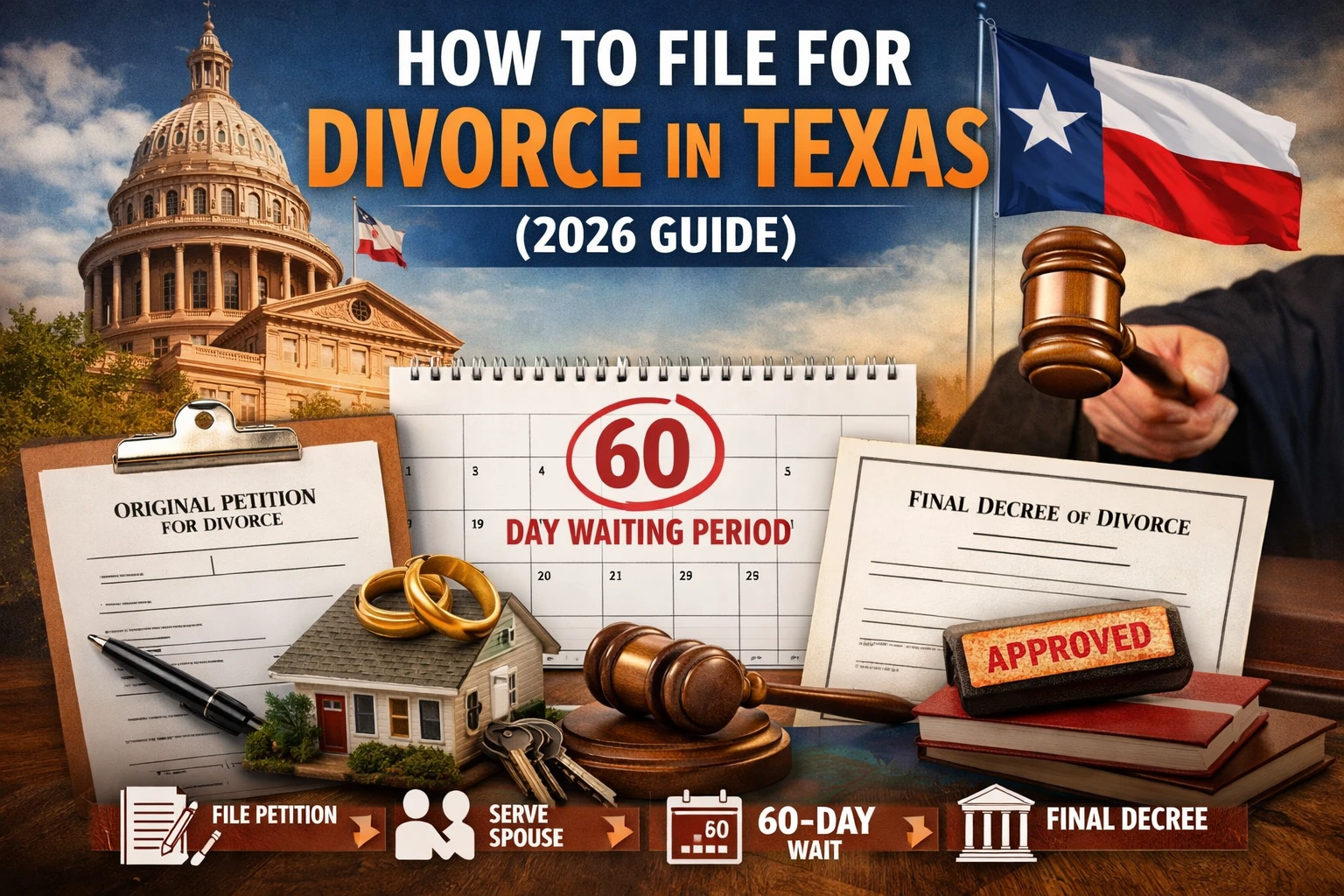
Filing for divorce in Texas generally involves the following steps:
- Prepare the Original Petition for Divorce
This document formally begins the divorce case. - File the Petition with the District Clerk
The petition is filed electronically through the Texas e-filing system and the filing fee is paid. - Notify the Other Spouse
The other spouse must either be formally served or sign a Waiver of Service. - Complete the Required Waiting Period
Texas law requires a minimum 60-day waiting period before a divorce can be finalized. - Finalize the Divorce Decree
Once the terms are agreed upon or decided by the court, the judge signs the Final Decree of Divorce.
🔍Important Tip: Filing Fees Are Only Paid Once
The divorce filing fee is a one-time court fee paid when the case is filed. It is not a monthly or recurring charge.
However, additional court costs may occur if the case becomes contested or requires multiple hearings.

How much is the filing fee for a divorce in Texas?
In most Texas counties, the filing fee for divorce is about $350 when there are no minor children and around $400 when minor children are involved. The exact amount can vary by county.
Does it cost more to file for divorce in Texas if there are children?
Yes. In many Texas counties, divorce cases involving minor children have a higher filing fee because additional court-related fees may apply to cases affecting the parent-child relationship.
What is the filing fee for divorce in Dallas County?
Dallas County filing fees are commonly around $350 for divorce without children and about $400 for divorce with minor children, though court costs should always be verified before filing.
What is the filing fee for divorce in Tarrant County?
Tarrant County divorce filing fees are generally about $350 without children and around $400 when minor children are involved.
What is the filing fee for divorce in Denton County?
Denton County is commonly about $350 whether or not minor children are involved, making it one of the more consistent counties for divorce filing fees.
What is the filing fee for divorce in Harris County?
Harris County is typically about $350 for divorce without children and about $365 for divorce with minor children.
What is the filing fee for divorce in Bexar County?
Bexar County is commonly about $350 for divorce without children and about $401 for divorce involving minor children.
Who pays the filing fee in a Texas divorce?
Usually, the spouse who files the divorce case pays the filing fee at the time the Original Petition for Divorce is submitted to the court.
Can the divorce filing fee be waived in Texas?
Yes. A person who cannot afford court costs may file a Statement of Inability to Afford Payment of Court Costs and ask the court to waive filing fees and other required costs.
Are divorce filing fees refundable in Texas?
No. Once a divorce petition is filed and the court filing fee is paid, that fee is generally non-refundable.
Are there other costs besides the filing fee in a Texas divorce?
Yes. Other possible costs may include service of process fees, certified copies of the Final Decree of Divorce, parenting classes if required, and any additional expenses related to a contested case.
How can I reduce the cost of divorce in Texas?
An uncontested divorce can often reduce costs. Using a Waiver of Service, avoiding unnecessary hearings, and making sure documents are prepared correctly can also help keep expenses lower.
✅ Get Help with Your Texas Divorce Today
At Ready Divorce Service, we simplify the divorce process so you can move forward with confidence. Whether you’re facing a default judgment or pursuing an uncontested divorce, our service is fast, affordable, and tailored to Texas law.
Serving clients in:
📞 Call us now at (800) 432-0018
💻 Or contact us online to get started today.
No court battles. No hidden fees. Just results you can count on.