When both spouses are ready to end the marriage without a fight, the Texas agreed divorce process can feel far more manageable than most people expect. You are still dealing with legal paperwork, court rules, and deadlines, but you are not preparing for a drawn-out courtroom battle. That difference matters. It can save time, reduce stress, and keep costs in a range that many Texas families can actually handle.
An agreed divorce works best when both spouses are on the same page about the major issues. That usually includes property and debt division, whether either spouse will ask for spousal maintenance, and, if children are involved, conservatorship, possession, support, and medical coverage. If those issues are resolved before filing, the process is usually simpler. If they are not, the case may start as agreed and then become contested later.
What the texas agreed divorce process means
In Texas, an agreed divorce is generally an uncontested divorce. That means one spouse files the divorce, the other does not file a formal fight against it, and both sign the necessary final paperwork reflecting their agreement. The court still has to approve the divorce. A judge will not simply accept that both people want it over. The paperwork must be complete, legally proper, and consistent with Texas requirements.
This is where many people get tripped up. They assume agreed means informal. It does not. Even in the easiest case, the court expects correct forms, required notices, and a final decree that clearly states the terms. If children are involved or retirement accounts need to be divided, the paperwork often becomes more detailed.
Who qualifies for an agreed divorce in Texas
Not every divorce is a fit for this process. In most straightforward cases, an agreed divorce may work if one spouse has lived in Texas for at least six months and in the county of filing for at least 90 days. There also needs to be a genuine agreement on the terms of the divorce.
For many couples, the basic fit comes down to conflict level and complexity. If there is domestic violence, fear, hiding of assets, major disagreement about the children, or uncertainty about property, an agreed divorce may not be the right path. The lower cost is appealing, but only if the agreement is real and informed.
A couple with no children, limited property, and no dispute over debt usually has the simplest path. A couple with children can still have an agreed divorce, but the parenting terms need to be very clear. Texas courts pay close attention to child-related provisions, and vague agreements often create delays.
Step by step through the Texas agreed divorce process
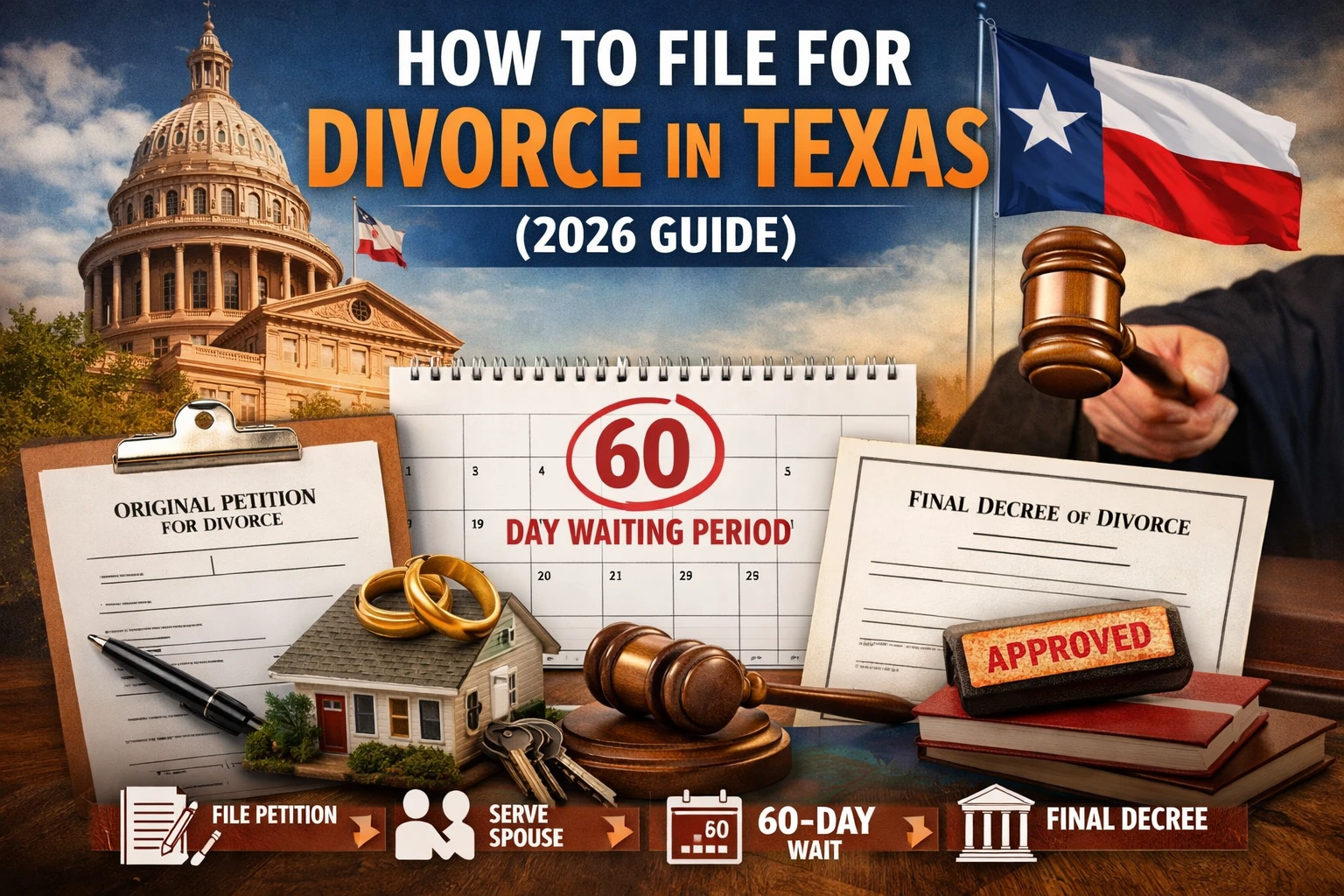
The process usually begins when one spouse, called the Petitioner, files an Original Petition for Divorce in the proper Texas county. Filing starts the case and also starts the mandatory waiting period. Texas generally requires at least 60 days from the filing date before a divorce can be finalized, with limited exceptions.
After filing, the other spouse, often called the Respondent, must be formally notified unless that spouse signs a valid waiver. In many agreed cases, using a waiver helps keep things simple and avoids the need for formal service by a constable or process server. Still, the timing and wording of that waiver matter. Signing the wrong document at the wrong time can create problems.
Next comes the core of the case: the final paperwork. This usually includes the Final Decree of Divorce and, depending on the facts, additional forms related to children, support, name change, or county-specific requirements. The decree needs to say who gets what, who pays which debts, and what the parenting and support terms will be if children are involved.
Once the 60-day waiting period has passed and all paperwork is ready, one spouse appears for a short prove-up hearing unless the county allows another approved method. At that hearing, the judge reviews the case and may ask a few basic questions. If everything is in order, the judge signs the Final Decree of Divorce. That signed order is what makes the divorce final.
Waiting periods, timing, and realistic expectations
A lot of people hear that agreed divorces are fast and assume they will be done in a week or two. Texas law does not allow that in most cases. The 60-day waiting period is built in, so even a smooth case usually takes at least a little time.
That said, some divorces take longer than 60 days for practical reasons. A spouse may delay signing. The decree may need revisions. Child support terms may need to be corrected. Some counties move faster than others when it comes to hearing availability or document review. If retirement division is involved, separate orders may be needed after the divorce is granted.
So yes, agreed divorces are often faster than contested cases. But faster does not mean instant. A realistic mindset helps. The goal is not speed at any cost. The goal is getting through the process correctly so you do not have to go back and fix preventable mistakes.
If children are involved, details matter more
An agreed divorce with children is common in Texas, but it requires extra care. Parents need to address conservatorship, visitation or possession schedules, child support, and health insurance. Judges want to see terms that are specific enough to be enforceable and reasonable for the child.
This is one area where shortcuts tend to backfire. Parents may verbally agree to be flexible, but the court paperwork still needs defined terms. If the decree is too vague, it can create confusion later, especially when schedules change, school starts, or one parent relocates.
Texas also has standard approaches to possession and child support, but families do not always fit neatly into a single model. Sometimes a custom agreement makes sense. When that happens, the paperwork needs to be drafted clearly enough that both the parents and the court understand exactly what will happen.
Common mistakes that slow down an agreed divorce
Most delays in the Texas agreed divorce process do not happen because the court wants to make things hard. They happen because paperwork is incomplete, inconsistent, or filed in the wrong order.
One common problem is assuming the decree can be written casually. It cannot. If the petition says one thing and the final decree says another, the judge may require corrections. Another issue is leaving out debts. People often focus on the house, the car, or bank accounts and forget credit cards, loans, or tax obligations.
Parents sometimes run into trouble by submitting child-related terms that do not match Texas requirements or are missing required language. Filing in the wrong county, using outdated forms, or misunderstanding whether a waiver is appropriate can also slow a case down.
These are exactly the kinds of issues that make a straightforward divorce feel harder than it should. Good procedural guidance helps because it keeps the case moving and reduces the risk of starting over.
Cost savings are real, but only if the case stays agreed
One reason people look for an agreed divorce is cost. That makes sense. Traditional litigation can become expensive very quickly, especially if there are repeated hearings, contested discovery, or attorney negotiations over every issue.
An agreed divorce is usually more affordable because the legal work is narrower. You are not paying for a fight. You are paying for proper preparation, filing steps, and accurate completion of the case. But the savings depend on both spouses staying cooperative. If one person changes position halfway through, costs and delays usually increase.
That is why honesty at the beginning matters. If there is a hidden dispute about custody, property, or support, it is better to recognize that early than to force an agreed process that is not actually agreed.
When support can make the process easier
Many Texans are capable of reaching agreement but still feel overwhelmed by the forms, county procedures, and final hearing requirements. That is a common situation. Agreement does not automatically mean confidence with legal paperwork.
This is where process-focused divorce support can make a real difference. Services built around uncontested Texas divorces help people organize information, prepare documents, and move through filing steps with fewer mistakes. For people who want a practical path without the cost of full litigation, that support can relieve a lot of pressure. Ready Divorce Service is one example of a Texas-focused option designed for that kind of case.
If your case is truly agreed, the path forward may be simpler than it feels right now. The key is treating the process seriously, getting the paperwork right, and moving one step at a time. A divorce may be the end of one chapter, but done properly, it also gives you a cleaner start on the next one.
Common Questions About Agreed Divorce in Texas
What is an agreed divorce in Texas?
An agreed divorce in Texas (also called an uncontested divorce) means both spouses fully agree on all issues, including property division, debts, and any child-related matters, before filing. The court typically approves the agreement without litigation.
What are the steps in the Texas agreed divorce process?
The typical agreed divorce process includes:
- Filing the Original Petition for Divorce
- Having the spouse sign a Waiver of Service
- Preparing and signing the Final Decree of Divorce
- Waiting the mandatory 60-day period
- Submitting the decree for judge approval
How long does an agreed divorce take in Texas?
Texas law requires a minimum 60-day waiting period after filing before a divorce can be finalized. Most agreed divorces are completed shortly after that, depending on how quickly documents are prepared and approved.
Do both spouses have to agree to an agreed divorce?
Yes. Both spouses must agree on all terms—including property, debts, and children—otherwise the case becomes contested and requires court involvement.
Can I file an agreed divorce online in Texas?
Yes. Texas allows electronic filing (e-filing) in most counties, meaning many agreed divorces can be handled online without going to court in person.
Get Started Today – Your Divorce Is Just a Click Away
If you’re in Texas and want your divorce handled quickly, correctly, and without unnecessary stress, we can help you from start to finish.
👉 Start here: Complete the Divorce Questionnaire
📞 Call now: (469) 913-4000