If you are trying to file divorce online Texas courts may let you handle much of the process electronically, but that does not mean the divorce itself is automatic. You still have to meet Texas requirements, prepare the right paperwork, file in the correct county, and follow the court’s timeline. For many couples, the easiest path is an uncontested divorce where both spouses agree on the major terms before anything is filed.
That distinction matters more than most people realize. Filing online can save time and reduce trips to the courthouse, but it does not fix disagreements about property, debt, children, or support. If you and your spouse are on the same page, online filing can make the process more manageable. If you are not, the case usually becomes slower, more expensive, and harder to complete without legal help.
Can you file divorce online in Texas?
In many Texas counties, yes, at least in part. Courts may allow electronic filing of divorce documents, and some parts of the case can be handled without appearing in person. But people often use the phrase to mean two different things. One meaning is submitting documents through an online filing system. The other is completing the entire divorce from start to finish on a computer.
The first is common. The second depends on your county, your judge, and the details of your case.
For a straightforward agreed divorce, much of the work can be done remotely. You can prepare the petition, waiver or answer, final decree, and other required documents, then file them electronically if your county accepts e-filing for self-represented parties. In some cases, the prove-up hearing may also be handled in a simplified way. In others, you may still need a brief court appearance, even if the filing itself happened online.
When online divorce works best
The best fit is an uncontested divorce. That means both spouses agree that the marriage should end and agree on the main terms. Usually, that includes how to divide property and debt, whether either spouse will change names, and if children are involved, the parenting plan, child support, and medical support.
Texas courts take child-related terms seriously, so agreement alone is not enough. The final orders still need to meet legal requirements and be acceptable to the court. That is one reason document accuracy matters so much. A simple mistake in wording can delay a case that otherwise should have moved quickly.
Online filing also works better when the estate is relatively simple. If there is a house, retirement account, family business, or disagreement about separate versus community property, the paperwork becomes more sensitive. It can still be uncontested, but it needs more care.
Basic requirements before you file divorce online Texas cases
Before anything is filed, you need to make sure Texas has jurisdiction over your divorce. In general, one spouse must have lived in Texas for at least six months and in the county of filing for at least 90 days.
You also need grounds for divorce. Most uncontested cases use insupportability, which is the Texas no-fault ground. It simply means the marriage can no longer continue because of conflict or discord that cannot be resolved.
From there, the practical question is whether your case is truly agreed. If one spouse is unresponsive, contests terms, or refuses to sign, the process is no longer the simple online route most people are hoping for.
What documents are usually involved
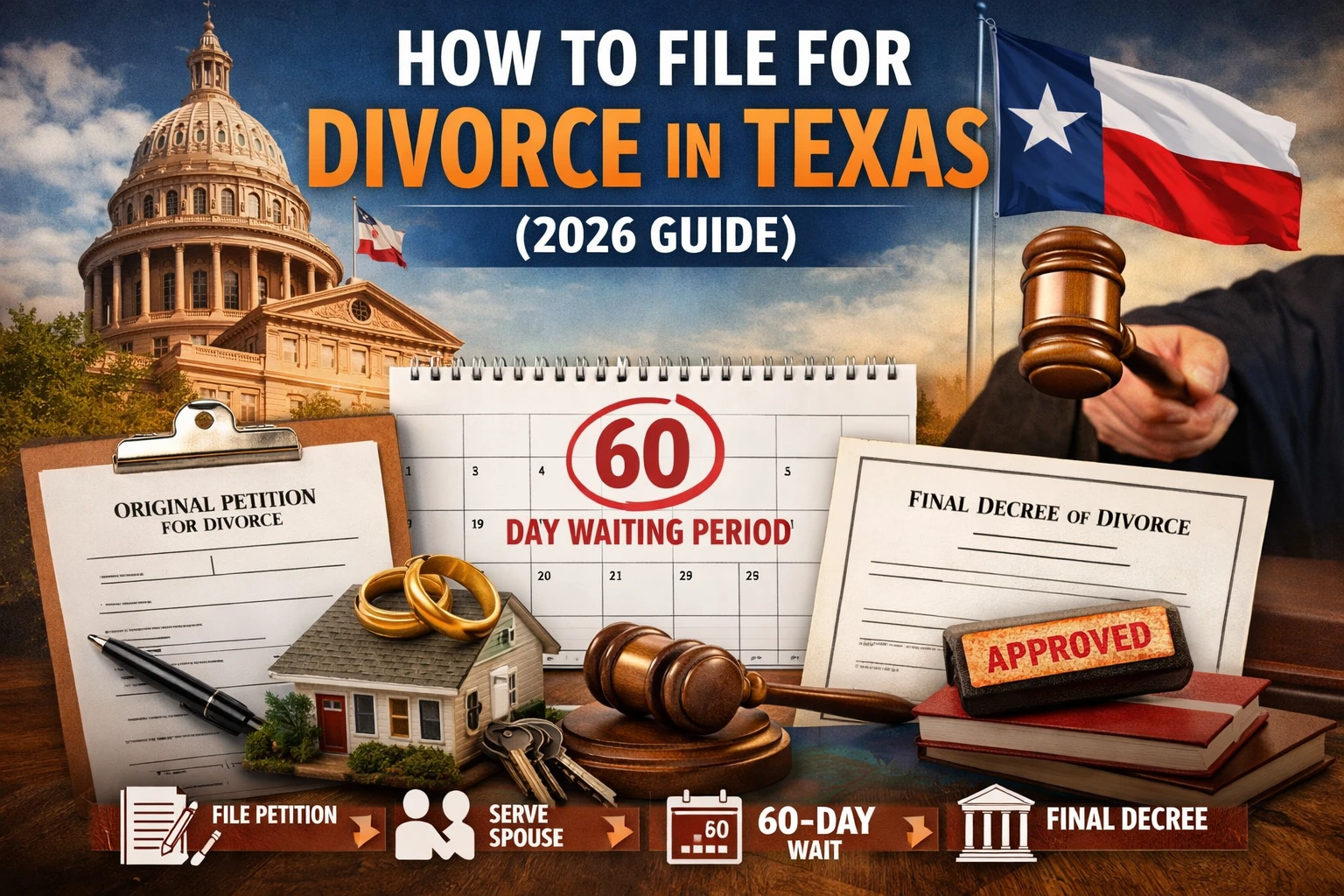
The case begins with an Original Petition for Divorce. That document tells the court what you are asking for and gives the case a formal starting point. After filing, the other spouse must usually be served unless they sign a waiver or file an answer.
In an agreed divorce, the final decree is the most important document. It sets out the terms that will control after the divorce is granted. If children are involved, there may be additional forms covering conservatorship, possession and access, child support, and medical support. Some cases also require income withholding documents.
This is where many self-filed cases run into trouble. People assume the petition is the hard part, but the decree is where the legal details live. If the decree is incomplete, inconsistent, or missing required provisions, the court may reject it or require revisions.
Step by step: how the process usually works
First, the paperwork is prepared based on your situation. That means not just filling in names and dates, but making sure the property terms, debt division, and child-related provisions match your agreement.
Next, the petition is filed in the correct Texas county. Filing fees vary by county, and if you are filing in places like Dallas County, Tarrant County, Harris County, or Bexar County, local procedures may differ in small but important ways. Those differences can affect cover sheets, standing orders, scheduling, and final submission requirements.
After filing, the other spouse must be legally notified unless they are participating voluntarily through a waiver or answer. In an uncontested case, a waiver is common, but it has to be signed correctly and at the right time.
Then comes the waiting period. Texas has a mandatory 60-day waiting period in most divorce cases. That means the divorce usually cannot be finalized until at least 60 days have passed from the filing date. People often expect online filing to speed past that deadline, but it does not. Filing online can reduce administrative delays, not remove the statutory waiting period.
Once the waiting period has passed, the remaining final documents are submitted and the case is presented to the court for approval. Depending on the county and court, that may involve a brief hearing, an affidavit, or another approved finalization process.
Common mistakes that slow down online divorce
The biggest mistake is treating divorce forms like tax forms. Divorce paperwork is not only about reporting information. It creates enforceable court orders. If the language is unclear, the problem may not show up until months later when one party is trying to transfer a car title, refinance a home, divide a retirement account, or follow a parenting schedule.
Another common mistake is filing in the wrong county or before meeting the residency requirement. Courts cannot fix that with a quick edit. It may mean refiling and paying again.
Parents also run into issues when they assume a private agreement is enough without including the required child support and medical support terms. Texas courts expect those issues to be addressed properly. If they are missing or drafted poorly, finalization can stall.
There is also the problem of partial agreement. Some couples say the divorce is uncontested because they are generally getting along, but they still disagree on one account, one debt, or one parenting issue. That one unresolved point can change the whole case.
Is filing online cheaper?
Usually, yes, compared with a traditional contested divorce handled through full attorney litigation. But cheaper does not always mean cheap in the long run. If bad paperwork leads to rejected filings, repeated corrections, or future enforcement problems, the cost advantage can disappear.
For couples with a true agreement, a document preparation and procedural support service is often the middle ground that makes sense. You get help organizing the paperwork and following the Texas process without paying litigation-level fees for a case that does not need a courtroom fight.
That is why many Texans look for support instead of trying to piece the process together alone. A service focused on agreed Texas divorces can often spot issues early, keep the documents consistent, and reduce the risk of delays.
When online filing may not be the right choice
If there is family violence, hidden assets, intimidation, serious power imbalance, or a spouse who will not cooperate, online filing is probably not the clean solution it appears to be. The same is true when one spouse cannot be located or when the property issues are unusually complex.
Those situations do not always require a fully contested court battle, but they usually require more than a basic online filing approach. The safest route depends on the facts.
Getting through the process with less stress
Most people are not looking for a complicated legal education. They want to know what forms they need, where to file them, how long it will take, and how to avoid doing it twice. That is exactly where a Texas-focused support process helps.
If your divorce is agreed, filing online can be a practical way to move forward. Just make sure you are not confusing convenience with simplicity. The filing method may be digital, but the legal requirements are still real, and getting them right is what keeps the case moving.
A calm, accurate start can make the rest of the process feel a lot more manageable, and when you are closing one chapter of life, that kind of clarity matters.
Get Started Today – Your Divorce Is Just a Click Away
If you’re in Texas and want your divorce handled quickly, correctly, and without unnecessary stress, we can help you from start to finish.
👉 Start here: Complete the Divorce Questionnaire
📞 Call now: (469) 913-4000