For many Texans, the most stressful part of divorce is not the paperwork. It is the thought of standing in a courtroom, answering questions in public, and dealing with more conflict than they already have at home. The good news is that a Texas divorce without court appearance may be possible in some uncontested cases, but it depends on the county, the judge, and the details of your case.
If you and your spouse agree on the major terms, the process can often be much simpler than people expect. That does not mean you can ignore the legal steps. It means you may be able to complete them in a more efficient, lower-conflict way.
Can you get a Texas divorce without court appearance?
Sometimes, yes. In Texas, not every divorce requires both spouses to physically appear in court. In a straightforward uncontested divorce, one spouse may be able to finalize the case without a traditional courtroom hearing, and in some counties the final prove-up may be handled remotely or through procedures that reduce in-person appearances.
That said, there is no one-size-fits-all answer. Texas courts are run at the county level, and local practices matter. One county may allow a remote prove-up in certain agreed cases, while another may still require one spouse to appear briefly before a judge. If your case involves children, property issues, missing paperwork, or anything the court views as unclear, the chance of avoiding a court appearance can shrink.
The key point is simple. A Texas divorce without court appearance is most realistic when the divorce is uncontested, the paperwork is complete, and the final orders are clear and acceptable to the court.
What makes an uncontested divorce a better fit?
An uncontested divorce works best when both spouses agree that the marriage should end and also agree on the terms. That usually includes property division, debt division, and, if children are involved, conservatorship, possession, support, and related parenting terms.
When there is genuine agreement, the court does not have to referee a dispute. That is why uncontested cases are typically faster, less expensive, and less emotionally draining than contested litigation. It also makes them the best candidates for reduced hearing requirements.
But agreement has to be real, not assumed. If one spouse is delaying, refusing to sign, changing terms every week, or hiding financial information, the case may stop being uncontested even if it started that way. In those situations, expecting a smooth no-court process can lead to frustration.
When a court appearance may still happen
People often hear that an agreed divorce is easy and assume there will be no hearing at all. Sometimes that is true. Sometimes it is not.
Texas courts still have a duty to review divorce orders, especially when children are involved. A judge may want confirmation that residency requirements are met, the waiting period has passed, and the proposed Final Decree of Divorce is legally proper. Even in a calm, fully agreed case, one spouse may need to complete a brief prove-up.
A prove-up is a short final step where the court confirms basic facts and approves the divorce. In many uncontested cases, only the filing spouse appears. In some counties, that appearance may be remote. In others, it may be in person but brief and routine.
So the better question is not just, “Can I avoid court entirely?” It is, “What does my county require for an uncontested final divorce?” That question leads to better planning and fewer surprises.
Texas divorce without court appearance usually depends on these factors
The biggest factor is whether the case is uncontested from start to finish. If both spouses sign the necessary documents and the decree is properly prepared, the court has less reason to require extra proceedings.
The next factor is whether children are involved. Courts tend to review child-related terms more carefully, which can affect whether a hearing is required and what kind of proof is needed. That does not mean you cannot have an efficient agreed divorce with children. It just means the paperwork and parenting terms need to be especially clear.
County procedure also matters. Local courts in places like Tarrant County, Dallas County, Denton County, Collin County, Ellis County, Bexar County, and Harris County may differ in how they handle prove-ups, scheduling, and remote appearances. Even within a county, court-specific preferences can affect the final step.
Finally, the quality of the paperwork matters more than many people realize. Incomplete forms, inconsistent dates, missing signatures, or unclear settlement terms can delay the case or trigger a need for correction. A simple case can become complicated when documents are not prepared correctly.
What the process usually looks like
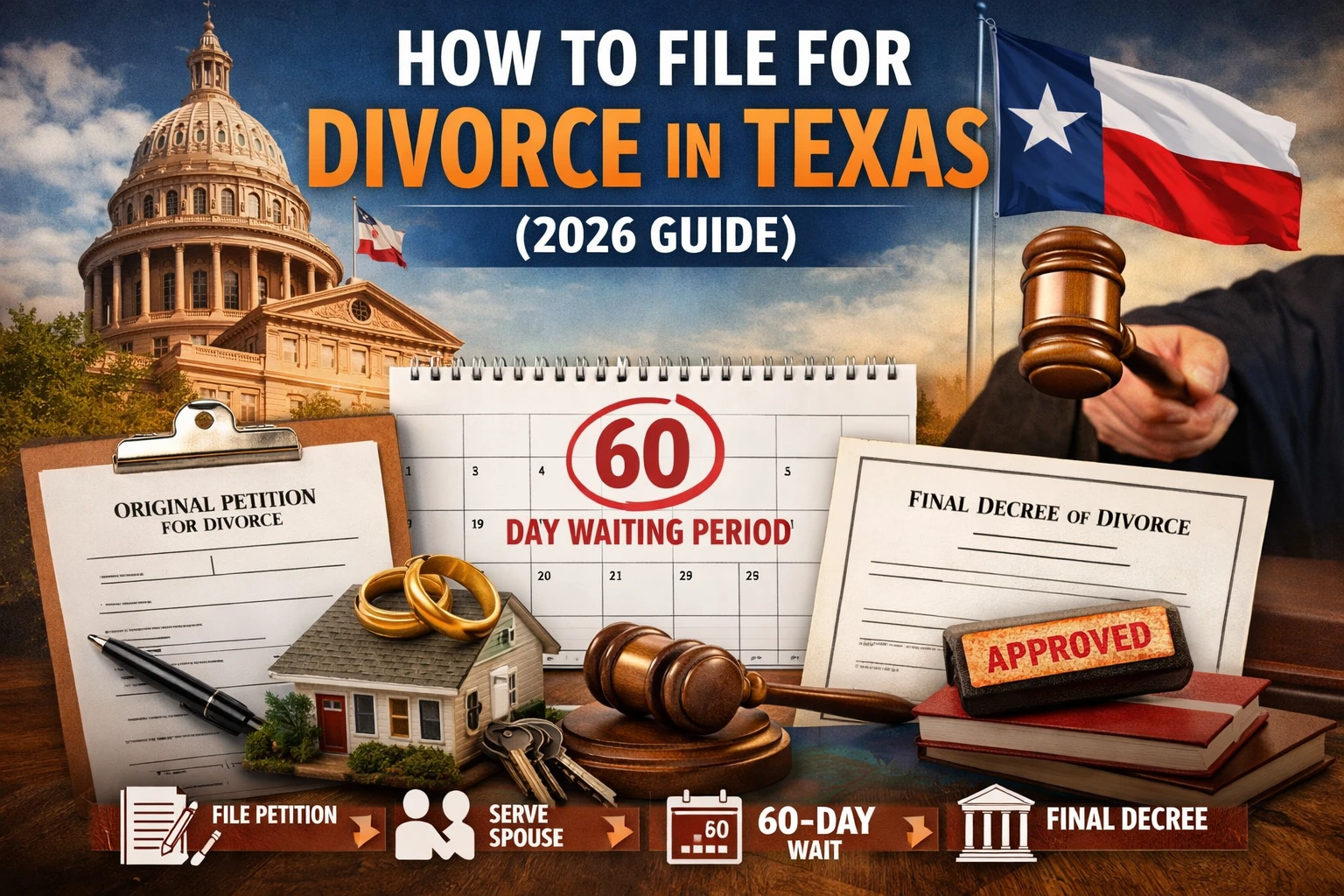
Most uncontested Texas divorces follow the same basic path. One spouse files the Original Petition for Divorce. Then the other spouse is formally served or signs a waiver, depending on the circumstances. The parties prepare and sign the necessary documents, including the Final Decree of Divorce and any child-related forms if applicable.
Texas also has a mandatory 60-day waiting period in most divorces. That waiting period begins on the date the case is filed, not the date the spouses separate. Even when everything is agreed, the divorce usually cannot be finalized until that period has passed.
After the waiting period, the case moves to finalization. This is the stage where the question of court appearance becomes most relevant. Depending on local procedure, finalization may involve a brief prove-up, a remote hearing, or another approved method for presenting the agreed order to the judge.
This is why procedural guidance matters. The legal system does not reward good intentions. It rewards complete, accurate, timely filings.
Common reasons an agreed divorce gets delayed
A lot of delays have nothing to do with major legal disputes. They happen because people underestimate the paperwork.
One common problem is using forms that do not fit the case. Another is leaving out details on property, retirement accounts, debts, or parenting schedules. Some couples agree in conversation but never put the terms into language the court can sign. Others miss local filing requirements or assume the clerk will fix errors for them.
There is also the issue of timing. If one spouse signs too early, signs the wrong version, or forgets a required form, the case can stall right near the finish line. That is frustrating when the goal is a low-stress divorce.
For people trying to avoid unnecessary hearings, clean paperwork is not just helpful. It is part of what makes a streamlined finalization possible.
Is this the right option for everyone?
No, and that matters. A Texas divorce without court appearance is not a good fit for every situation.
If there is family violence, coercion, hidden assets, major disagreement over custody, or a spouse who will not cooperate, you may need a more formal legal process. The same is true when one spouse cannot be located or when the facts are legally complicated. Trying to force a contested case into an uncontested process usually costs more time in the end.
On the other hand, if both spouses are being reasonable and want to finish the divorce with as little disruption as possible, an agreed case may offer a practical path forward. For many families, that means less missed work, lower costs, and fewer emotionally exhausting steps.
Getting help can reduce mistakes and stress
Many people do not need full litigation. They need a clear roadmap, properly prepared documents, and guidance on what happens next. That is where divorce support services can make a real difference.
A process-focused service can help you understand whether your case is likely to qualify as uncontested, what documents are required, how the waiting period affects timing, and what finalization may look like in your county. That kind of support can be especially valuable if your priority is keeping the process affordable while still following Texas requirements.
Ready Divorce Service works with Texans who want a simpler path through agreed divorce, with an emphasis on accurate paperwork and practical next steps. For the right case, that kind of support can make the process feel much more manageable.
If you are hoping to avoid a courtroom scene, the best first move is not guessing. It is finding out whether your case truly qualifies as uncontested and making sure every step is handled correctly from the start. A calmer divorce usually begins with a clearer plan.
Get Started Today – Your Divorce Is Just a Click Away
If you’re in Texas and want your divorce handled quickly, correctly, and without unnecessary stress, we can help you from start to finish.
👉 Start here: Complete the Divorce Questionnaire
📞 Call now: (469) 913-4000