When children are part of a divorce, the questions get more urgent fast. Parents are not just trying to end a marriage. They are trying to protect routines, keep school and childcare stable, and make legally sound decisions that will hold up after the case is final. This guide to Texas divorce with children is built to make that process easier to understand, especially if both parents want a lower-conflict path.
In Texas, divorces involving children require more paperwork and more detail than divorces without children. Even when both spouses agree, the court still expects clear terms about conservatorship, possession, child support, medical support, and decision-making. The goal is not simply to sign off on an agreement. The goal is to make sure the final orders are complete, workable, and in the child’s best interest.
What makes a Texas divorce with children different
A divorce without children can be fairly simple if both spouses agree on property and debt. A divorce with children adds a second layer of issues, and those issues usually matter more than anything else in the case. Texas courts want to know where the children will live, how parenting time will be shared, who will make major decisions, and how financial support will be handled.
This is where many parents get stuck. They may be in agreement generally, but not yet in enough detail to prepare accurate documents. Saying, “We’ll work it out,” may feel cooperative, but it usually is not enough for a final decree. A usable agreement needs specifics.
That does not mean every case becomes a fight. Many Texas parents complete an uncontested divorce with children successfully. The key is making sure the agreement is realistic and the paperwork matches what the court requires.
Guide to Texas divorce with children – starting with eligibility
Before filing, it helps to confirm that your case can move forward in Texas. In general, one spouse must have lived in Texas for at least six months and in the county of filing for at least 90 days. If that residency requirement is not met, the case may need to wait.
If children are involved, another issue can come up: whether Texas has authority to make custody orders. Usually, Texas must be the child’s home state. That often means the child has lived in Texas for the six months before filing. If there has been a recent move, another state may have jurisdiction, and that can affect where the case should be filed.
For parents in counties such as Dallas, Tarrant, Collin, Denton, Harris, Bexar, or Ellis, local filing procedures may vary slightly, but the statewide legal requirements are the same. Getting the county right from the start helps avoid delays.
The core child-related issues in a Texas divorce
Texas uses terms that can sound unfamiliar at first. “Conservatorship” refers to parental rights and duties. “Possession and access” refers to the parenting schedule. In everyday language, many people still call these custody and visitation.
In many cases, parents are named joint managing conservators. That usually means both parents share certain rights and responsibilities, although one parent may still have the exclusive right to determine the child’s primary residence. Joint conservatorship does not always mean a 50-50 schedule. It simply means both parents stay legally involved.
The possession schedule is where the practical details matter. A parenting plan should address weekdays, weekends, holidays, school breaks, transportation, and exchange times. What works for a toddler may not work for a teenager. What works for parents living ten minutes apart may break down if they live in different counties.
Child support is another major part of the case. Texas has guideline support rules based largely on the paying parent’s net resources and the number of children involved. Medical support must also be addressed, including who provides health insurance and how uninsured expenses are shared.
Can an uncontested divorce work when children are involved?
Yes, if both parents genuinely agree on the major terms and are willing to put those terms into a clear, court-ready order. An uncontested divorce is often a strong option for families who want to avoid prolonged conflict and keep costs more manageable.
That said, “uncontested” does not mean casual. Parents still need complete and accurate documents. If the decree is vague, inconsistent, or missing required provisions, the court may reject it or require corrections. This is one reason process support matters. The details can be easy to underestimate until you are in the middle of them.
An uncontested case also works best when there is no serious dispute about safety, hidden assets, or major parenting issues. If one parent is refusing to cooperate, ignoring the process, or trying to control the outcome unfairly, the case may no longer be a good fit for a streamlined agreed divorce.
The basic process for a Texas divorce with children
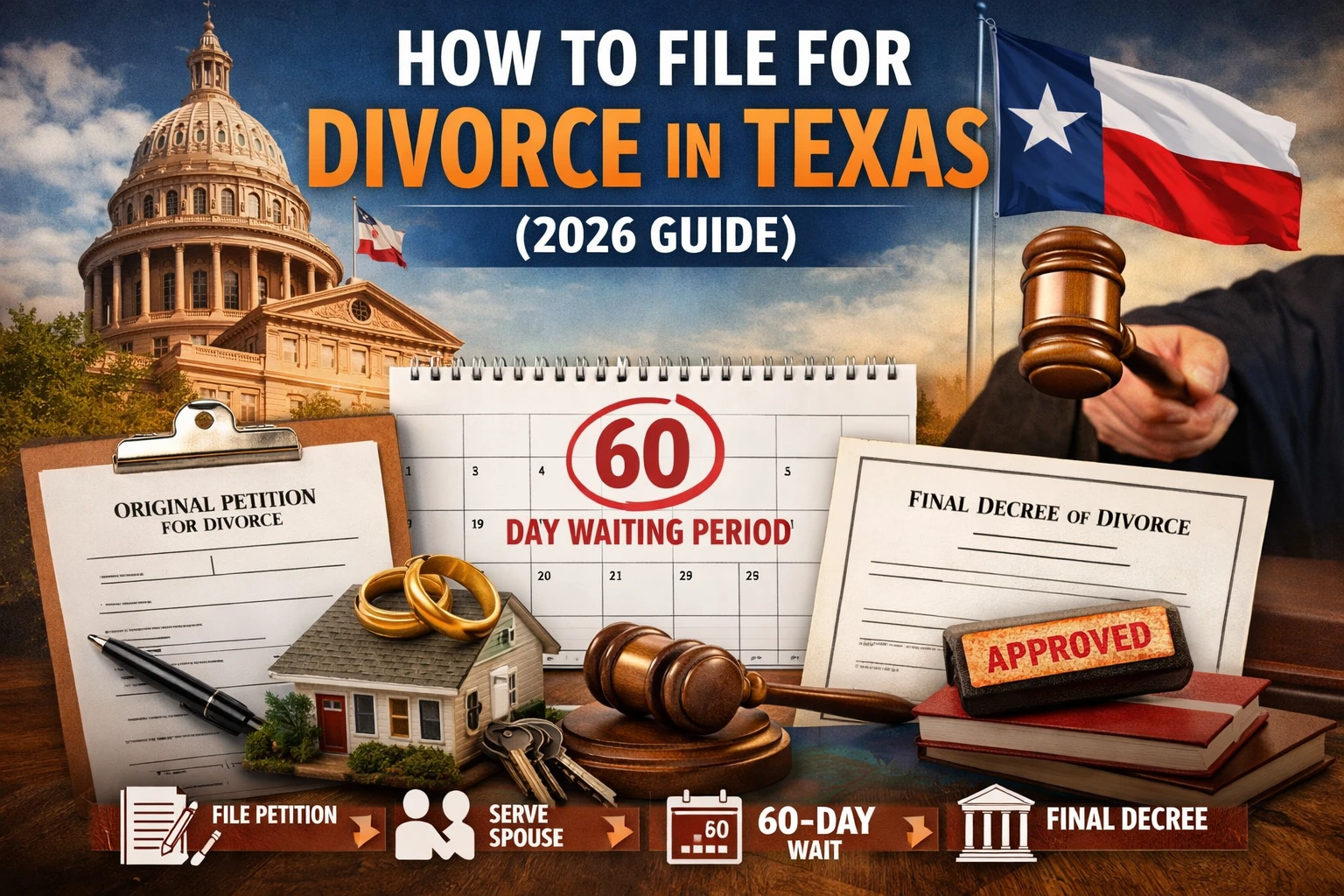
The case usually starts when one spouse files an Original Petition for Divorce in the proper Texas county. After filing, the other spouse must usually be formally served unless they sign a waiver. In an agreed case, many couples prefer the waiver route because it is simpler and less confrontational.
Texas has a 60-day waiting period in most divorce cases. That means the divorce generally cannot be finalized until at least 60 days after the petition is filed. Parents sometimes assume an agreed case can be completed immediately, but the waiting period still applies unless a narrow exception exists.
During that waiting period, the parties usually complete the remaining documents, including the Final Decree of Divorce and any child-related forms required for the case. If both parents agree, those documents can often be prepared and signed without a courtroom battle.
When everything is ready and the waiting period has passed, one spouse typically appears for a short prove-up hearing, unless the court allows another procedure. The judge reviews the paperwork and, if everything is in order, signs the final decree.
Common mistakes parents make
One common mistake is agreeing too quickly without thinking through daily logistics. A parenting plan can look fair on paper and still create constant stress if it ignores work schedules, school pickup times, daycare, or holiday travel.
Another mistake is using generic language that leaves too much open to interpretation. If an order says parents will share expenses “as agreed,” that may create problems later. It is usually better to define how costs will be split, how reimbursement will be requested, and when payment is due.
Parents also sometimes focus only on the present. A workable decree should account for future transitions too. Children grow, school demands change, and jobs shift. While no order can predict everything, the terms should be detailed enough to handle normal real-life changes.
When a child’s best interest shapes the outcome
Texas courts center child-related decisions on the best interest of the child. That standard is broad because families are different. Stability, safety, emotional needs, each parent’s involvement, and the ability to support the child’s well-being can all matter.
This is why one-size-fits-all advice can be risky. A standard possession schedule may work well in one family and poorly in another. A parent with rotating hospital shifts may need a more customized plan. A child with special medical or educational needs may require more detailed language in the decree.
The trade-off is simple. The more customized the agreement, the more care it usually takes to draft it correctly. But that extra clarity often prevents future conflict.
What parents should gather before preparing paperwork
Before documents are drafted, it helps to gather practical information. That includes the children’s full names and dates of birth, both parents’ addresses, employment details, income information for support calculations, health insurance information, and a proposed parenting schedule.
If there are existing court orders involving the children, those should be reviewed closely. Prior custody or support orders can affect how the divorce documents must be prepared. Parents should also be ready to provide details about who has been caring for the children and where the children have lived.
This preparation stage may feel tedious, but it often saves time. Clean information leads to cleaner paperwork, and cleaner paperwork usually means fewer delays.
Getting help without turning the case into a fight
Many parents do not need full litigation. They need help understanding the forms, making sure the agreement is complete, and moving the case through the proper steps. That is where a Texas-focused divorce support service can make a meaningful difference.
For agreed cases, practical guidance can reduce errors, missed signatures, rejected documents, and unnecessary stress. Ready Divorce Service works with Texans who want an affordable, straightforward path through uncontested divorce paperwork, including cases where children are involved and the details need to be handled carefully.
If you and your spouse are mostly in agreement, getting organized early is one of the smartest things you can do. A calm process starts with clear terms, accurate documents, and realistic expectations. For parents, that is not just about finishing a divorce. It is about creating a stable next chapter your children can actually live with.
Get Started Today – Your Divorce Is Just a Click Away
If you’re in Texas and want your divorce handled quickly, correctly, and without unnecessary stress, we can help you from start to finish.
👉 Start here: Complete the Divorce Questionnaire
📞 Call now: (469) 913-4000