Table of Contents
- Understanding the Fastest Way to Get Divorced in Texas
- Texas Divorce Laws Residency Requirements
- The Texas Divorce Waiting Period Explained
- Step-by-Step Filing Timeline for the Fastest Divorce
- Uncontested Divorce Texas Cost and E-Filing Options
- Texas Divorce Forms Online: Document Preparation Essentials
- Common Mistakes to Avoid in Your Texas Divorce
- Conclusion
Last Updated: July 27, 2026
Understanding the Fastest Way to Get Divorced in Texas
The fastest way to get divorced in Texas depends on whether you and your spouse agree on major issues. At Ready Divorce Service, we’ve guided hundreds through the process, the difference between quick resolution and lengthy battles comes down to one factor: whether your divorce is uncontested or contested.
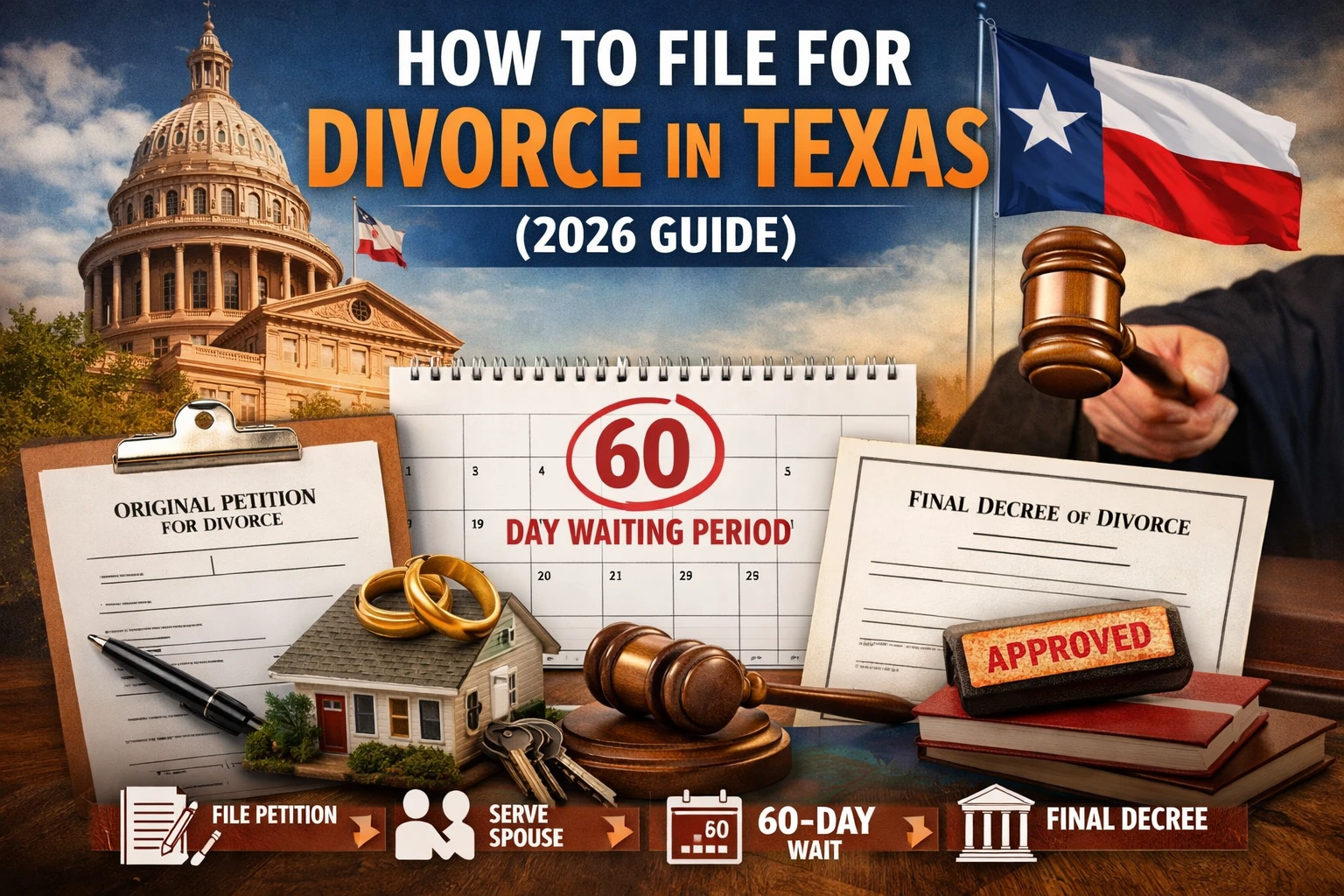
Texas law imposes a mandatory 60-day waiting period from filing your Original Petition for Divorce until a Final Decree can be issued. Even the fastest divorce takes 60 days minimum. Many people unnecessarily extend this timeline through procedural mistakes, missed deadlines, or misunderstanding what must happen during those 60 days.
The path to the fastest divorce is straightforward when you know the exact steps, required documents, and local rules.
Uncontested vs. Contested Divorce
An uncontested divorce occurs when both spouses agree on all major issues: property division, custody, child support, spousal support, and debt division. This is the fastest path because there’s no need for court battles, depositions, or extended negotiations. An uncontested divorce can be finalized in 61-90 days.
A contested divorce requires court intervention when spouses disagree on significant issues and routinely takes 12-24 months or longer, depending on complexity and court schedules.
If you have minor children, the court will review custody arrangements to ensure they’re in the child’s best interest, but if both parents agree, this review is usually quick.
Why the 60-Day Waiting Period Matters
Texas Family Code § 6.409 mandates a 60-day waiting period from filing until a Final Decree can be signed. This waiting period cannot be waived except in cases involving family violence.
The 60 days gives both spouses time to reconsider, seek counsel, and ensure informed decisions. It also gives the court time to review your case and schedule a final hearing.
Use the 60-day waiting period to finalize your property settlement agreement, custody arrangements, and prepare all supporting documents so everything is ready for your final hearing when the period ends.
Texas Divorce Laws Residency Requirements
To file for divorce in Texas, at least one spouse must have been a resident for the preceding six months, and the filing spouse must have been a resident of the filing county for at least 90 days immediately before filing.
These residency requirements are critical. If you don’t meet them, the court lacks jurisdiction and you’ll have to start over in the correct jurisdiction. If you’ve recently moved to Texas or within Texas, verify your dates carefully before filing.
The Texas Divorce Waiting Period Explained
The 60-day waiting period begins the day your Original Petition for Divorce is filed and officially served on your spouse (or the day they sign a Waiver of Service). This period is non-negotiable in most cases.
During these 60 days, finalize all agreements about property division, custody, child support, and spousal support. Gather required financial documents, complete the Civil Case Information Sheet, and prepare court-required forms.
One common misunderstanding is that the waiting period can be shortened if you move quickly. It cannot. The law is explicit: no Final Decree can be signed before 60 days have passed, with very limited exceptions.
When the 60-Day Waiting Period Can Be Waived
Texas Family Code § 6.409 allows the 60-day waiting period to be waived only in cases involving family violence. If one spouse has obtained a protective order against the other due to domestic violence, the judge may waive the waiting period upon motion.
For everyone else, the 60-day waiting period is mandatory regardless of how amicable the divorce is.
Step-by-Step Filing Timeline for the Fastest Divorce
The fastest divorce follows this sequence: prepare documents, file with the District Court, serve your spouse or obtain a Waiver of Service, wait 60 days, attend a final hearing, and receive your Final Decree. This entire process can be completed in 90-120 days if you stay organized and meet all deadlines.

Step 1: Prepare Your Documents and Civil Case Information Sheet
Before filing, prepare your Original Petition for Divorce and the Civil Case Information Sheet. The Original Petition must include your name, your spouse’s name, residency information, information about minor children, and what you’re requesting from the court.
The Civil Case Information Sheet provides administrative information about your case, including basic facts about the parties and whether the divorce is contested or uncontested.
If you have minor children, you’ll also need to file a suit affecting the parent-child relationship, typically included in your Original Petition.
Filing incomplete or incorrect documents is one of the most common reasons divorces take longer than necessary. The court clerk will reject documents that don’t meet Texas requirements, causing delays while you correct and refile. Double-check every field before submitting.
Step 2: File Your Original Petition for Divorce
File your documents with the District Court in the county where you meet the residency requirement. Filing can be done in person or through e-filing (digital filing).
When you file, you’ll pay the filing fee, which varies by county but typically ranges from $300 to $500. The court clerk will stamp your petition with the filing date and assign a case number. The filing date marks the beginning of the 60-day waiting period.
Step 3: Serve Your Spouse or Obtain Waiver of Service
Your spouse must be notified of the divorce filing through “service of citation.” Formal service means hiring a process server or having a sheriff’s deputy deliver the petition and citation to your spouse.
A Waiver of Service is simpler and faster. If your spouse agrees to the divorce and will cooperate, they can sign a Waiver of Service, acknowledging they’ve been informed and waiving their right to formal service. This waiver is then filed with the court.
The fastest divorce almost always involves a Waiver of Service. Service must be completed before the final hearing, but complete it early to ensure your spouse has been properly notified.
Step 4: Complete the 60-Day Waiting Period
Once your petition is filed and your spouse is served (or has signed a Waiver), the 60-day clock begins. Use this time to finalize all agreements and prepare final paperwork.
If your divorce is uncontested, draft your property settlement agreement, finalize custody orders, and calculate child support using Texas guidelines. Gather all required financial documents: bank statements, tax returns, retirement account statements, and documentation of assets and debts.
| Task | Timeline |
|---|---|
| File Original Petition for Divorce | Day 1 |
| Serve spouse or obtain Waiver | Days 1-7 |
| Finalize property settlement | Days 7-50 |
| Prepare final paperwork | Days 40-55 |
| Schedule final hearing | Days 50-58 |
| Attend final hearing | Day 60+ |
| Receive Final Decree | Day 61+ |
Step 5: Attend Final Hearing and Receive Final Decree
After the 60-day waiting period, you can schedule a final hearing. In uncontested divorces, the final hearing is brief, often taking only 10-15 minutes.
At the final hearing, the judge reviews your petition and any agreements reached with your spouse. If the judge approves everything and finds the divorce is in the best interest of any minor children, they’ll sign the Final Decree of Divorce.
The Final Decree is the official court order ending your marriage. It includes all terms: property division, custody arrangements, child support, and spousal support (if applicable). Once signed, your divorce is final.
Uncontested Divorce Texas Cost and E-Filing Options
The cost of an uncontested divorce includes court filing fees, service fees (if applicable), and potentially document preparation fees if you use Ready Divorce Service.
Court filing fees vary by county but typically range from $300 to $500. If you need a process server for formal service, expect $50 to $150. If your spouse signs a Waiver of Service, you avoid this cost. Total cost for an uncontested divorce is significantly lower than a contested divorce, which may involve attorney fees of $5,000 to $15,000 or more.
Digital Filing (E-Filing) Walkthrough
Many Texas counties now support e-filing, allowing you to file electronically rather than in person. E-filing is faster, more convenient, and reduces the risk of documents being lost or misfiled.
To e-file, create an account with your county’s e-filing system, upload documents in the required format (usually PDF), and pay the filing fee online. The court clerk will review your documents within 1-3 business days and either accept them or send corrections needed.
Before e-filing, check your county’s specific requirements. Some counties require specific document formats, have file size limits, or require specific formatting of headers and footers. Verify these requirements before uploading.
County-Specific Local Rules and Filing Fees
Texas has 254 counties, each with its own local rules governing divorce proceedings. These rules can affect filing fees, required forms, e-filing procedures, and final hearing scheduling.
Before filing, research your specific county’s requirements. Visit the District Court clerk’s website for local rules, required forms, and fee schedules. Filing fees typically range from $300 to $500, though some counties charge more or less.
Texas Divorce Forms Online: Document Preparation Essentials
The Texas Supreme Court provides approved forms for uncontested divorces, available for free on the Supreme Court’s website. These forms meet all state requirements and are accepted by every court in Texas.
Key forms you’ll need are:
- Original Petition for Divorce (with or without children)
- Civil Case Information Sheet
- Waiver of Service (if applicable)
- Final Decree of Divorce
- Property Settlement Agreement (if applicable)
- Parenting Plan (if you have minor children)
Completing these forms accurately is critical. A single error can result in rejection by the court clerk, delaying everything by several weeks.
Pro Se Divorce: Representing Yourself
Pro se means representing yourself without an attorney. Many people successfully complete uncontested divorces pro se, especially when there are no minor children and parties agree on property division.
However, pro se divorce requires careful attention to detail. You must file correct forms, follow all procedural rules, and meet all deadlines. If you have minor children, be especially careful. The court will review custody arrangements to ensure they’re in the child’s best interest, and incomplete or unclear custody orders can result in rejection of your final decree.
Financial Preparation Checklist
Before filing, gather all financial documents related to your marriage:
- Bank statements (last 2-3 months for all accounts)
- Tax returns (last 2-3 years)
- Retirement account statements (401k, IRA, pension)
- Real estate documents (deed, mortgage statements, property tax records)
- Vehicle titles and loan documents
- Credit card statements and debt records
- Insurance policies (health, life, auto, homeowners)
- Pay stubs (last 2-3 months for both spouses)
- Business documents (if either spouse owns a business)
Having these documents organized before filing makes the property settlement process much faster.
Common Mistakes to Avoid in Your Texas Divorce
One of the most common mistakes is filing incomplete documents. The court clerk will reject any petition missing required information, causing delays while you correct and refile.
Another frequent mistake is failing to serve your spouse properly or failing to obtain a Waiver of Service. If service isn’t completed correctly, your spouse can challenge the validity of the entire divorce.
Many people also fail to finalize agreements during the 60-day waiting period. If you wait until the last minute to reach agreements, you may not have time to prepare final paperwork before the final hearing.
Failing to understand your county’s local rules is another common error. Each county has specific requirements for forms, filing procedures, and hearing scheduling. Ignoring these rules can result in delays or rejection of documents.
The fastest divorce comes from doing everything correctly the first time. Take time to prepare complete, accurate documents, follow all procedural rules, and stay organized throughout.
Getting divorced in Texas doesn’t have to be complicated or expensive. When both spouses agree on major issues, an uncontested divorce can be finalized in 90-120 days. The key is understanding the process, preparing accurate documents, and following all procedural requirements. Ready Divorce Service specializes in helping individuals navigate the uncontested divorce process with accuracy and efficiency. Our team provides step-by-step guidance on document preparation, e-filing procedures, and county-specific requirements so your divorce is completed correctly and as quickly as possible. Get started with Ready Divorce Service today and move forward with confidence.
Frequently Asked Questions
How long does it take to get a divorce in Texas using the fastest way?
The fastest way to get divorced in Texas typically takes a minimum of 60 days due to the mandatory waiting period mandated by Texas Family Code, plus additional time for document preparation, service, and final hearing scheduling. An uncontested divorce with proper preparation and e-filing can be finalized in 2-3 months. The timeline depends on court backlogs, how quickly you prepare documents, and whether your spouse cooperates with service. Expedited circumstances like family violence may allow waiver of the waiting period, potentially reducing the timeline significantly.
Can you get divorced in Texas without a lawyer using pro se filing?
Yes, you can represent yourself (pro se) in an uncontested Texas divorce if you meet residency requirements and file accurate documents. You’ll need to complete the Original Petition for Divorce, Civil Case Information Sheet, and any agreed divorce documents yourself or with document preparation assistance. Many people successfully use online forms and e-filing to avoid attorney fees. However, accuracy is critical, errors can delay your case or result in rejection. Consider having a professional review your documents before filing to ensure compliance with Texas Family Code and local court rules.
What is the Texas divorce waiting period and can it be waived?
Texas requires a mandatory 60-day waiting period from the date you file your Original Petition for Divorce before a Final Decree of Divorce can be granted. This cooling-off period applies to all divorces, including uncontested ones. The waiting period can only be waived in specific circumstances: documented family violence, abuse, or a protective order. If you qualify for a waiver, you must petition the court with supporting evidence. Otherwise, the 60 days cannot be shortened, even if both spouses agree to an amicable divorce. Plan your timeline accordingly.
What residency requirements must I meet to file for divorce in Texas?
To file for divorce in Texas, you or your spouse must have been a resident of Texas for at least six months immediately before filing, and you must file in the county where you or your spouse has lived for at least 90 days. If neither spouse meets the 90-day county requirement, you can file in the county where you’ve resided for six months or longer. These Texas divorce laws residency requirements ensure proper jurisdiction. If you don’t meet them, the court may dismiss your case, so verify your eligibility before filing your Original Petition for Divorce.
What documents do I need to file for the fastest uncontested divorce in Texas?
For an uncontested divorce in Texas, you’ll need: the Original Petition for Divorce, Civil Case Information Sheet, Waiver of Service (if your spouse agrees), and any agreed divorce documents covering property division, custody, and support. If you have minor children, include a child support calculation worksheet and parenting plan. Gather financial documents, property records, and debt information before drafting. Using Texas divorce forms online or document preparation services ensures accuracy. File through e-filing if your county supports it to speed up processing. Missing or incorrect documents delay your case significantly.
📞 Get Started Today – Your Peaceful Divorce Is Just a Click Away
When you’re ready to move on, we’re ready to help.
📲 Call us now at (800) 432-0018
🖥️ Start your divorce online today